The European Commission has published its inaugural European Visa Strategy alongside a five-year Asylum and Migration Management Plan, signalling the biggest overhaul of Schengen entry rules in two decades. Released in Brussels on 14 February 2026, the twin frameworks bind major destinations—including Germany, France, Spain and Italy—into a single roadmap running through 2028.
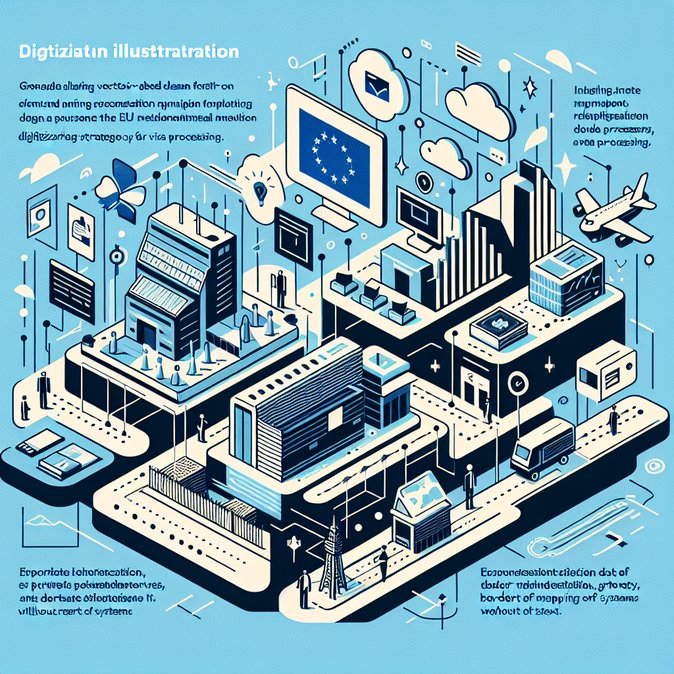
For travellers, the headline is full digitalisation. All short-stay (Schengen) visa applications will migrate to an online platform, eliminating printed forms and consulate stickers. In parallel, visa-exempt nationals will need pre-travel clearance through the European Travel Information and Authorisation System (ETIAS) by late 2026. Biometric gates under the Entry/Exit System (EES) will record fingerprints and facial images each time a non-EU visitor crosses an external border, replacing manual passport stamping.
The Commission pitches the strategy as a win–win: faster processing for tourists and business travellers, but tighter screening against security and overstays. Airports and seaports across Germany have already begun installing EES kiosks; Lufthansa says it will integrate ETIAS verification into online check-in to avoid boarding-gate denials. Employers moving staff under the EU Blue Card can expect more uniform documentation standards once member-state consulates adopt the digital platform.
![EU Unveils First-Ever Visa Strategy—Germany, France, Spain and Italy to Synchronise Digital Entry Systems]()
During this transition period, specialist visa facilitation services such as VisaHQ can help travellers and corporate mobility managers navigate the shifting requirements. Through its dedicated Germany portal (https://www.visahq.com/germany/), the company offers up-to-date checklists, ETIAS alerts and end-to-end application handling—providing a single point of contact while EU consulates phase in the new digital systems.
However, legal advisers caution that harmonisation does not automatically mean simplification. National add-ons—such as Germany’s proof-of-funds thresholds or France’s medical-insurance rules—may survive inside the new system. Companies should budget for higher IT-integration costs as HR portals interface with ETIAS APIs to validate travel clearance in real time.
Implementation funding will draw on the 2028–34 Multi-Annual Financial Framework, and Brussels will audit member-state progress annually. For global mobility teams the message is clear: audit travel-authorisation workflows now, update employee-communication templates and prepare for phased roll-outs that will begin as early as Q4 2026.
For travellers, the headline is full digitalisation. All short-stay (Schengen) visa applications will migrate to an online platform, eliminating printed forms and consulate stickers. In parallel, visa-exempt nationals will need pre-travel clearance through the European Travel Information and Authorisation System (ETIAS) by late 2026. Biometric gates under the Entry/Exit System (EES) will record fingerprints and facial images each time a non-EU visitor crosses an external border, replacing manual passport stamping.
The Commission pitches the strategy as a win–win: faster processing for tourists and business travellers, but tighter screening against security and overstays. Airports and seaports across Germany have already begun installing EES kiosks; Lufthansa says it will integrate ETIAS verification into online check-in to avoid boarding-gate denials. Employers moving staff under the EU Blue Card can expect more uniform documentation standards once member-state consulates adopt the digital platform.

During this transition period, specialist visa facilitation services such as VisaHQ can help travellers and corporate mobility managers navigate the shifting requirements. Through its dedicated Germany portal (https://www.visahq.com/germany/), the company offers up-to-date checklists, ETIAS alerts and end-to-end application handling—providing a single point of contact while EU consulates phase in the new digital systems.
However, legal advisers caution that harmonisation does not automatically mean simplification. National add-ons—such as Germany’s proof-of-funds thresholds or France’s medical-insurance rules—may survive inside the new system. Companies should budget for higher IT-integration costs as HR portals interface with ETIAS APIs to validate travel clearance in real time.
Implementation funding will draw on the 2028–34 Multi-Annual Financial Framework, and Brussels will audit member-state progress annually. For global mobility teams the message is clear: audit travel-authorisation workflows now, update employee-communication templates and prepare for phased roll-outs that will begin as early as Q4 2026.