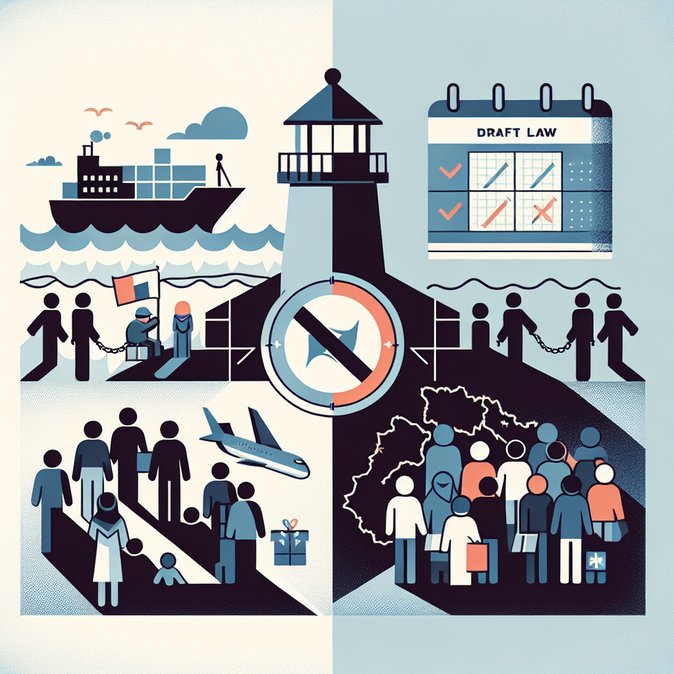
Human Rights Watch (HRW) has sounded the alarm over draft legislation, approved by cabinet on 11 February and now before parliament, that would allow the government to ban vessels from Italian territorial waters for up to six months in cases of “exceptional migratory pressure” or security threats.(hrw.org)
The bill formalises Prime Minister Giorgia Meloni’s long-promised “naval blockade,” empowering the navy and coast guard to intercept boats and reroute passengers to third countries with which Italy has bilateral agreements. NGOs that violate the ban could face fines of €50,000 and vessel seizure after repeat offences.
HRW argues the proposals would effectively short-circuit asylum screening and endanger lives in the central Mediterranean, already the world’s deadliest migration corridor. The organisation also criticises provisions that transpose elements of the new EU Pact on Migration and Asylum, including accelerated border procedures designed to speed deportations of people from so-called safe countries of origin.
![Rights Groups Warn Italy’s New Immigration Bill ‘Fast-Tracks Deportations’]()
Amid this shifting landscape, organisations and individuals who still need to enter Italy for business, humanitarian or personal reasons can rely on VisaHQ’s online platform for up-to-date guidance and streamlined processing of Italian visas and residence documents (https://www.visahq.com/italy/). By outsourcing paperwork to specialists, employers can keep international assignments on track even as policy winds change.
For employers relocating non-EU talent, the bill does not directly affect work-permit channels but could shape the broader political climate in which quota programmes are administered. Companies running corporate social-responsibility programmes in southern Italy may also face reputational dilemmas as search-and-rescue NGOs scale back operations.
Parliamentary debate is expected to begin next week. Business lobbies are urging lawmakers to introduce humanitarian exemptions and maintain alignment with EU Charter obligations—points that could become bargaining chips in upcoming negotiations over labour-migration quotas for 2027-29.
The bill formalises Prime Minister Giorgia Meloni’s long-promised “naval blockade,” empowering the navy and coast guard to intercept boats and reroute passengers to third countries with which Italy has bilateral agreements. NGOs that violate the ban could face fines of €50,000 and vessel seizure after repeat offences.
HRW argues the proposals would effectively short-circuit asylum screening and endanger lives in the central Mediterranean, already the world’s deadliest migration corridor. The organisation also criticises provisions that transpose elements of the new EU Pact on Migration and Asylum, including accelerated border procedures designed to speed deportations of people from so-called safe countries of origin.
Amid this shifting landscape, organisations and individuals who still need to enter Italy for business, humanitarian or personal reasons can rely on VisaHQ’s online platform for up-to-date guidance and streamlined processing of Italian visas and residence documents (https://www.visahq.com/italy/). By outsourcing paperwork to specialists, employers can keep international assignments on track even as policy winds change.
For employers relocating non-EU talent, the bill does not directly affect work-permit channels but could shape the broader political climate in which quota programmes are administered. Companies running corporate social-responsibility programmes in southern Italy may also face reputational dilemmas as search-and-rescue NGOs scale back operations.
Parliamentary debate is expected to begin next week. Business lobbies are urging lawmakers to introduce humanitarian exemptions and maintain alignment with EU Charter obligations—points that could become bargaining chips in upcoming negotiations over labour-migration quotas for 2027-29.