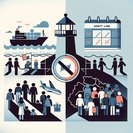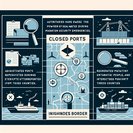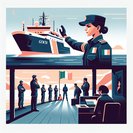
The Italian government is preparing to authorise navy vessels to intercept and divert migrant boats before they enter territorial waters, according to a policy outline obtained by The Times. The measure would allow interceptions of up to six months at a time and includes fines of €50,000 for NGOs that refuse to comply, building on last year’s push to restrict humanitarian rescue missions.(thetimes.com)
Officials say the operation will rely on partnerships with unidentified “safe third countries,” where intercepted migrants would be disembarked and processed under the supervision of international agencies. A previous plan to outsource processing to Albania was stalled by legal challenges, prompting Rome to explore maritime interdictions instead.
The deployment comes as sea arrivals to Italy have fallen by roughly 50 percent year-on-year, helped by EU-brokered deals with Tunisia and Egypt. Nevertheless, the policy has triggered sharp criticism from refugee advocates and risks fresh friction with neighbouring Malta and Greece, which fear displacement of migration routes into their search-and-rescue zones.
![Italy Plans Naval Deployment to Turn Back Mediterranean Migrant Boats]()
Amid these shifting maritime controls, travelers who have legitimate reasons to enter Italy still need clarity on standard visa procedures. VisaHQ, an online visa facilitation service, maintains an updated Italy resource center (https://www.visahq.com/italy/) where applicants can check documentation requirements, submit applications, and receive real-time alerts on regulatory changes—ensuring that policy turbulence at sea does not translate into confusion at the consulate.
From a mobility standpoint, the naval plan does not change entry rules for legitimate travellers, but it underscores the government’s willingness to use hard-power tools in migration control—an approach that could influence future visa-quota debates and Italy’s stance in EU negotiations on talent attraction schemes.
Stakeholders with CSR initiatives in the Mediterranean should review contingency plans, as heightened naval activity may limit NGO charter availability and raise insurance premiums for vessels operating near Libya.
Officials say the operation will rely on partnerships with unidentified “safe third countries,” where intercepted migrants would be disembarked and processed under the supervision of international agencies. A previous plan to outsource processing to Albania was stalled by legal challenges, prompting Rome to explore maritime interdictions instead.
The deployment comes as sea arrivals to Italy have fallen by roughly 50 percent year-on-year, helped by EU-brokered deals with Tunisia and Egypt. Nevertheless, the policy has triggered sharp criticism from refugee advocates and risks fresh friction with neighbouring Malta and Greece, which fear displacement of migration routes into their search-and-rescue zones.

Amid these shifting maritime controls, travelers who have legitimate reasons to enter Italy still need clarity on standard visa procedures. VisaHQ, an online visa facilitation service, maintains an updated Italy resource center (https://www.visahq.com/italy/) where applicants can check documentation requirements, submit applications, and receive real-time alerts on regulatory changes—ensuring that policy turbulence at sea does not translate into confusion at the consulate.
From a mobility standpoint, the naval plan does not change entry rules for legitimate travellers, but it underscores the government’s willingness to use hard-power tools in migration control—an approach that could influence future visa-quota debates and Italy’s stance in EU negotiations on talent attraction schemes.
Stakeholders with CSR initiatives in the Mediterranean should review contingency plans, as heightened naval activity may limit NGO charter availability and raise insurance premiums for vessels operating near Libya.