The long-awaited recast of the EU Blue Card Directive formally took effect in late-2025, but practical guidance for companies has been thin—until now. A detailed employer briefing published on 13 February by immigration firm Fragomen’s Brussels office breaks down how the revamped scheme is playing out on the ground in Belgium and across Europe.
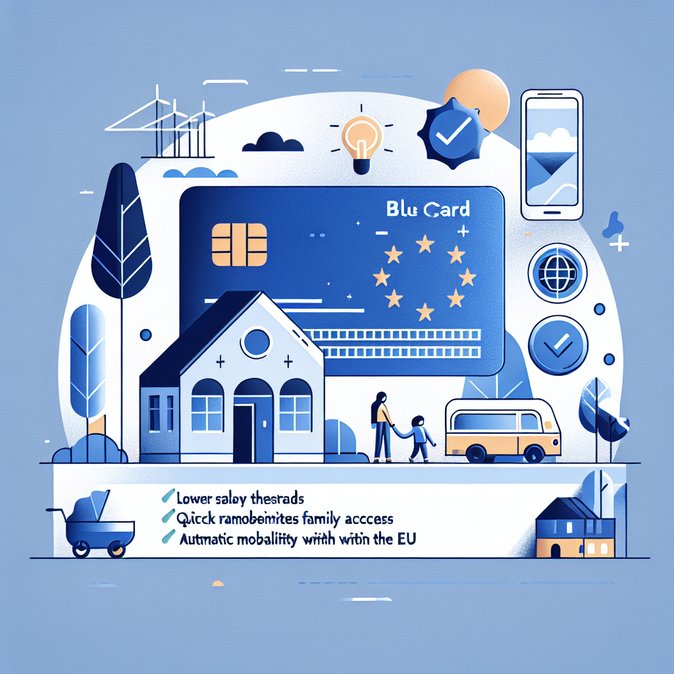
Key upgrades include shorter minimum contract terms (six months), lower salary-threshold flexibility (1.0–1.6× national average), immediate labour-market access for spouses and, crucially, codified short- and long-term mobility rights inside the EU. Belgian authorities transposed the main provisions on schedule, aligning salary thresholds at 100 % of the national average gross wage (€ 46,632 for 2026) and allowing professional experience in lieu of a degree for ICT profiles.
For multinational employers the headline benefits are longer permit validity (up to four years), easier intra-company role changes and clearer paths to long-term residence. However, the Fragomen analysis warns that uptake still hinges on speed and predictability: in Belgium, single-permit processing can run 12–16 weeks, compared with eight weeks in Germany. Where national permits or recognised-sponsor routes remain faster, HR teams may stick to familiar options.
![EU Blue Card Recast: What Belgian Employers Need to Know Now]()
Companies that need extra hands-on support navigating Belgium’s immigration paperwork can streamline filings through VisaHQ’s corporate portal; the Brussels-focused page (https://www.visahq.com/belgium/) offers documentation checklists, turnaround estimates and dedicated account-management—handy whether you’re switching talent onto the new Blue Card track or arranging short-term business visas for visiting colleagues.
The briefing advises Belgian companies to review talent-acquisition policies before the busy spring recruitment cycle. Positions that struggled to meet the previous 1.5× salary test may now qualify, especially in STEM and fintech. Employers should also map out mobility scenarios: staff holding Blue Cards issued in other member states can undertake up to 90 days of ‘business activity’ per trip in Belgium without a work permit, provided notification rules are met.
Compliance, however, is tightening. Because EES ‘smart borders’ launch in April, overstays tied to 90/180-day limits will be flagged automatically, and Blue-Card holders transferring between EU offices will leave a clearer digital trail. Companies must therefore synchronise immigration, travel and posted-worker notifications to avoid costly penalties.
Bottom line: the recast makes the Blue Card a far more attractive tool for Belgium-based employers competing in a scarcer talent pool—but only if internal processes keep pace with the new flexibility.
Key upgrades include shorter minimum contract terms (six months), lower salary-threshold flexibility (1.0–1.6× national average), immediate labour-market access for spouses and, crucially, codified short- and long-term mobility rights inside the EU. Belgian authorities transposed the main provisions on schedule, aligning salary thresholds at 100 % of the national average gross wage (€ 46,632 for 2026) and allowing professional experience in lieu of a degree for ICT profiles.
For multinational employers the headline benefits are longer permit validity (up to four years), easier intra-company role changes and clearer paths to long-term residence. However, the Fragomen analysis warns that uptake still hinges on speed and predictability: in Belgium, single-permit processing can run 12–16 weeks, compared with eight weeks in Germany. Where national permits or recognised-sponsor routes remain faster, HR teams may stick to familiar options.

Companies that need extra hands-on support navigating Belgium’s immigration paperwork can streamline filings through VisaHQ’s corporate portal; the Brussels-focused page (https://www.visahq.com/belgium/) offers documentation checklists, turnaround estimates and dedicated account-management—handy whether you’re switching talent onto the new Blue Card track or arranging short-term business visas for visiting colleagues.
The briefing advises Belgian companies to review talent-acquisition policies before the busy spring recruitment cycle. Positions that struggled to meet the previous 1.5× salary test may now qualify, especially in STEM and fintech. Employers should also map out mobility scenarios: staff holding Blue Cards issued in other member states can undertake up to 90 days of ‘business activity’ per trip in Belgium without a work permit, provided notification rules are met.
Compliance, however, is tightening. Because EES ‘smart borders’ launch in April, overstays tied to 90/180-day limits will be flagged automatically, and Blue-Card holders transferring between EU offices will leave a clearer digital trail. Companies must therefore synchronise immigration, travel and posted-worker notifications to avoid costly penalties.
Bottom line: the recast makes the Blue Card a far more attractive tool for Belgium-based employers competing in a scarcer talent pool—but only if internal processes keep pace with the new flexibility.