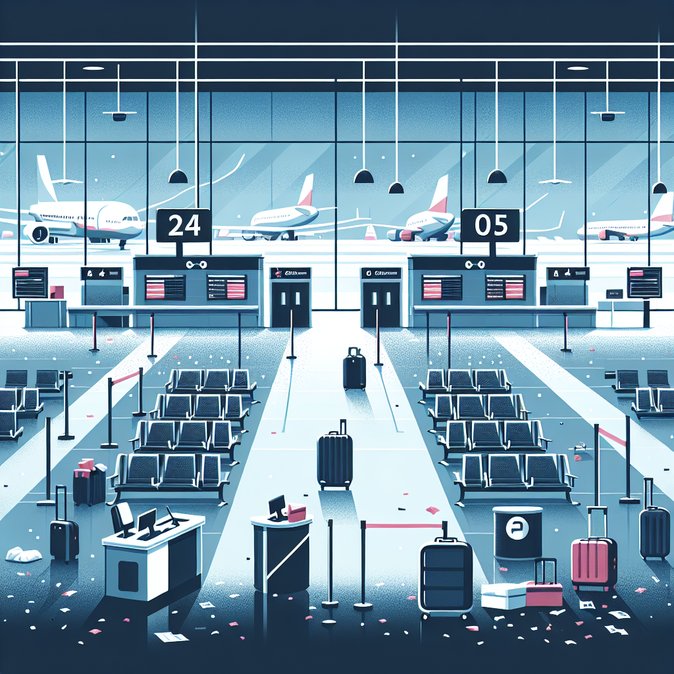
Travel turbulence looms as pilots, cabin crew and ground handlers representing multiple unions have called a 24-hour national strike for Friday 16 February. Flag-carrier ITA Airways, easyJet and several ground-handling companies at Milan Malpensa, Milan Linate, Rome Fiumicino, Venice Marco Polo and Naples Capodichino are bracing for cancellations.
According to scheduling data cited by industry tracker Cirium, ITA Airways has 314 departures planned that day, with nearly 70 percent falling outside the legally protected ‘guaranteed’ windows (07:00-10:00 and 18:00-21:00) during which minimum services must operate. Unions accuse employers of slow progress on wage adjustments and work-life balance after cost-cutting measures introduced during the pandemic.
The strike comes during the peak Carnival break and just days before Milan Fashion Week, raising the stakes for business travellers and inbound cargo shipments of luxury goods. Airlines are already issuing travel waivers, urging passengers to rebook or shift to rail where possible.
![Nation-Wide Aviation Strike Planned for 16 February Set to Disrupt Italian Airports]()
For corporate mobility teams the advice is clear: avoid same-day connections through Italian hubs, monitor carrier advisories, and prepare contingency accommodation for stranded staff. Employers relocating talent should build in extra days for home-finding trips and visa activation appointments, which could be missed if flights are cancelled.
Amid such unpredictability, VisaHQ’s Italy desk (https://www.visahq.com/italy/) offers a quick safety net, allowing travellers and HR coordinators to shift or replace embassy appointments online, track application status and arrange secure courier collection of passports—vital capabilities when sudden flight cancellations threaten to derail tightly scheduled visa formalities.
The walkout is part of a broader wave of European transport unrest; analysts warn that if talks fail, further rolling strikes could extend into late February, potentially affecting the seasonal ‘click-days’ for work-permit applications when applicants must be physically present in Italy.
According to scheduling data cited by industry tracker Cirium, ITA Airways has 314 departures planned that day, with nearly 70 percent falling outside the legally protected ‘guaranteed’ windows (07:00-10:00 and 18:00-21:00) during which minimum services must operate. Unions accuse employers of slow progress on wage adjustments and work-life balance after cost-cutting measures introduced during the pandemic.
The strike comes during the peak Carnival break and just days before Milan Fashion Week, raising the stakes for business travellers and inbound cargo shipments of luxury goods. Airlines are already issuing travel waivers, urging passengers to rebook or shift to rail where possible.

For corporate mobility teams the advice is clear: avoid same-day connections through Italian hubs, monitor carrier advisories, and prepare contingency accommodation for stranded staff. Employers relocating talent should build in extra days for home-finding trips and visa activation appointments, which could be missed if flights are cancelled.
Amid such unpredictability, VisaHQ’s Italy desk (https://www.visahq.com/italy/) offers a quick safety net, allowing travellers and HR coordinators to shift or replace embassy appointments online, track application status and arrange secure courier collection of passports—vital capabilities when sudden flight cancellations threaten to derail tightly scheduled visa formalities.
The walkout is part of a broader wave of European transport unrest; analysts warn that if talks fail, further rolling strikes could extend into late February, potentially affecting the seasonal ‘click-days’ for work-permit applications when applicants must be physically present in Italy.