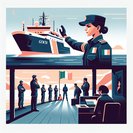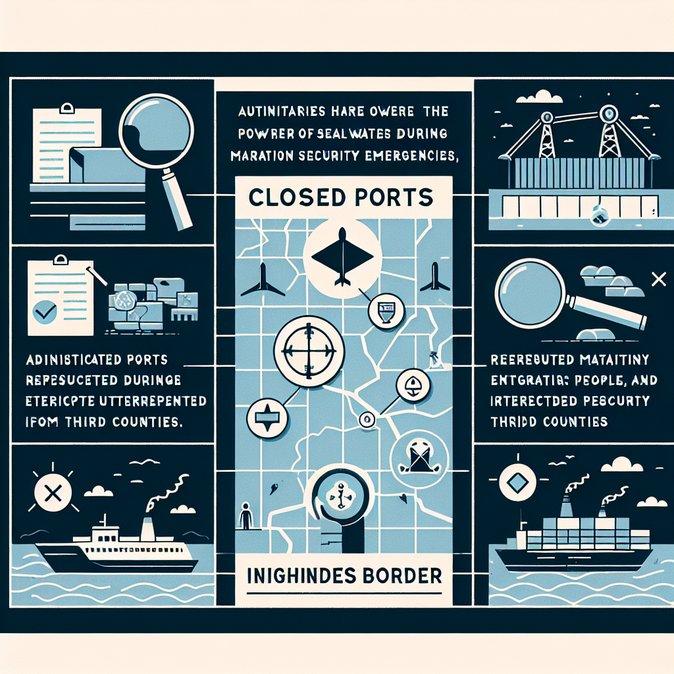
The Council of Ministers gave final sign-off on 11 February to an emergency security decree that substantially expands the toolkit Italy can use to deter irregular maritime arrivals. The headline measure allows the government to impose a temporary ‘naval blockade’, shutting Italy’s territorial waters for up to 30 days (renewable to six months) whenever intelligence indicates a terrorism risk or “exceptional migratory pressure” that threatens public order. Vessels intercepted during a blockade may be redirected to “third countries with which Italy has bilateral agreements,” echoing the government’s contentious plan to process asylum seekers in Albania.
The decree also kick-starts domestic implementation of the EU Pact on Migration and Asylum, due to take effect in June. Rome will transpose new screening, detention and return procedures, positioning itself as an early adopter before the busy summer crossing season. Interior Ministry officials say fast-track asylum decisions at border hotspots will be rolled out on Sicily and Lampedusa within weeks, supported by additional magistrates and linguistic experts.
For corporate mobility teams the implications are two-fold. First, tighter maritime controls could translate into smaller but more politically sensitive overland flows through the Brenner and Tarvisio corridors, where police resources may be re-deployed. Second, businesses that rely on NGO rescue operators for crew changes or logistics in central Mediterranean ports should prepare for short-notice port closures and diversion costs.
![Italian Cabinet Approves Sweeping Anti-Immigration Package With ‘Naval Blockade’ Powers]()
Whether you need expedited Schengen visas for short-notice crew rotations, guidance on humanitarian entry for family members, or simply up-to-date intelligence on Italy’s shifting border policies, VisaHQ’s specialists in Rome can streamline the paperwork and keep your travellers compliant. Explore our Italy services at https://www.visahq.com/italy/
Legal practitioners warn that the naval blockade concept will face immediate court challenges over EU free-navigation rules and the non-refoulement principle. Nevertheless, the political signal is clear: the Meloni government is prepared to test the limits of international law to curb arrivals before regional elections in May.
Practical takeaway: employers moving staff or dependants by private yacht or charter should verify updated NOTAMs and port authority bulletins; immigration counsel expects heightened scrutiny of humanitarian visa requests linked to family reunification during any blockade period.
The decree also kick-starts domestic implementation of the EU Pact on Migration and Asylum, due to take effect in June. Rome will transpose new screening, detention and return procedures, positioning itself as an early adopter before the busy summer crossing season. Interior Ministry officials say fast-track asylum decisions at border hotspots will be rolled out on Sicily and Lampedusa within weeks, supported by additional magistrates and linguistic experts.
For corporate mobility teams the implications are two-fold. First, tighter maritime controls could translate into smaller but more politically sensitive overland flows through the Brenner and Tarvisio corridors, where police resources may be re-deployed. Second, businesses that rely on NGO rescue operators for crew changes or logistics in central Mediterranean ports should prepare for short-notice port closures and diversion costs.

Whether you need expedited Schengen visas for short-notice crew rotations, guidance on humanitarian entry for family members, or simply up-to-date intelligence on Italy’s shifting border policies, VisaHQ’s specialists in Rome can streamline the paperwork and keep your travellers compliant. Explore our Italy services at https://www.visahq.com/italy/
Legal practitioners warn that the naval blockade concept will face immediate court challenges over EU free-navigation rules and the non-refoulement principle. Nevertheless, the political signal is clear: the Meloni government is prepared to test the limits of international law to curb arrivals before regional elections in May.
Practical takeaway: employers moving staff or dependants by private yacht or charter should verify updated NOTAMs and port authority bulletins; immigration counsel expects heightened scrutiny of humanitarian visa requests linked to family reunification during any blockade period.