ÖBB-Infrastruktur and Wiener Linien unveiled detailed construction and service-replacement plans for the next—and most disruptive—phase of the €2.2 billion “S-Bahn Wien Upgrade”. At a joint press briefing in Vienna yesterday, infrastructure board member Judith Engel confirmed that the trunk line between Hauptbahnhof and Praterstern—used by more than 700 trains and 250,000 passengers on a normal weekday—will be closed from 7 September 2026 until the end of October 2027. A preparatory summer blockade between Praterstern and Floridsdorf will already halt through services from 4 July to 6 September 2026.(lok-report.de)
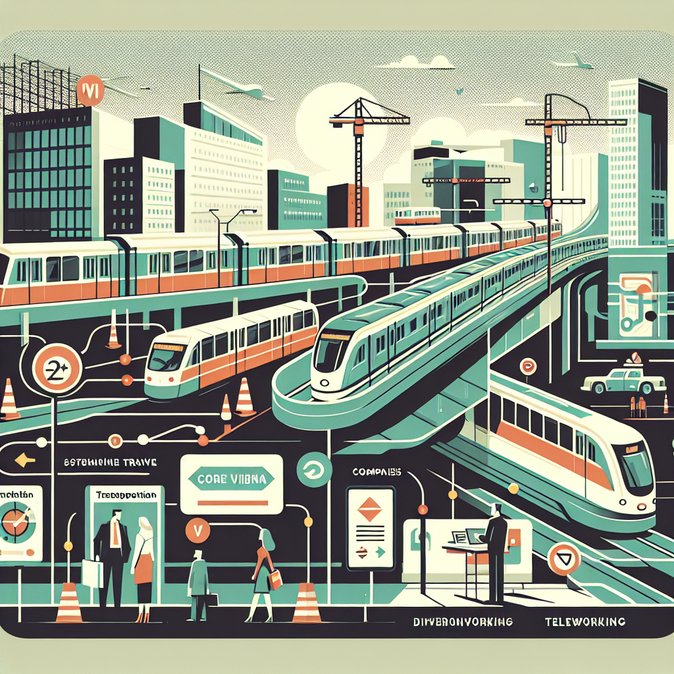
The works include the replacement of 19th-century viaduct arches, the lowering of track beds to accommodate longer Desiro HC sets, new signalling, and full accessibility at Praterstern, Traisengasse and Handelskai. Because no parallel rail corridor exists, ÖBB and Wiener Linien will deploy a multilayered diversion concept: higher-frequency U-Bahn lines, extended tram routes, temporary bus lanes over the Reichsbrücke, and additional regional services via the Marchegger Ostbahn. The strategy was modelled with the Austrian Institute for Spatial Planning to ensure capacity during peak commuter windows.(lok-report.de)
International staff, contractors, or conference attendees who need to travel to Austria during the construction phase can streamline their entry paperwork through VisaHQ’s digital visa-processing service. The platform’s quick eligibility checks, document-upload tools and real-time status updates (https://www.visahq.com/austria/) help ensure that business and leisure visitors secure the necessary visas well before altered train schedules come into force.
![Vienna S-Bahn upgrade to shut central rail artery for 14 months; summer 2026 closures confirmed]()
For corporate mobility programmes the impact is two-fold. First, Vienna’s main north-south commuter axis will lose direct rail service for more than a year, affecting daily travel patterns for employees living in Lower Austria. Second, long-distance trains from Germany and the Czech Republic that normally use the trunk will be rerouted to Meidling or diverted via the Donaulände, adding up to 25 minutes. Travel-policy teams should update door-to-door time estimates, re-evaluate taxi allowances and monitor hotel allocations near Meidling.
ÖBB acknowledged that the 2024 and 2025 summer blockades already triggered a 12 % modal shift to private cars, but insists that intensive communication—starting this spring with station roadshows, multilingual flyers and targeted social-media ads—will keep the 2026 figure below 8 %. Employers are encouraged to stagger working hours or promote remote work during key construction milestones.
Funding for the upgrade is secured through the federal transport framework plan; no further parliamentary approvals are needed. The project will ultimately allow 100-metre longer trains, 2-minute headways and a 50 % capacity increase on the city’s most important S-Bahn corridor, supporting Vienna’s goal of raising the public-transport modal share to 80 % by 2030.
The works include the replacement of 19th-century viaduct arches, the lowering of track beds to accommodate longer Desiro HC sets, new signalling, and full accessibility at Praterstern, Traisengasse and Handelskai. Because no parallel rail corridor exists, ÖBB and Wiener Linien will deploy a multilayered diversion concept: higher-frequency U-Bahn lines, extended tram routes, temporary bus lanes over the Reichsbrücke, and additional regional services via the Marchegger Ostbahn. The strategy was modelled with the Austrian Institute for Spatial Planning to ensure capacity during peak commuter windows.(lok-report.de)
International staff, contractors, or conference attendees who need to travel to Austria during the construction phase can streamline their entry paperwork through VisaHQ’s digital visa-processing service. The platform’s quick eligibility checks, document-upload tools and real-time status updates (https://www.visahq.com/austria/) help ensure that business and leisure visitors secure the necessary visas well before altered train schedules come into force.

For corporate mobility programmes the impact is two-fold. First, Vienna’s main north-south commuter axis will lose direct rail service for more than a year, affecting daily travel patterns for employees living in Lower Austria. Second, long-distance trains from Germany and the Czech Republic that normally use the trunk will be rerouted to Meidling or diverted via the Donaulände, adding up to 25 minutes. Travel-policy teams should update door-to-door time estimates, re-evaluate taxi allowances and monitor hotel allocations near Meidling.
ÖBB acknowledged that the 2024 and 2025 summer blockades already triggered a 12 % modal shift to private cars, but insists that intensive communication—starting this spring with station roadshows, multilingual flyers and targeted social-media ads—will keep the 2026 figure below 8 %. Employers are encouraged to stagger working hours or promote remote work during key construction milestones.
Funding for the upgrade is secured through the federal transport framework plan; no further parliamentary approvals are needed. The project will ultimately allow 100-metre longer trains, 2-minute headways and a 50 % capacity increase on the city’s most important S-Bahn corridor, supporting Vienna’s goal of raising the public-transport modal share to 80 % by 2030.