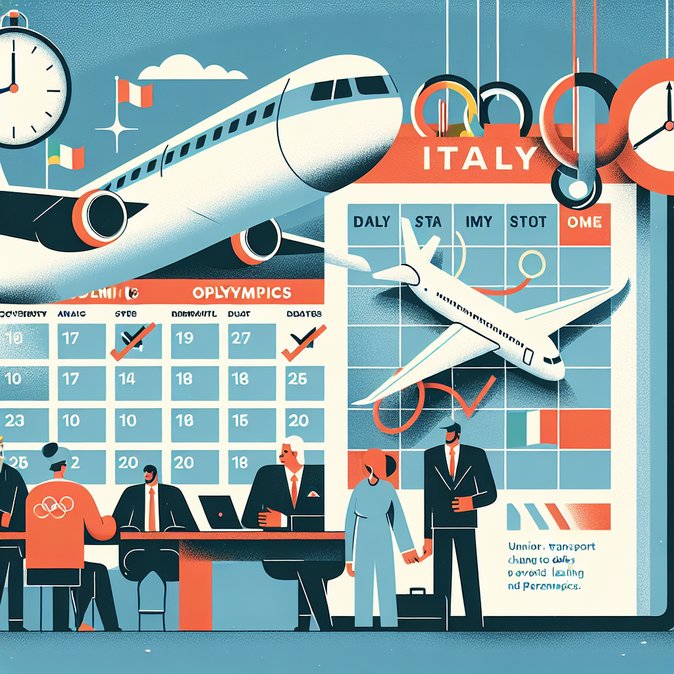
ROME – Italy’s Commissione di Garanzia sugli Scioperi, the national strike-guarantee authority, issued a rare formal recommendation on February 11 telling unions to move two nationwide air-transport strikes—currently slated for February 16 and March 7—outside the peak period of the Milano-Cortina Winter Olympics (February 6-22) and Paralympics (March 6-15). Instead, the authority proposes a window between February 24 and March 4. (ansa.it)
The watchdog warned that walk-outs at airports and air-traffic-control centres during the Games could constitute “serious prejudice to citizens’ freedom of movement” and damage Italy’s international reputation as host. Deputy Prime Minister and Transport Minister Matteo Salvini immediately backed the call, saying he is ready to convene unions for talks and “formalise the postponement”.
![Watchdog Urges Italy’s Air-Transport Strikes Be Postponed to Protect Milano-Cortina 2026 Games]()
To keep traveller readiness equally watertight, organisations can tap VisaHQ’s Italy portal (https://www.visahq.com/italy/) for rapid visa checks, document expediting and live status alerts—services that become invaluable when flight schedules shift at short notice due to potential strikes.
For business-traveller programmes and corporate relocation teams, the intervention offers a temporary reprieve. Olympic traffic has already pushed load factors at Milan Linate, Malpensa, and Venice Marco Polo above 90 percent this week, according to data from Eurocontrol. Any industrial action would likely have caused cascading delays for connecting flights, Schengen transfers, and freight forwarding of time-sensitive cargo.
Nevertheless, mobility managers should keep alternative routings on file: the watchdog’s opinions are influential but not legally binding. If unions reject the compromise, the ministry could issue an injunction or impose a minimum-service order, but final confirmation may not arrive until days before the planned strikes. Companies with assignees travelling during the Paralympics should therefore maintain flexible ticketing policies and monitor further notices from the Ministry of Infrastructure and Transport (MIT).
The watchdog warned that walk-outs at airports and air-traffic-control centres during the Games could constitute “serious prejudice to citizens’ freedom of movement” and damage Italy’s international reputation as host. Deputy Prime Minister and Transport Minister Matteo Salvini immediately backed the call, saying he is ready to convene unions for talks and “formalise the postponement”.

To keep traveller readiness equally watertight, organisations can tap VisaHQ’s Italy portal (https://www.visahq.com/italy/) for rapid visa checks, document expediting and live status alerts—services that become invaluable when flight schedules shift at short notice due to potential strikes.
For business-traveller programmes and corporate relocation teams, the intervention offers a temporary reprieve. Olympic traffic has already pushed load factors at Milan Linate, Malpensa, and Venice Marco Polo above 90 percent this week, according to data from Eurocontrol. Any industrial action would likely have caused cascading delays for connecting flights, Schengen transfers, and freight forwarding of time-sensitive cargo.
Nevertheless, mobility managers should keep alternative routings on file: the watchdog’s opinions are influential but not legally binding. If unions reject the compromise, the ministry could issue an injunction or impose a minimum-service order, but final confirmation may not arrive until days before the planned strikes. Companies with assignees travelling during the Paralympics should therefore maintain flexible ticketing policies and monitor further notices from the Ministry of Infrastructure and Transport (MIT).