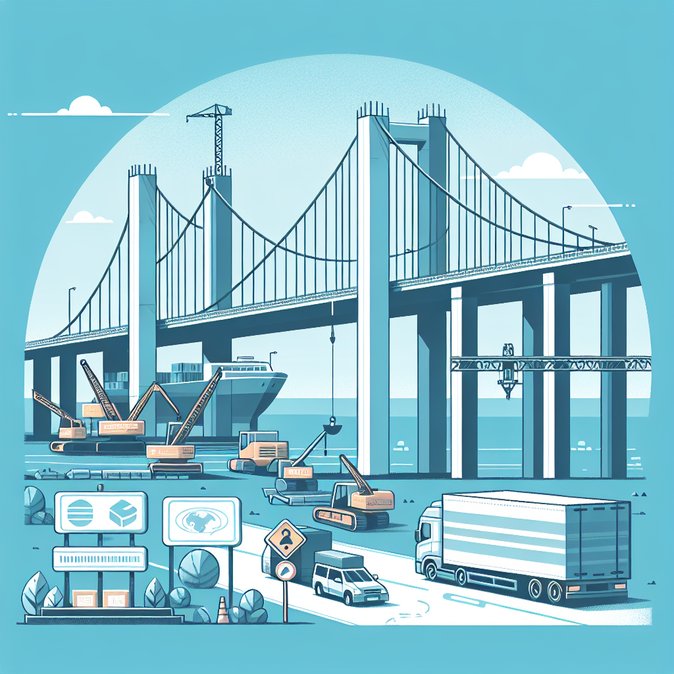
In the latest flash-point of cross-border tension, U.S. President Donald Trump vowed on 10 February to block the long-awaited opening of the Gordie Howe International Bridge unless Washington receives “at least half-ownership and appropriate compensation” from Ottawa. The six-lane, C$6.3-billion span—funded largely by Canada to relieve chronic congestion at the Ambassador Bridge—is slated to open later this year and handle roughly a quarter of all Canada-U.S. truck trade.
Posting on Truth Social, Trump accused Canada of “treating the United States very unfairly for decades.” Canadian officials declined immediate comment, but Michigan Governor Gretchen Whitmer and Windsor Mayor Drew Dilkens blasted the threat as “economically self-defeating,” noting that the project already uses U.S. steel and will create thousands of jobs on both sides of the border. Trade lawyers say the White House has limited legal tools to halt commissioning, yet the rhetoric alone injects uncertainty into cross-border logistics planning.
Automakers, agri-food exporters and e-commerce giants have spent months designing supply chains around the new crossing, which promises 4-minute average customs processing and dedicated FAST lanes. A delay could saddle companies with continued reliance on the ageing, privately owned Ambassador Bridge—vulnerable to protests and weather closures—and undercut hoped-for reductions in greenhouse-gas emissions from idling trucks.
![Trump’s bridge ultimatum threatens Detroit–Windsor border opening]()
Canadian forwarders are advising shippers to retain contingency routings through Sarnia’s Blue Water Bridge and the Peace Bridge at Buffalo while monitoring developments.
Amid such volatility, businesses and individual travelers juggling work permits, NEXUS renewals or temporary resident visas can streamline the paperwork through VisaHQ’s Canada portal (https://www.visahq.com/canada/), which offers up-to-date guidance, digital applications, and courier handling; the service can be especially valuable if rerouting through alternate crossings changes port-of-entry rules at short notice.
Political analysts suggest Trump’s gambit is aimed at renegotiating steel-procurement rules ahead of the 2026 review of the USMCA trade pact.
For global-mobility managers relocating staff between Ontario and Michigan, the episode is a reminder to budget extra time for household-goods trucks and to brief employees on alternative commuter routes until the diplomatic dust settles.
Posting on Truth Social, Trump accused Canada of “treating the United States very unfairly for decades.” Canadian officials declined immediate comment, but Michigan Governor Gretchen Whitmer and Windsor Mayor Drew Dilkens blasted the threat as “economically self-defeating,” noting that the project already uses U.S. steel and will create thousands of jobs on both sides of the border. Trade lawyers say the White House has limited legal tools to halt commissioning, yet the rhetoric alone injects uncertainty into cross-border logistics planning.
Automakers, agri-food exporters and e-commerce giants have spent months designing supply chains around the new crossing, which promises 4-minute average customs processing and dedicated FAST lanes. A delay could saddle companies with continued reliance on the ageing, privately owned Ambassador Bridge—vulnerable to protests and weather closures—and undercut hoped-for reductions in greenhouse-gas emissions from idling trucks.

Canadian forwarders are advising shippers to retain contingency routings through Sarnia’s Blue Water Bridge and the Peace Bridge at Buffalo while monitoring developments.
Amid such volatility, businesses and individual travelers juggling work permits, NEXUS renewals or temporary resident visas can streamline the paperwork through VisaHQ’s Canada portal (https://www.visahq.com/canada/), which offers up-to-date guidance, digital applications, and courier handling; the service can be especially valuable if rerouting through alternate crossings changes port-of-entry rules at short notice.
Political analysts suggest Trump’s gambit is aimed at renegotiating steel-procurement rules ahead of the 2026 review of the USMCA trade pact.
For global-mobility managers relocating staff between Ontario and Michigan, the episode is a reminder to budget extra time for household-goods trucks and to brief employees on alternative commuter routes until the diplomatic dust settles.