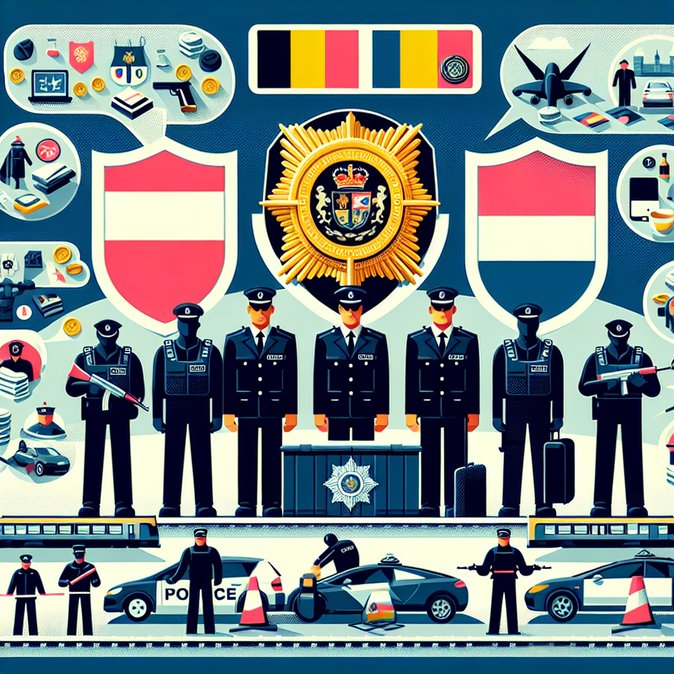
Belgium joined forces with the Netherlands, Luxembourg and France between 2 and 8 February 2026 for the first “Etoile” cross-border security operation of the year. Details released on 11 February show that police and customs teams inspected 3,767 people, 2,342 vehicles, 19 buses and 15 international trains using the expanded powers contained in the 2023 Benelux Police Treaty.(benelux.int)
On Belgian territory alone, officers seized 13 weapons, nearly €100,000 in cash and a variety of narcotics, including more than 2.8 kg of cannabis and 123 g of cocaine. Railway Police operating out of Brussels-Midi uncovered €39,720 in undeclared currency alongside large quantities of prescription medication, triggering five new money-laundering investigations.(benelux.int)
The Etoile framework allows mixed patrols to carry out identity checks on roads and rail corridors up to ten kilometres across internal borders. For international travellers and commuters, this means heightened document screening—especially on Thalys, Eurostar and intercity bus routes linking Brussels with Amsterdam, Paris and Luxembourg. Authorities emphasise that the treaty also streamlines hot-pursuit rules, reducing the time needed to stop suspect vehicles that cross into Belgian territory.
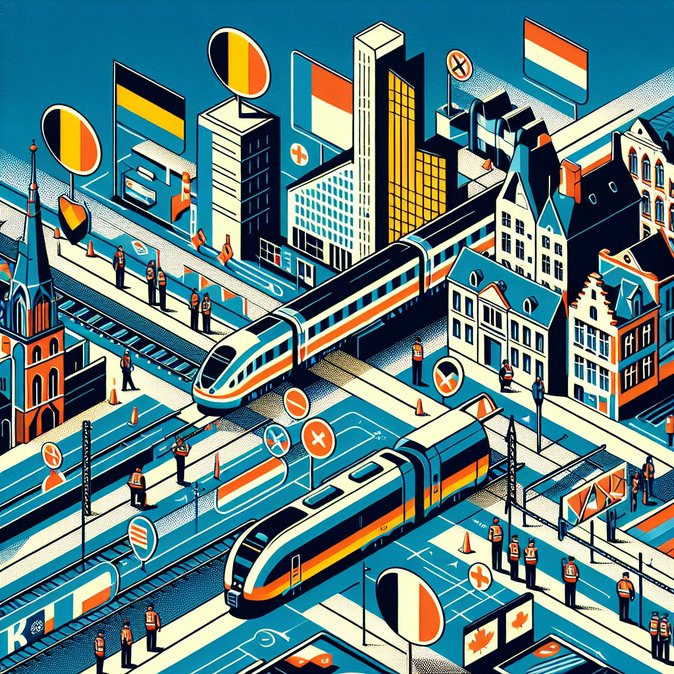
![Benelux ‘Etoile’ Police Sweep Checks 3,700 Travellers on Belgian Borders]()
If you or your organisation need help navigating Schengen documentation requirements, VisaHQ’s Belgium portal (https://www.visahq.com/belgium/) offers step-by-step visa guidance, digital application tools and real-time status tracking—making it easier to ensure that employees and cargo crews carry the correct papers before setting off.
From a global-mobility perspective, the operation is a reminder that Schengen’s “no-frontier” philosophy does not eliminate ad-hoc controls. Companies moving staff or valuable cargo through the Benelux region should ensure that drivers carry valid IDs, work permits and proof of assignment. Failure to do so can lead to on-the-spot fines, vehicle impoundment or—even more costly—delivery delays.
Benelux ministers have already scheduled a second Etoile action for May 2026, coinciding with public holidays that traditionally see a spike in leisure travel. Employers are advised to brief mobile workers about the likelihood of random checks and to budget extra transit time when planning cross-border trips.
On Belgian territory alone, officers seized 13 weapons, nearly €100,000 in cash and a variety of narcotics, including more than 2.8 kg of cannabis and 123 g of cocaine. Railway Police operating out of Brussels-Midi uncovered €39,720 in undeclared currency alongside large quantities of prescription medication, triggering five new money-laundering investigations.(benelux.int)
The Etoile framework allows mixed patrols to carry out identity checks on roads and rail corridors up to ten kilometres across internal borders. For international travellers and commuters, this means heightened document screening—especially on Thalys, Eurostar and intercity bus routes linking Brussels with Amsterdam, Paris and Luxembourg. Authorities emphasise that the treaty also streamlines hot-pursuit rules, reducing the time needed to stop suspect vehicles that cross into Belgian territory.
If you or your organisation need help navigating Schengen documentation requirements, VisaHQ’s Belgium portal (https://www.visahq.com/belgium/) offers step-by-step visa guidance, digital application tools and real-time status tracking—making it easier to ensure that employees and cargo crews carry the correct papers before setting off.
From a global-mobility perspective, the operation is a reminder that Schengen’s “no-frontier” philosophy does not eliminate ad-hoc controls. Companies moving staff or valuable cargo through the Benelux region should ensure that drivers carry valid IDs, work permits and proof of assignment. Failure to do so can lead to on-the-spot fines, vehicle impoundment or—even more costly—delivery delays.
Benelux ministers have already scheduled a second Etoile action for May 2026, coinciding with public holidays that traditionally see a spike in leisure travel. Employers are advised to brief mobile workers about the likelihood of random checks and to budget extra transit time when planning cross-border trips.