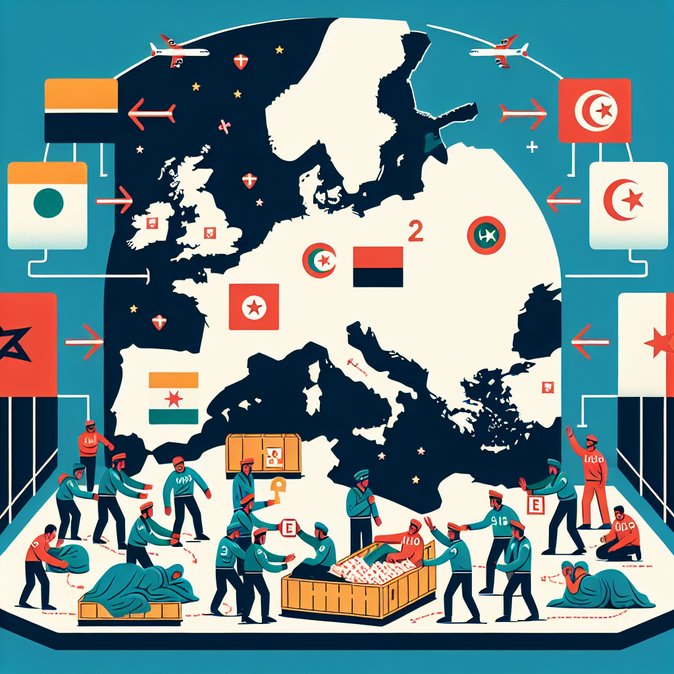
Meeting in Strasbourg on 10 February, the European Parliament voted by 408-to-184 to approve new regulations allowing member states—including France—to reject asylum claims from migrants who come from, or have transited through, countries designated “safe.” A parallel vote (396-to-226) endorsed the concept of “safe third countries,” enabling accelerated returns to transit states outside the EU.
Under the rules, due to take effect in June 2026, applicants arriving in France from Bangladesh, Colombia, Egypt, India, Kosovo, Morocco or Tunisia—among others—could see their petitions deemed manifestly unfounded unless they demonstrate individual risk. French authorities will also gain latitude to reroute applicants who crossed Serbia or Albania en route to the EU, for example, arguing those states can provide effective protection.
![European Parliament Backs ‘Safe Country’ Rules, Easing Deportations from France and Other EU States]()
Companies and private applicants who need clarity on how these forthcoming changes might intersect with standard work-permit, family-reunification or visitor-visa procedures can turn to VisaHQ for up-to-date guidance. The service’s France portal (https://www.visahq.com/france/) continually tracks legislative updates and offers document checks, concierge filing assistance and courier support, helping users navigate shifting EU rules with confidence.
Centre-right French MEPs hailed the measure as a way to relieve prefectures overwhelmed by a record 384 000 first residence-permit applications in 2025. Human-rights organisations and left-leaning deputies warn the policy risks “chain refoulement” that could violate non-refoulement obligations if transit countries lack robust asylum systems.
For employers the change could speed processing of legitimate corporate permits by unclogging administrative backlogs—but it will also raise the bar for humanitarian transfers and may complicate family-reunification filings when relatives originate from a newly listed safe country. Mobility teams should monitor implementation decrees from the French Interior Ministry and be ready to evidence labour-market or family-dependency grounds more rigorously.
Under the rules, due to take effect in June 2026, applicants arriving in France from Bangladesh, Colombia, Egypt, India, Kosovo, Morocco or Tunisia—among others—could see their petitions deemed manifestly unfounded unless they demonstrate individual risk. French authorities will also gain latitude to reroute applicants who crossed Serbia or Albania en route to the EU, for example, arguing those states can provide effective protection.

Companies and private applicants who need clarity on how these forthcoming changes might intersect with standard work-permit, family-reunification or visitor-visa procedures can turn to VisaHQ for up-to-date guidance. The service’s France portal (https://www.visahq.com/france/) continually tracks legislative updates and offers document checks, concierge filing assistance and courier support, helping users navigate shifting EU rules with confidence.
Centre-right French MEPs hailed the measure as a way to relieve prefectures overwhelmed by a record 384 000 first residence-permit applications in 2025. Human-rights organisations and left-leaning deputies warn the policy risks “chain refoulement” that could violate non-refoulement obligations if transit countries lack robust asylum systems.
For employers the change could speed processing of legitimate corporate permits by unclogging administrative backlogs—but it will also raise the bar for humanitarian transfers and may complicate family-reunification filings when relatives originate from a newly listed safe country. Mobility teams should monitor implementation decrees from the French Interior Ministry and be ready to evidence labour-market or family-dependency grounds more rigorously.