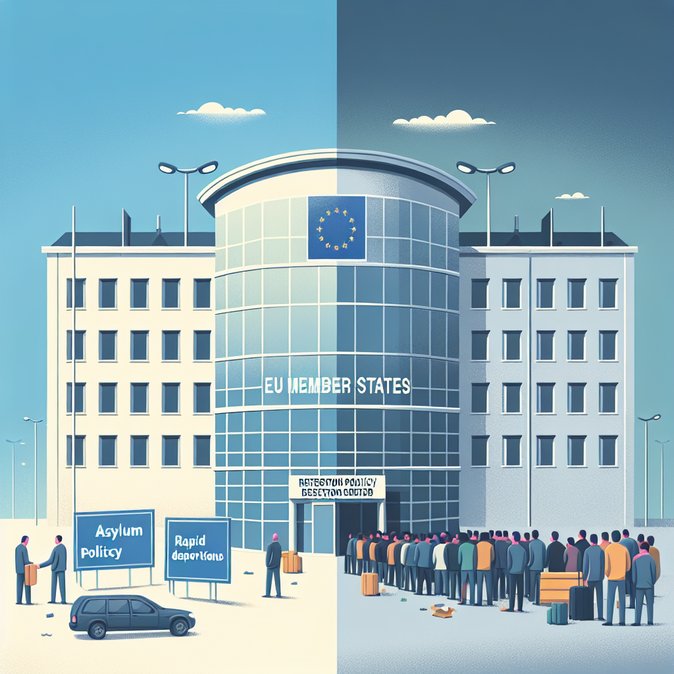
In a key vote on February 10, 2026, the European Parliament endorsed two regulations that will allow member states, including Belgium, to reject asylum claims and deport applicants more quickly if they come from – or even merely transited through – countries now labelled “safe.” The measures form part of the wider 2023 Pact on Migration and Asylum and will start applying in June. Bangladesh, Colombia, Egypt, India, Kosovo, Morocco and Tunisia head the new “safe-origin” list, while an accompanying regulation lets authorities send migrants to a so-called “safe third country” outside the EU even if the person never lived there.
For Belgium, where reception centres have been operating at capacity for months, the promise of speedier procedures is politically attractive. Federal Secretary of State for Asylum and Migration Nicole de Moor welcomed the vote, saying that “manifestly unfounded claims clog our system and harm those who do need protection.” The Immigration Office processed nearly 39,000 asylum requests in 2025, the highest level since 2015, and has faced court orders to provide shelter for hundreds of claimants it could not accommodate. Quicker rejections could ease that pressure—if, critics note, the Federal Police and diplomatic services can secure the documents and seats needed to actually remove people.
Human-rights groups and the Belgian Refugee Council argue the reforms undermine the right to an individual assessment. They point out that India and Egypt, both on the “safe” list, have deteriorating records on press freedom and minority rights. Lawyers fear that people will be returned before they can gather country-of-origin evidence or find representation, while NGOs warn that smaller EU states might outsource responsibility to neighbours with even less capacity.
![EU Parliament approves fast-track deportation rules, putting pressure on Belgium’s asylum system]()
Amid these uncertainties, VisaHQ can serve as a practical ally for employers, NGOs and individual travelers who need to navigate Belgium’s evolving immigration landscape. Its Belgium-dedicated platform (https://www.visahq.com/belgium/) aggregates up-to-date visa requirements, offers document-checking services and streamlines appointment scheduling, helping applicants anticipate procedural changes well before they reach the consulate window.
From a corporate-mobility perspective, the new rules will not affect work-permit or business-travel channels directly, but they could reshape public discourse on immigration and indirectly influence processing priorities. Companies that rely on humanitarian pathways—such as talent-displacement schemes for tech workers from conflict zones—may find it harder to relocate candidates via Belgium. Employers sponsoring non-EU talent should monitor whether resources freed up at the Immigration Office are redeployed toward work and single-permit units, potentially shortening corporate processing queues.
In the near term, mobility managers should update crisis-management plans for internationally mobile staff who might be caught in protests or heightened border checks as the regulations take effect. The government is expected to publish practical guidance by mid-April; global-mobility teams should watch for new standard letters and appeal deadlines so they can brief affected assignees and HR partners.
For Belgium, where reception centres have been operating at capacity for months, the promise of speedier procedures is politically attractive. Federal Secretary of State for Asylum and Migration Nicole de Moor welcomed the vote, saying that “manifestly unfounded claims clog our system and harm those who do need protection.” The Immigration Office processed nearly 39,000 asylum requests in 2025, the highest level since 2015, and has faced court orders to provide shelter for hundreds of claimants it could not accommodate. Quicker rejections could ease that pressure—if, critics note, the Federal Police and diplomatic services can secure the documents and seats needed to actually remove people.
Human-rights groups and the Belgian Refugee Council argue the reforms undermine the right to an individual assessment. They point out that India and Egypt, both on the “safe” list, have deteriorating records on press freedom and minority rights. Lawyers fear that people will be returned before they can gather country-of-origin evidence or find representation, while NGOs warn that smaller EU states might outsource responsibility to neighbours with even less capacity.

Amid these uncertainties, VisaHQ can serve as a practical ally for employers, NGOs and individual travelers who need to navigate Belgium’s evolving immigration landscape. Its Belgium-dedicated platform (https://www.visahq.com/belgium/) aggregates up-to-date visa requirements, offers document-checking services and streamlines appointment scheduling, helping applicants anticipate procedural changes well before they reach the consulate window.
From a corporate-mobility perspective, the new rules will not affect work-permit or business-travel channels directly, but they could reshape public discourse on immigration and indirectly influence processing priorities. Companies that rely on humanitarian pathways—such as talent-displacement schemes for tech workers from conflict zones—may find it harder to relocate candidates via Belgium. Employers sponsoring non-EU talent should monitor whether resources freed up at the Immigration Office are redeployed toward work and single-permit units, potentially shortening corporate processing queues.
In the near term, mobility managers should update crisis-management plans for internationally mobile staff who might be caught in protests or heightened border checks as the regulations take effect. The government is expected to publish practical guidance by mid-April; global-mobility teams should watch for new standard letters and appeal deadlines so they can brief affected assignees and HR partners.