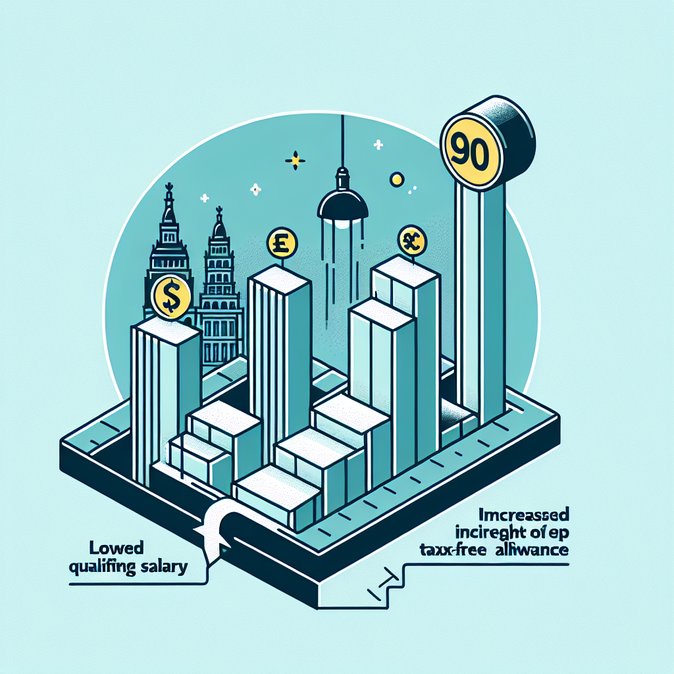
Belgium’s Federal Government has pushed through a significant upgrade of its special tax regime for inbound taxpayers, and the details—published on 9 February 2026—make the country tangibly cheaper for multinationals moving staff into Brussels, Antwerp or any of the country’s other business hubs. Retroactive to 1 January 2025, the minimum annual salary to qualify falls from €75,000 to €70,000, widening the talent pool that can benefit. At the same time, the tax-free allowance covering “expenses proper to the employer” jumps from 30 % to 35 % of gross remuneration and, crucially, the previous €90,000 cap on that allowance disappears altogether.
The changes stem from the Law of 18 December 2025, but companies had been awaiting formal confirmation of practical dates and filing windows. Those have now been set: employers have until 9 April 2026 to submit retroactive applications for employees who started Belgian assignments during 2025 yet fell short of the old €75k threshold. For inbound researchers, the salary threshold remains waived altogether, maintaining an attractive route for R&D teams.
For companies transferring staff, securing the correct Belgian work permits and residence visas is just as critical as optimising taxes. VisaHQ’s Belgium desk (https://www.visahq.com/belgium/) can fast-track these immigration formalities, coordinate document legalisation and keep HR teams updated on status changes, letting mobility professionals concentrate on the new tax calculations.
![Belgium sweetens expat-tax regime with lower salary threshold and bigger allowances]()
Why it matters: Belgium competes with the Netherlands and Luxembourg for regional-headquarters and EU-affairs talent. Modelling by Big Four advisers suggests the higher 35 % allowance can lower effective income-tax rates for a mid-career manager by three to four percentage points and, for C-suite transferees, remove the previous ceiling that often triggered cost-of-living gross-ups. Employers can therefore shrink assignment budgets or re-deploy savings to housing and schooling support.
Practical implications for mobility teams include recalculating hypothetical tax deductions, amending assignment letters and payroll instructions, and checking whether the broader allowance pushes total remuneration above social-security ceilings for pension accrual. Because social-security rules are unchanged, assignees continue to pay standard Belgian contributions, which means total employer cost may still rise in absolute terms even though net pay improves.
Global-mobility managers should also note the condensed retroactive window. Collecting documentation—particularly proof that eligible employees lived at least 150 km outside Belgium during the previous five years—can take weeks. Firms are urged to start dossier reviews immediately and to brief payroll providers on amended withholding calculations from the February pay cycle onward.
The changes stem from the Law of 18 December 2025, but companies had been awaiting formal confirmation of practical dates and filing windows. Those have now been set: employers have until 9 April 2026 to submit retroactive applications for employees who started Belgian assignments during 2025 yet fell short of the old €75k threshold. For inbound researchers, the salary threshold remains waived altogether, maintaining an attractive route for R&D teams.
For companies transferring staff, securing the correct Belgian work permits and residence visas is just as critical as optimising taxes. VisaHQ’s Belgium desk (https://www.visahq.com/belgium/) can fast-track these immigration formalities, coordinate document legalisation and keep HR teams updated on status changes, letting mobility professionals concentrate on the new tax calculations.

Why it matters: Belgium competes with the Netherlands and Luxembourg for regional-headquarters and EU-affairs talent. Modelling by Big Four advisers suggests the higher 35 % allowance can lower effective income-tax rates for a mid-career manager by three to four percentage points and, for C-suite transferees, remove the previous ceiling that often triggered cost-of-living gross-ups. Employers can therefore shrink assignment budgets or re-deploy savings to housing and schooling support.
Practical implications for mobility teams include recalculating hypothetical tax deductions, amending assignment letters and payroll instructions, and checking whether the broader allowance pushes total remuneration above social-security ceilings for pension accrual. Because social-security rules are unchanged, assignees continue to pay standard Belgian contributions, which means total employer cost may still rise in absolute terms even though net pay improves.
Global-mobility managers should also note the condensed retroactive window. Collecting documentation—particularly proof that eligible employees lived at least 150 km outside Belgium during the previous five years—can take weeks. Firms are urged to start dossier reviews immediately and to brief payroll providers on amended withholding calculations from the February pay cycle onward.