The European Commission on 9 February 2026 unveiled its first-ever EU Visa Strategy, a roadmap that will make all short-stay (Schengen) visa applications fully digital by 2028 and allow the re-use of biometric data for up to 59 months. Italy—whose consulates from New York to New Delhi routinely post the longest appointment backlogs in the bloc—lobbied hard for the reforms and is expected to be one of the main beneficiaries.
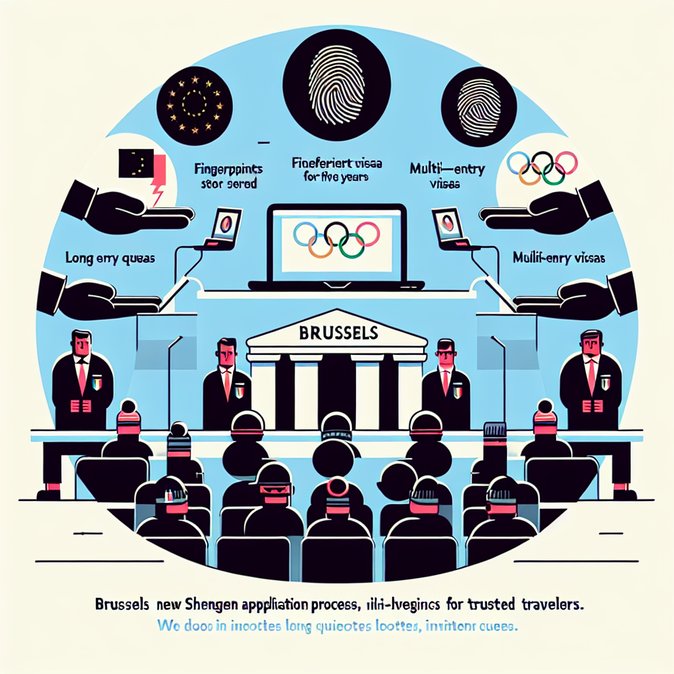
Under the plan, travellers will submit a single online form, upload supporting documents and, after the first application, simply confirm that their fingerprints and photo remain unchanged. Trusted business travellers could obtain multi-entry visas valid for up to five years, while Member States are encouraged to open “Legal Mobility Gateways” to help firms relocate highly-skilled staff inside the EU. The strategy also calls on countries to outsource more low-risk processing tasks and to expand fast-track lanes at busy airports such as Rome Fiumicino and Milan Malpensa.
Companies and individual travelers who want to get ahead of the curve can already offload much of the paperwork to specialized providers. VisaHQ, for example, allows applicants bound for Italy to complete the Schengen application online, monitors appointment backlogs, and will integrate with the forthcoming EU portal as soon as it goes live—details are available at https://www.visahq.com/italy/
![EU Launches Digital Visa Strategy; Italy Expects Relief From Consular Queues]()
For Italian employers the digital shift could be transformative. Film crews shooting in Cinecittà Studios, fashion houses rushing designers to Milan, and engineering firms bringing in commissioning teams for Lombardy’s new semiconductor fabs all cite visa delays as a top bottleneck. According to Confindustria, average lead time for a Schengen visa appointment in Mumbai is 37 days; the Commission wants that under ten.
Border-security hawks have welcomed the ability to revoke a visa digitally within minutes should a security flag arise, while privacy advocates argue that clearer data-retention limits are needed. The Interior Ministry in Rome says it will begin beta-testing the common EU portal in June and plans to roll it out at all embassies by mid-2027.
Travel managers should prepare to integrate the EU portal’s APIs into their booking tools and review corporate mobility policies: longer-validity visas will reduce renewal costs but ETIAS pre-travel authorisation—also fully digital—will still apply to visa-exempt executives from the US, UK and other countries after late 2026.
Under the plan, travellers will submit a single online form, upload supporting documents and, after the first application, simply confirm that their fingerprints and photo remain unchanged. Trusted business travellers could obtain multi-entry visas valid for up to five years, while Member States are encouraged to open “Legal Mobility Gateways” to help firms relocate highly-skilled staff inside the EU. The strategy also calls on countries to outsource more low-risk processing tasks and to expand fast-track lanes at busy airports such as Rome Fiumicino and Milan Malpensa.
Companies and individual travelers who want to get ahead of the curve can already offload much of the paperwork to specialized providers. VisaHQ, for example, allows applicants bound for Italy to complete the Schengen application online, monitors appointment backlogs, and will integrate with the forthcoming EU portal as soon as it goes live—details are available at https://www.visahq.com/italy/

For Italian employers the digital shift could be transformative. Film crews shooting in Cinecittà Studios, fashion houses rushing designers to Milan, and engineering firms bringing in commissioning teams for Lombardy’s new semiconductor fabs all cite visa delays as a top bottleneck. According to Confindustria, average lead time for a Schengen visa appointment in Mumbai is 37 days; the Commission wants that under ten.
Border-security hawks have welcomed the ability to revoke a visa digitally within minutes should a security flag arise, while privacy advocates argue that clearer data-retention limits are needed. The Interior Ministry in Rome says it will begin beta-testing the common EU portal in June and plans to roll it out at all embassies by mid-2027.
Travel managers should prepare to integrate the EU portal’s APIs into their booking tools and review corporate mobility policies: longer-validity visas will reduce renewal costs but ETIAS pre-travel authorisation—also fully digital—will still apply to visa-exempt executives from the US, UK and other countries after late 2026.