The Finnish MFA announced on 9 February that Sweden’s Foreign Minister Maria Malmer Stenergard will travel to Espoo on 10 February to join her Finnish counterpart Elina Valtonen at the annual Hanalys foreign-policy forum. While Russia’s war against Ukraine tops the agenda, officials say cross-border labour mobility, joint consular services and Schengen border management will feature prominently in bilateral talks.
Finland and Sweden abolished routine passport checks on their internal border in 1954, and business travel between Helsinki and Stockholm is among the densest intra-Nordic corridors, with twelve daily flights plus multiple ferry connections. Both countries are modernising digital ID infrastructure and have pledged to pilot interoperable mobile-ID wallets that could eventually replace physical passports for Nordic citizens.
The ministers are expected to review progress on a joint fast-track lane for frequent business travellers at Helsinki-Vantaa and Stockholm Arlanda airports. The project, launched last year, aims to recognise each other’s trusted-traveller schemes and reduce security-screening time to under five minutes. Pilot operations are slated for late 2026, subject to EU approval.
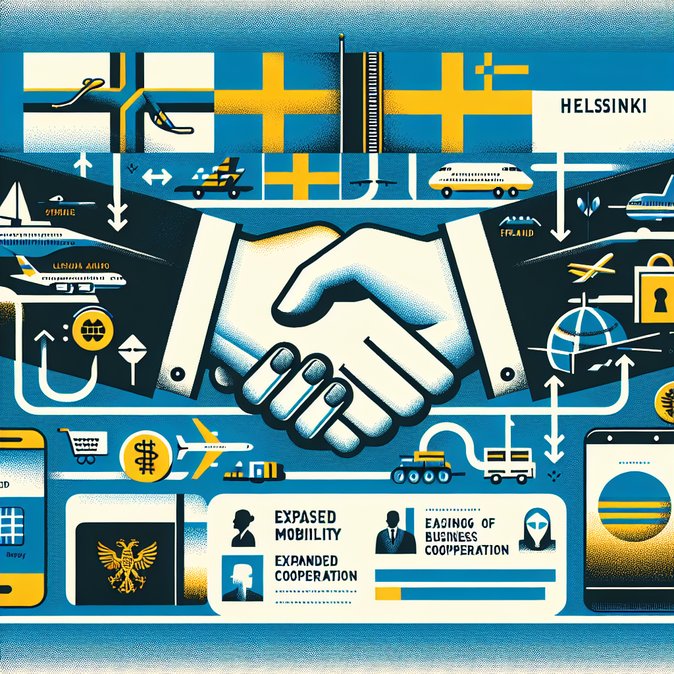
![Swedish foreign minister to visit Finland’s Hanalys forum, mobility cooperation on agenda]()
Also on the table is deeper consular-co-operation: Finland currently represents Sweden in seven African countries, while Sweden issues emergency travel documents for Finns in parts of Latin America. Officials may expand the arrangement to Southeast Asia, easing corporate mobility in secondary markets.
Business travellers looking to stay ahead of these shifting Nordic entry protocols can streamline their planning with VisaHQ. The service’s online portal (https://www.visahq.com/finland/) provides real-time advice on Finnish, Swedish and wider Schengen visa or ETIAS requirements, facilitates document submissions, and offers status alerts—making it easier for companies and individuals alike to adapt as Helsinki and Stockholm roll out new ID and airport procedures.
Although the visit is largely diplomatic, the outcomes could streamline regional business travel and strengthen Nordic influence in upcoming EU negotiations over the Entry/Exit System and the European Travel Information and Authorisation System (ETIAS). Mobility managers with operations in both countries should monitor announcements for practical changes to airport processes and ID requirements.
Finland and Sweden abolished routine passport checks on their internal border in 1954, and business travel between Helsinki and Stockholm is among the densest intra-Nordic corridors, with twelve daily flights plus multiple ferry connections. Both countries are modernising digital ID infrastructure and have pledged to pilot interoperable mobile-ID wallets that could eventually replace physical passports for Nordic citizens.
The ministers are expected to review progress on a joint fast-track lane for frequent business travellers at Helsinki-Vantaa and Stockholm Arlanda airports. The project, launched last year, aims to recognise each other’s trusted-traveller schemes and reduce security-screening time to under five minutes. Pilot operations are slated for late 2026, subject to EU approval.

Also on the table is deeper consular-co-operation: Finland currently represents Sweden in seven African countries, while Sweden issues emergency travel documents for Finns in parts of Latin America. Officials may expand the arrangement to Southeast Asia, easing corporate mobility in secondary markets.
Business travellers looking to stay ahead of these shifting Nordic entry protocols can streamline their planning with VisaHQ. The service’s online portal (https://www.visahq.com/finland/) provides real-time advice on Finnish, Swedish and wider Schengen visa or ETIAS requirements, facilitates document submissions, and offers status alerts—making it easier for companies and individuals alike to adapt as Helsinki and Stockholm roll out new ID and airport procedures.
Although the visit is largely diplomatic, the outcomes could streamline regional business travel and strengthen Nordic influence in upcoming EU negotiations over the Entry/Exit System and the European Travel Information and Authorisation System (ETIAS). Mobility managers with operations in both countries should monitor announcements for practical changes to airport processes and ID requirements.