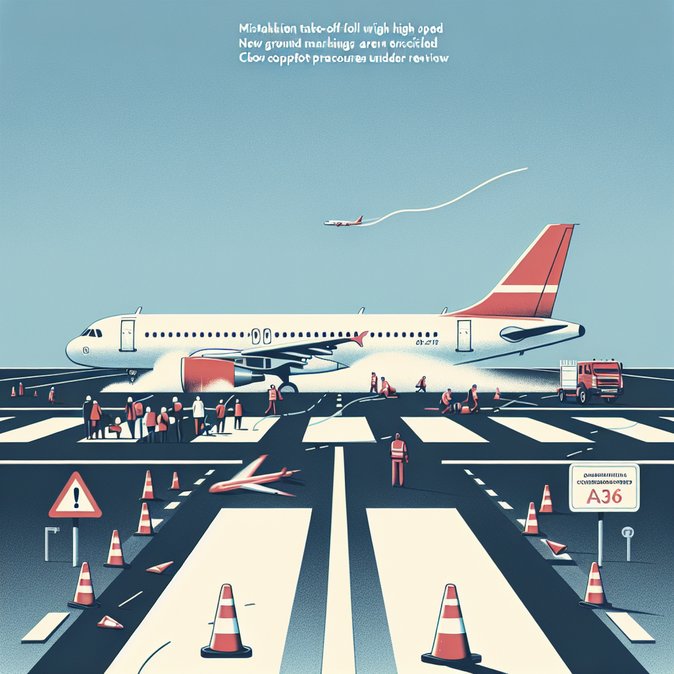
Only three days after an e-gate breakdown, Brussels Airport faced another crisis – this time on the airfield itself. At 21:57 on Thursday, 5 February, Scandinavian Airlines flight SK4748, an Airbus A320neo bound for Copenhagen, accelerated down taxiway E1 instead of the assigned runway 01. According to preliminary data from Belgium’s air-accident investigation unit (AAIU-B), the jet reached almost 200 km/h before the crew aborted the take-off, veering onto grass metres from aviation-fuel storage tanks. All 165 passengers were eventually evacuated without injury, but the aircraft sustained minor tyre and gear damage.
Aviation experts quoted by VRT News and Travel Tomorrow describe the incident as “one of the most serious wrong-surface events in Belgian history.” Initial indications point to pilot confusion compounded by schedule pressure after a lengthy delay. The A320 was not equipped with the optional Runway Awareness Advisory System (RAAS) that provides cockpit alerts when a crew lines up on an incorrect surface – a feature airlines are not currently mandated to fit.
![Runway mix-up at Brussels Airport narrowly avoids catastrophe, prompts safety review]()
Amid such operational uncertainties, VisaHQ can be an invaluable back-office ally: its Belgium portal (https://www.visahq.com/belgium/) enables travelers and mobility teams to secure visas, passport renewals and transit documents online in just a few clicks, helping to minimize stress when flights are suddenly rescheduled or rerouted.
Belgium’s civil-aviation authority has ordered an urgent review of signage, lighting and controller phraseology on the airport’s complex taxiway network, while SAS is auditing crew training records. Brussels Airport Company says additional ‘STOP’ markings will be painted on high-risk taxiway intersections within days.
For corporate mobility managers, the event is a reminder that safety-related disruptions can trigger overnight delays, accommodation costs and re-ticketing headaches. Organisations with time-critical travel to or via Brussels should ensure travellers are enrolled in real-time duty-of-care alert systems and that travel policies allow flexible rebooking when operational incidents occur.
Aviation experts quoted by VRT News and Travel Tomorrow describe the incident as “one of the most serious wrong-surface events in Belgian history.” Initial indications point to pilot confusion compounded by schedule pressure after a lengthy delay. The A320 was not equipped with the optional Runway Awareness Advisory System (RAAS) that provides cockpit alerts when a crew lines up on an incorrect surface – a feature airlines are not currently mandated to fit.
Amid such operational uncertainties, VisaHQ can be an invaluable back-office ally: its Belgium portal (https://www.visahq.com/belgium/) enables travelers and mobility teams to secure visas, passport renewals and transit documents online in just a few clicks, helping to minimize stress when flights are suddenly rescheduled or rerouted.
Belgium’s civil-aviation authority has ordered an urgent review of signage, lighting and controller phraseology on the airport’s complex taxiway network, while SAS is auditing crew training records. Brussels Airport Company says additional ‘STOP’ markings will be painted on high-risk taxiway intersections within days.
For corporate mobility managers, the event is a reminder that safety-related disruptions can trigger overnight delays, accommodation costs and re-ticketing headaches. Organisations with time-critical travel to or via Brussels should ensure travellers are enrolled in real-time duty-of-care alert systems and that travel policies allow flexible rebooking when operational incidents occur.
More From Belgium
View all
Software glitch forces manual passport checks at Brussels Airport, causing hours-long queues

European Parliament to vote this week on ‘safe country’ rules that could reshape asylum processing in Belgium