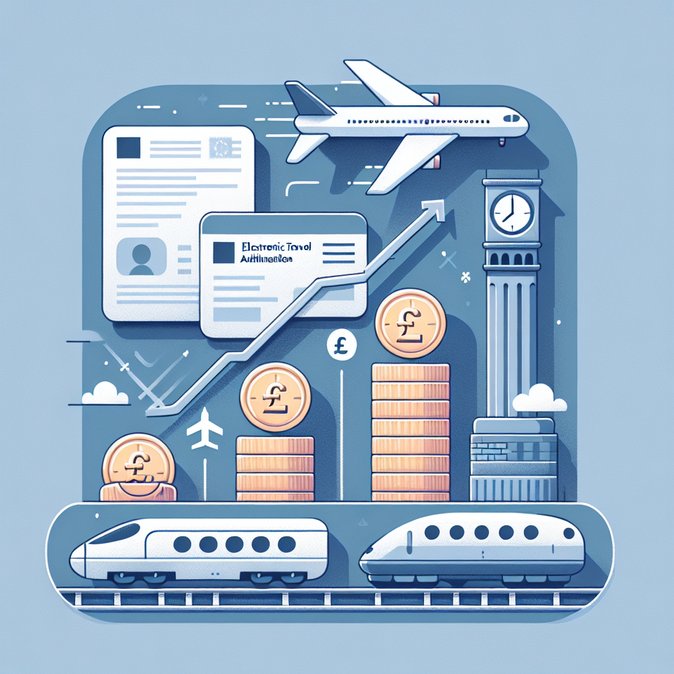
The Home Office has quietly confirmed that the charge for the UK’s new Electronic Travel Authorisation (ETA) will rise by 25 %, from £16 to £20, when full enforcement begins on 25 February 2026. The increase, first reported on 8 February 2026 by industry outlet Travel and Tour World, comes only ten months after the £16 fee was set and just weeks before carriers must adopt a strict “no ETA, no travel” policy.
Under the ETA scheme, nationals who are currently visa-exempt for short stays—including citizens of the EU, United States, Canada and Australia—must obtain digital permission before boarding a flight, ferry or Eurostar train to the UK. Airlines and other carriers will face civil penalties if they carry passengers who require, but do not hold, an ETA. The price rise is intended to offset the escalating cost of biometric vetting, carrier connectivity and the roll-out of the UK’s “digital border”.
For global mobility managers the jump from £16 to £20 is significant in both cost and optics. A family of four visiting on holiday will now pay £80 instead of £64, and a multinational relocating staff for repeated short-term assignments could see hundreds of pounds added to annual travel budgets. Employers must also factor in operational disruption: staff who forget to apply—or who change passports—cannot be checked-in.
![UK Government Confirms 25 % ETA Fee Hike to £20 From Late February]()
Carriers have started updating booking flows to prompt travellers for ETA numbers, but HR teams are advised to issue formal reminders, add ETA fields to travel approval systems, and brief assignees on the 48- to 72-hour processing window. Companies with large volumes of intra-EU travel should review budgets and consider pre-purchasing ETAs where itineraries are known.
VisaHQ’s dedicated UK immigration team can remove much of this administrative burden. Through a single online dashboard (https://www.visahq.com/united-kingdom/) we can file ETA applications in bulk, validate passport data, and send automated reminders so that your travellers receive approvals well before departure—helping organisations control costs and avoid last-minute gate rejections.
The fee hike has already drawn criticism from business groups that argue the move undermines the UK’s competitiveness just as the EU prepares to introduce its own €20 ETIAS waiver. In response, ministers insist the higher charge is needed to maintain security and keep the ETA service “self-funding”, avoiding pressure on general taxation.
Under the ETA scheme, nationals who are currently visa-exempt for short stays—including citizens of the EU, United States, Canada and Australia—must obtain digital permission before boarding a flight, ferry or Eurostar train to the UK. Airlines and other carriers will face civil penalties if they carry passengers who require, but do not hold, an ETA. The price rise is intended to offset the escalating cost of biometric vetting, carrier connectivity and the roll-out of the UK’s “digital border”.
For global mobility managers the jump from £16 to £20 is significant in both cost and optics. A family of four visiting on holiday will now pay £80 instead of £64, and a multinational relocating staff for repeated short-term assignments could see hundreds of pounds added to annual travel budgets. Employers must also factor in operational disruption: staff who forget to apply—or who change passports—cannot be checked-in.

Carriers have started updating booking flows to prompt travellers for ETA numbers, but HR teams are advised to issue formal reminders, add ETA fields to travel approval systems, and brief assignees on the 48- to 72-hour processing window. Companies with large volumes of intra-EU travel should review budgets and consider pre-purchasing ETAs where itineraries are known.
VisaHQ’s dedicated UK immigration team can remove much of this administrative burden. Through a single online dashboard (https://www.visahq.com/united-kingdom/) we can file ETA applications in bulk, validate passport data, and send automated reminders so that your travellers receive approvals well before departure—helping organisations control costs and avoid last-minute gate rejections.
The fee hike has already drawn criticism from business groups that argue the move undermines the UK’s competitiveness just as the EU prepares to introduce its own €20 ETIAS waiver. In response, ministers insist the higher charge is needed to maintain security and keep the ETA service “self-funding”, avoiding pressure on general taxation.