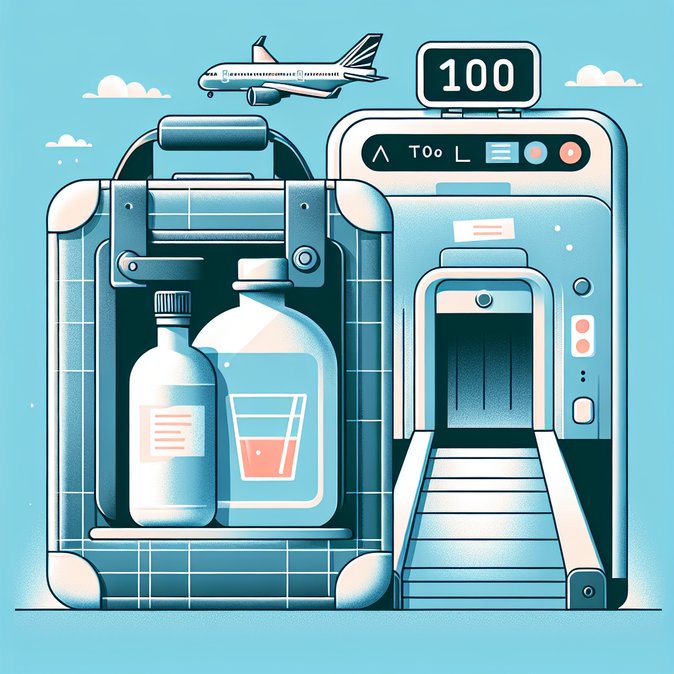
Edinburgh Airport has joined Heathrow, Gatwick, Belfast International and Bristol in lifting the 100 millilitre cabin-liquid limit, Travel and Tour World reported on 8 February 2026. Passengers departing these hubs can now carry up to two litres of liquids, gels and aerosols in hand luggage and leave laptops inside bags, thanks to new 3-D computed-tomography scanners.
The reform is part of a £1 billion national security upgrade that began in 2024. Airports that pass Department for Transport (DfT) compliance tests may relax the old rule immediately; those still awaiting equipment—Manchester, Luton and others—must keep the 100 ml limit.
While sorting out cabin luggage might soon be easier, securing the right travel documents can still be tricky. VisaHQ’s UK portal (https://www.visahq.com/united-kingdom/) lets travellers and corporate mobility teams check visa requirements for over 200 destinations, complete online applications and track approvals in real time—ensuring everyone reaches the departure gate smoothly, whatever security rules apply.
![100 ml Rule Scrapped at More UK Airports as CT Scanners Go Live]()
For business travellers the change promises shorter queues and less time decanting items, but mixed rules across airports risk confusion. Mobility teams should update pre-trip briefings to spell out airport-specific policies and remind staff that inbound connections via an airport still enforcing 100 ml may re-impose the restriction on transfer.
Airports report that the new scanners also reduce manual bag searches, cutting average security-lane dwell time by up to 30 %. UK travel-retail operators expect higher airside sales as travellers feel confident buying larger liquids.
Until the nationwide cut-over—targeted for June 2026—travellers should check each departure airport’s rules and keep liquids accessible in case secondary screening is required.
The reform is part of a £1 billion national security upgrade that began in 2024. Airports that pass Department for Transport (DfT) compliance tests may relax the old rule immediately; those still awaiting equipment—Manchester, Luton and others—must keep the 100 ml limit.
While sorting out cabin luggage might soon be easier, securing the right travel documents can still be tricky. VisaHQ’s UK portal (https://www.visahq.com/united-kingdom/) lets travellers and corporate mobility teams check visa requirements for over 200 destinations, complete online applications and track approvals in real time—ensuring everyone reaches the departure gate smoothly, whatever security rules apply.

For business travellers the change promises shorter queues and less time decanting items, but mixed rules across airports risk confusion. Mobility teams should update pre-trip briefings to spell out airport-specific policies and remind staff that inbound connections via an airport still enforcing 100 ml may re-impose the restriction on transfer.
Airports report that the new scanners also reduce manual bag searches, cutting average security-lane dwell time by up to 30 %. UK travel-retail operators expect higher airside sales as travellers feel confident buying larger liquids.
Until the nationwide cut-over—targeted for June 2026—travellers should check each departure airport’s rules and keep liquids accessible in case secondary screening is required.