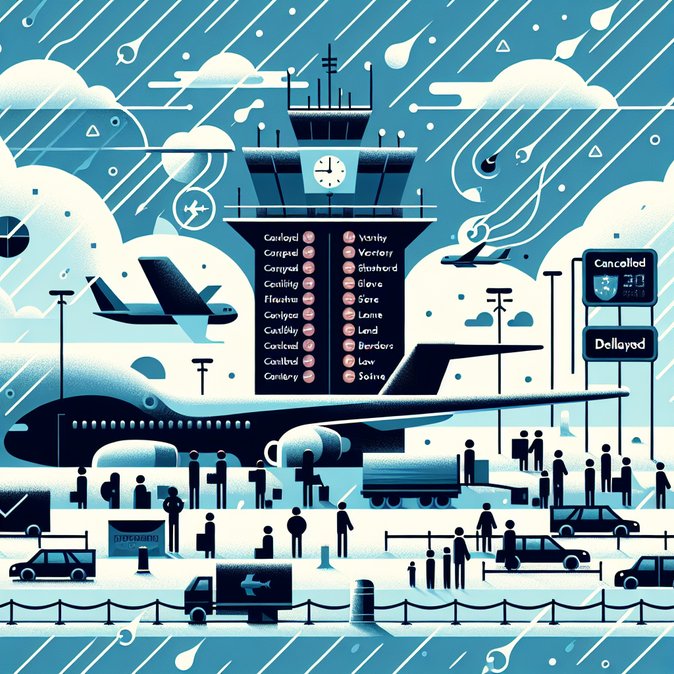
Finland’s aviation network was again under pressure on 8 February as Helsinki-Vantaa recorded delays on 64—or 33 percent—of scheduled flights, part of a continent-wide spike that saw 1,083 delays and 45 cancellations across Europe’s main hubs. The figures, compiled by analytics platform FlightAware and published by Travel and Tour World, show Finnair posting 108 delayed services—the third-highest among European carriers after easyJet and KLM.(travelandtourworld.com)
Unlike the morning’s weather-related ground-stop, afternoon delays were mostly attributed to cascading rotation slippage: aircraft and crews arriving late from storm-affected airports elsewhere in Europe missed their next slots out of Helsinki, while congestion at Paris-CDG, Amsterdam-Schiphol and London-Heathrow created knock-on airborne holding. With slot tolerance tightened under the EU’s post-COVID capacity rules, even minor tardiness is triggering departure-sequence reshuffles that ripple through airlines’ networks.
For mobility professionals the lesson is clear: EMEA duty-of-care plans must now treat widespread delay clusters—not just headline cancellations—as a material risk. A two-hour delay can nullify a 90-day visa-free Schengen stay calculation or push a Tier 2 assignee over maximum daily driving limits under Finnish labour law. Travel managers are therefore revisiting policy buffers and resurrecting “Plan B” rail options for intra-Nordic hops.
![One-Third of Flights Delayed at HEL as Europe Sees 1,083 Hold-ups in a Day]()
Amid these complications, VisaHQ can streamline the administrative side of travel. Through our dedicated Finland page (https://www.visahq.com/finland/), companies and individual flyers can instantly confirm visa rules, calculate remaining Schengen days, and arrange fast-tracked extensions or work-permit filings—crucial safeguards when cascading delays threaten to push a traveller beyond their authorised stay.
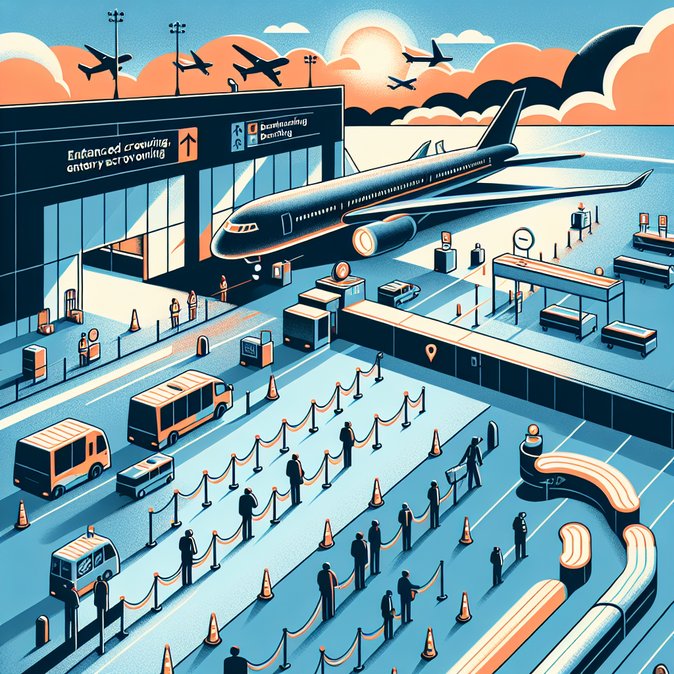
Finnish airports handled the passenger surge relatively smoothly. Finavia activated its overflow seating zones in the new departures extension and provided free Wi-Fi vouchers to stranded travellers—small touches that earned praise on social media. Still, border-control e-gates operating under the new EES reportedly struggled with throughput peaks, prompting the Border Guard to open additional staffed booths.
Industry analysts warn that the day’s statistics foreshadow a volatile late-winter period as staffing constraints, EES teething problems and unpredictable weather collide. Companies with frequent Finland travel should monitor EUROCONTROL’s Network Operations Portal and encourage travellers to use multi-modal journey planners that combine flights with rail and coach alternatives where practical.
Unlike the morning’s weather-related ground-stop, afternoon delays were mostly attributed to cascading rotation slippage: aircraft and crews arriving late from storm-affected airports elsewhere in Europe missed their next slots out of Helsinki, while congestion at Paris-CDG, Amsterdam-Schiphol and London-Heathrow created knock-on airborne holding. With slot tolerance tightened under the EU’s post-COVID capacity rules, even minor tardiness is triggering departure-sequence reshuffles that ripple through airlines’ networks.
For mobility professionals the lesson is clear: EMEA duty-of-care plans must now treat widespread delay clusters—not just headline cancellations—as a material risk. A two-hour delay can nullify a 90-day visa-free Schengen stay calculation or push a Tier 2 assignee over maximum daily driving limits under Finnish labour law. Travel managers are therefore revisiting policy buffers and resurrecting “Plan B” rail options for intra-Nordic hops.
Amid these complications, VisaHQ can streamline the administrative side of travel. Through our dedicated Finland page (https://www.visahq.com/finland/), companies and individual flyers can instantly confirm visa rules, calculate remaining Schengen days, and arrange fast-tracked extensions or work-permit filings—crucial safeguards when cascading delays threaten to push a traveller beyond their authorised stay.
Finnish airports handled the passenger surge relatively smoothly. Finavia activated its overflow seating zones in the new departures extension and provided free Wi-Fi vouchers to stranded travellers—small touches that earned praise on social media. Still, border-control e-gates operating under the new EES reportedly struggled with throughput peaks, prompting the Border Guard to open additional staffed booths.
Industry analysts warn that the day’s statistics foreshadow a volatile late-winter period as staffing constraints, EES teething problems and unpredictable weather collide. Companies with frequent Finland travel should monitor EUROCONTROL’s Network Operations Portal and encourage travellers to use multi-modal journey planners that combine flights with rail and coach alternatives where practical.