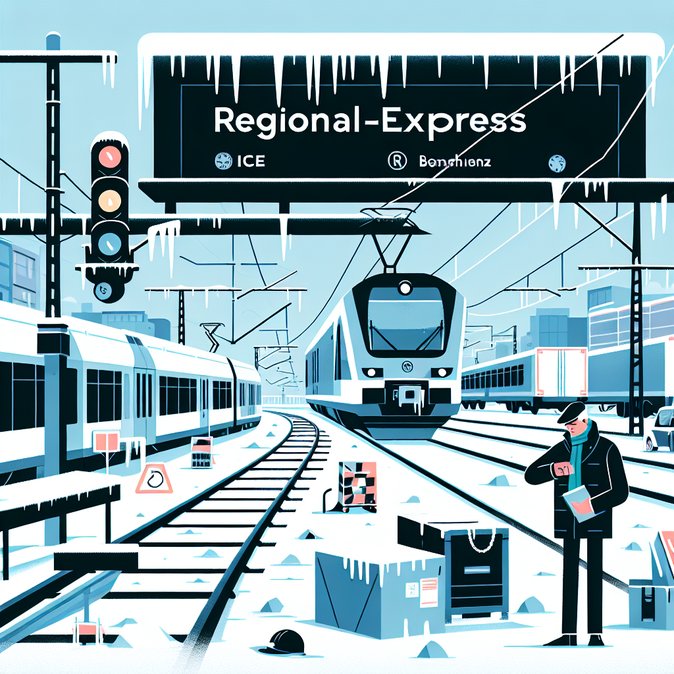
Deutsche Bahn warned on 8 February that regional rail services in Berlin, Brandenburg and parts of Mecklenburg-Vorpommern will remain curtailed at least until Sunday as persistent freezing rain continues to glaze overhead power lines. Critical commuter and business routes such as the RE7 are skipping central-Berlin stops and running via diversionary tracks between Wannsee and Ostkreuz, while the RE30 faces outright cancellations between Stralsund and Angermünde.(welt.de)
The latest advisory extends a week-long period of winter-weather disruption that has already pushed punctuality rates on some lines below 50 %. For mobile employees shuttling between Berlin’s tech clusters and industrial sites in Brandenburg, the reduced timetable translates into longer door-to-door journeys and crowded replacement buses.
For international travellers whose plans are suddenly upended by these rail disruptions, VisaHQ can help smooth the administrative side of an unexpected detour or extended stay. Whether you need to amend a Schengen visa, secure a transit document for routing through a neighbouring country, or simply clarify entry requirements, the service’s dedicated Germany page (https://www.visahq.com/germany/) gathers the latest embassy rules and offers expedited processing options—crucial when rail delays leave little margin for paperwork.
![Ice-laden power lines keep regional trains off-schedule in Berlin-Brandenburg corridor]()
Logistics experts caution that the rail bottlenecks have secondary impacts: parcels and air-cargo transfers that rely on “last mile” rail shuttles from BER and Leipzig airports are taking longer, forcing some forwarders to shift to road transport. That, in turn, compounds congestion on the A10 ring road, already strained by holiday traffic.
Deutsche Bahn says crews are working “around the clock” to clear ice from catenaries, but temperatures hovering just below freezing hamper progress. Business travellers are advised to build generous buffers into Monday-morning itineraries or consider remote-work alternatives.
The episode underscores Germany’s broader infrastructure resilience challenge. Climate-modelling suggests more frequent freeze-thaw cycles in northern Europe, meaning operators may have to invest in heated catenary sections or deploy more ice-crushing maintenance trains in future winters.
The latest advisory extends a week-long period of winter-weather disruption that has already pushed punctuality rates on some lines below 50 %. For mobile employees shuttling between Berlin’s tech clusters and industrial sites in Brandenburg, the reduced timetable translates into longer door-to-door journeys and crowded replacement buses.
For international travellers whose plans are suddenly upended by these rail disruptions, VisaHQ can help smooth the administrative side of an unexpected detour or extended stay. Whether you need to amend a Schengen visa, secure a transit document for routing through a neighbouring country, or simply clarify entry requirements, the service’s dedicated Germany page (https://www.visahq.com/germany/) gathers the latest embassy rules and offers expedited processing options—crucial when rail delays leave little margin for paperwork.

Logistics experts caution that the rail bottlenecks have secondary impacts: parcels and air-cargo transfers that rely on “last mile” rail shuttles from BER and Leipzig airports are taking longer, forcing some forwarders to shift to road transport. That, in turn, compounds congestion on the A10 ring road, already strained by holiday traffic.
Deutsche Bahn says crews are working “around the clock” to clear ice from catenaries, but temperatures hovering just below freezing hamper progress. Business travellers are advised to build generous buffers into Monday-morning itineraries or consider remote-work alternatives.
The episode underscores Germany’s broader infrastructure resilience challenge. Climate-modelling suggests more frequent freeze-thaw cycles in northern Europe, meaning operators may have to invest in heated catenary sections or deploy more ice-crushing maintenance trains in future winters.