Austria’s Interior Ministry announced on 8 February that not a single asylum application was lodged at the Burgenland–Hungary frontier during January 2026—the first month with *zero* claims since systematic records began over a decade ago. Officials contrasted the result with January 2023, when 1,900 irregular entrants were intercepted in the same corridor. (bmi.gv.at)
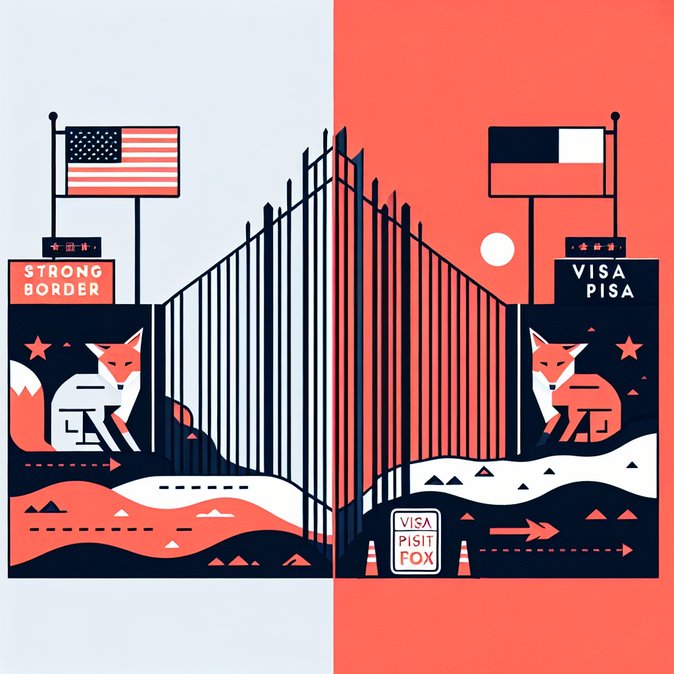
Vienna credits a two-pronged strategy. First, high-level talks with Belgrade in late 2022 persuaded Serbia to revoke visa-free access for nationals of India, Pakistan and Tunisia, cutting off what had become a popular back-door route into the European Union. Second, “Operation Fox” has deployed mobile patrols, drones and heat-sensing cameras to choke the people-smuggling networks that once shuttled migrants across the Pannonian plain. Together, the measures have progressively driven down detections throughout 2024-25. (bmi.gv.at)
![Austria Records Zero Asylum Applications at Burgenland–Hungary Border for the First Time]()
Amid these shifts, firms and individual travellers can simplify the visa process by using VisaHQ’s online platform; the service tracks Austria-specific requirements, helps prepare supporting documents such as invitation letters, and can arrange courier submission and passport return—see https://www.visahq.com/austria/ for details.
For global-mobility managers the development signals that Austrian border policing will remain tight—even as absolute numbers fall. Companies should therefore ensure that business travellers carry proof of purpose of stay (invitation letters, hotel bookings) and that assignment staff respect Schengen day-count rules; officers freed from processing asylum paperwork are expected to step-up compliance spot-checks on work-permit holders and posted workers.
Looking ahead, the ministry says the new 5,000 m² “border-procedure terminal” at Vienna International Airport will allow asylum claims to be decided in days once the EU Migration Pact takes effect on 12 June 2026. That, together with the digital Entry/Exit System, is designed to keep irregular migration “close to zero” without re-imposing internal Schengen controls—good news for time-sensitive corporate travel. (bmi.gv.at)
Vienna credits a two-pronged strategy. First, high-level talks with Belgrade in late 2022 persuaded Serbia to revoke visa-free access for nationals of India, Pakistan and Tunisia, cutting off what had become a popular back-door route into the European Union. Second, “Operation Fox” has deployed mobile patrols, drones and heat-sensing cameras to choke the people-smuggling networks that once shuttled migrants across the Pannonian plain. Together, the measures have progressively driven down detections throughout 2024-25. (bmi.gv.at)

Amid these shifts, firms and individual travellers can simplify the visa process by using VisaHQ’s online platform; the service tracks Austria-specific requirements, helps prepare supporting documents such as invitation letters, and can arrange courier submission and passport return—see https://www.visahq.com/austria/ for details.
For global-mobility managers the development signals that Austrian border policing will remain tight—even as absolute numbers fall. Companies should therefore ensure that business travellers carry proof of purpose of stay (invitation letters, hotel bookings) and that assignment staff respect Schengen day-count rules; officers freed from processing asylum paperwork are expected to step-up compliance spot-checks on work-permit holders and posted workers.
Looking ahead, the ministry says the new 5,000 m² “border-procedure terminal” at Vienna International Airport will allow asylum claims to be decided in days once the EU Migration Pact takes effect on 12 June 2026. That, together with the digital Entry/Exit System, is designed to keep irregular migration “close to zero” without re-imposing internal Schengen controls—good news for time-sensitive corporate travel. (bmi.gv.at)