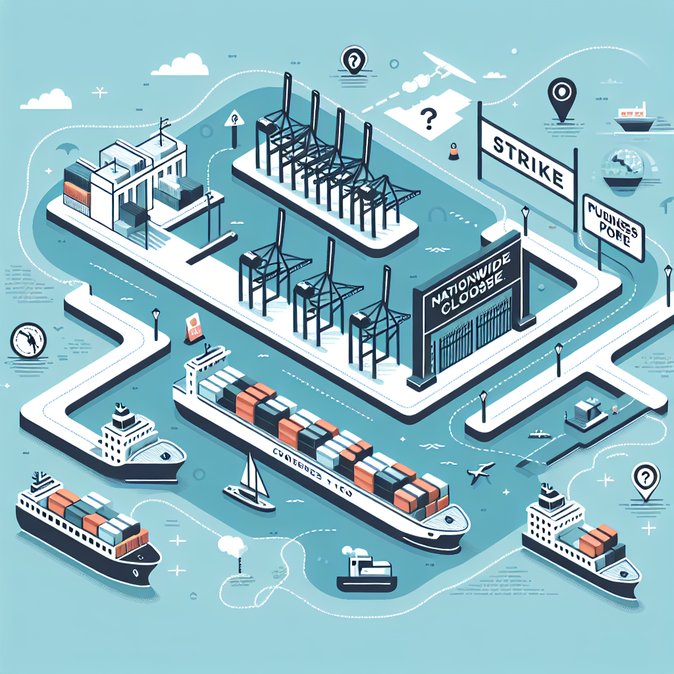
Italian logistics faced fresh turbulence today (6 February) as the USB Lavoro Privato union launched a 24-hour national strike covering all port authorities and private stevedoring companies. The industrial action – rooted in stalled contract negotiations under Articles 16-18 of the Ports Collective Agreement – halts cargo handling and passenger-ferry operations at major gateways such as Genoa, Trieste, Naples and Palermo. (striketracker.app)
While passenger volumes in February are low, the stoppage hits time-sensitive sectors: automotive imports via Livorno, perishables through Gioia Tauro, and cruise-ship provisioning in Civitavecchia. Companies moving project cargo for Milan-Cortina Olympic construction also report delays in clearing machinery.
![Nation-Wide 24-Hour Port Strike Disrupts Cargo and Ferry Traffic across Italy]()
For travelers and international assignees who suddenly need to re-route through alternative Schengen gateways or shift itinerary dates because of the strike, VisaHQ can streamline the process of updating or obtaining the necessary Italian or Schengen visas entirely online, often without a visit to the consulate. The service—accessible at https://www.visahq.com/italy/—offers real-time status tracking and expert support, helping minimize administrative friction while logistics schedules remain in flux.
Travellers using overnight ferries to Sardinia and Sicily face potential cancellations or schedule changes. Under Italian strike law, minimum services apply, but operators confirm only one round-trip per route is guaranteed. Freight forwarders are advising shippers to reroute via French or Slovenian ports or to hold consignments in bonded warehouses until 7 February.
The port stoppage coincides with multiple regional bus and highway strikes, underscoring an uptick in transport-sector unrest ahead of a national air-transport walk-out announced for 16 February. Mobility managers should build extra transit time into supply-chain schedules, alert assignees to possible ferry disruptions, and monitor further strike proclamations on the Ministry of Infrastructure website.
While passenger volumes in February are low, the stoppage hits time-sensitive sectors: automotive imports via Livorno, perishables through Gioia Tauro, and cruise-ship provisioning in Civitavecchia. Companies moving project cargo for Milan-Cortina Olympic construction also report delays in clearing machinery.

For travelers and international assignees who suddenly need to re-route through alternative Schengen gateways or shift itinerary dates because of the strike, VisaHQ can streamline the process of updating or obtaining the necessary Italian or Schengen visas entirely online, often without a visit to the consulate. The service—accessible at https://www.visahq.com/italy/—offers real-time status tracking and expert support, helping minimize administrative friction while logistics schedules remain in flux.
Travellers using overnight ferries to Sardinia and Sicily face potential cancellations or schedule changes. Under Italian strike law, minimum services apply, but operators confirm only one round-trip per route is guaranteed. Freight forwarders are advising shippers to reroute via French or Slovenian ports or to hold consignments in bonded warehouses until 7 February.
The port stoppage coincides with multiple regional bus and highway strikes, underscoring an uptick in transport-sector unrest ahead of a national air-transport walk-out announced for 16 February. Mobility managers should build extra transit time into supply-chain schedules, alert assignees to possible ferry disruptions, and monitor further strike proclamations on the Ministry of Infrastructure website.