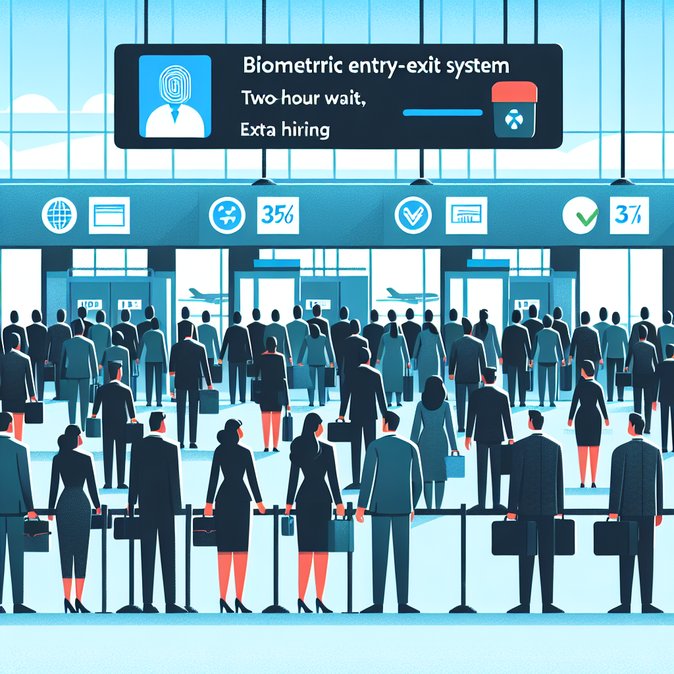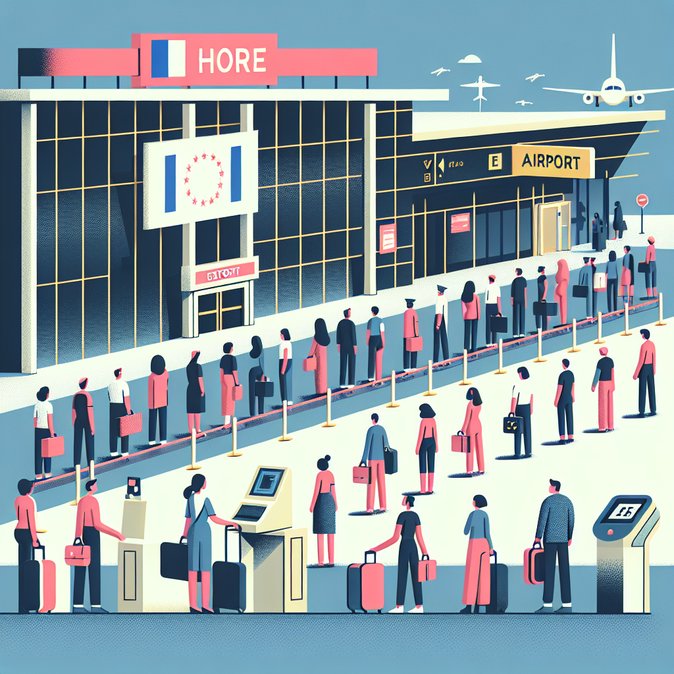
French border-control teams have sounded the alarm over the pace at which the European Union’s new Entry-Exit System (EES) is being ramped up. Since its ‘soft-launch’ in October 2025, only 35 % of third-country travellers are being registered but the legal obligation rises to 100 % on 10 April. Paris-Charles-de-Gaulle, Orly, Nice and Lyon have already recorded peaks of three-hour waits on busy weekends, despite France suspending full EES processing at several crossing points in order to keep queues moving.
Airport operators, airlines and travel associations told the European Commission this week that the combination of chronic staffing shortages and full biometric capture (four fingerprints and a live facial image) risks “five-hour lines” during the July–August holiday rush. Aéroports de Paris (ADP) estimates that enrolment adds 45–60 seconds per passenger—manageable off-season but devastating at a hub that can process 225,000 passengers a day.
Behind the scenes, France is lobbying Brussels for flexibility similar to the derogations granted during the Schengen Covid closures. Options on the table include: capping daily enrolment targets, allowing manual spot-checks instead of full biometric capture, and permitting temporary suspensions when wait-times exceed two hours. Border-police unions back the idea, warning that morale is already low after the 2024 Olympic surge in traffic.
![French Airports Brace for Summer Queues as EU Biometric Checks Expand]()
Travel coordinators who need hands-on assistance with these shifting requirements can lean on VisaHQ’s France resource centre (https://www.visahq.com/france/). The platform tracks EES rule changes in real time, offers proactive alerts for enrolment deadlines and provides expedited document reviews—services that can minimise surprises at French border checkpoints.
For corporate mobility managers the immediate advice is to pad connection windows, brief assignees on what to expect at first entry, and consider routing via secondary hubs such as Toulouse or Bordeaux, where passenger volumes are lower. Companies that rely on employee shuttles through the Channel Tunnel should also watch Eurotunnel’s readiness tests; software integration with French police databases is running “several weeks late,” according to industry sources.
In the medium term, once travellers are enrolled, re-entry will be quicker than the current manual stamping, and France expects to reopen its PARAFE e-gates to residence-permit holders by autumn 2026. Until then, however, contingency planning remains essential.
Airport operators, airlines and travel associations told the European Commission this week that the combination of chronic staffing shortages and full biometric capture (four fingerprints and a live facial image) risks “five-hour lines” during the July–August holiday rush. Aéroports de Paris (ADP) estimates that enrolment adds 45–60 seconds per passenger—manageable off-season but devastating at a hub that can process 225,000 passengers a day.
Behind the scenes, France is lobbying Brussels for flexibility similar to the derogations granted during the Schengen Covid closures. Options on the table include: capping daily enrolment targets, allowing manual spot-checks instead of full biometric capture, and permitting temporary suspensions when wait-times exceed two hours. Border-police unions back the idea, warning that morale is already low after the 2024 Olympic surge in traffic.

Travel coordinators who need hands-on assistance with these shifting requirements can lean on VisaHQ’s France resource centre (https://www.visahq.com/france/). The platform tracks EES rule changes in real time, offers proactive alerts for enrolment deadlines and provides expedited document reviews—services that can minimise surprises at French border checkpoints.
For corporate mobility managers the immediate advice is to pad connection windows, brief assignees on what to expect at first entry, and consider routing via secondary hubs such as Toulouse or Bordeaux, where passenger volumes are lower. Companies that rely on employee shuttles through the Channel Tunnel should also watch Eurotunnel’s readiness tests; software integration with French police databases is running “several weeks late,” according to industry sources.
In the medium term, once travellers are enrolled, re-entry will be quicker than the current manual stamping, and France expects to reopen its PARAFE e-gates to residence-permit holders by autumn 2026. Until then, however, contingency planning remains essential.