Finland will continue its longstanding humanitarian resettlement programme next year, after the government confirmed on 6 February 2026 that it will admit 500 quota refugees in 2026, the same overall ceiling applied in 2024 and 2025.
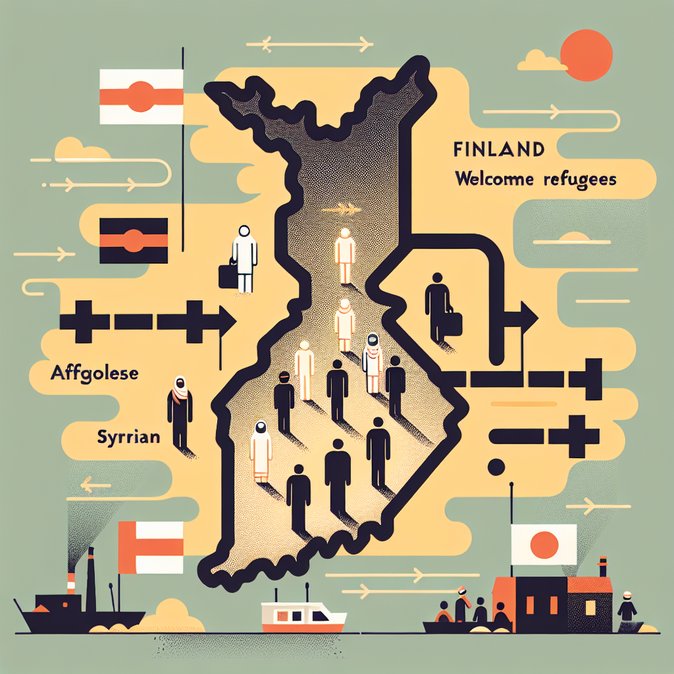
According to the Ministry of the Interior, the quota will focus on the following groups: 150 Afghan refugees currently in Iran; 120 Congolese refugees in Rwanda; 100 Syrian refugees living in Turkey; and 50 Venezuelan refugees hosted by Peru. An additional 30 places are reserved for people evacuated from Libya to Rwanda under UNHCR’s Emergency Transit Mechanism, while 50 places remain flexible for urgent protection cases of any nationality. Selection will be made during field missions, where Finnish officials interview candidates to confirm protection needs, security background and integration prospects. (dailyfinland.fi)
Finland was one of the first EU countries to introduce a fixed annual quota in the 1980s. Although small compared with the 1 000-person ceiling applied a decade ago, the scheme is politically significant: it guarantees a legal, orderly pathway for the most vulnerable and enables municipalities to plan integration services in advance. Once in Finland, quota refugees receive residence permits on arrival, immediate access to social security, and tailored integration plans that include Finnish or Swedish language training, employment coaching and trauma-informed health care.
![Finland Confirms 2026 Refugee Quota of 500 and Sets Country-by-Country Allocations]()
While the quota system concerns refugees rather than ordinary travellers, many stakeholders—government officers on selection missions, NGO staff, and corporate partners setting up apprenticeship programmes—still need to organise swift entry to Finland. VisaHQ’s dedicated Finland portal (https://www.visahq.com/finland/) simplifies that process by providing real-time visa requirements, document checklists and submission support, helping ensure that all personnel arrive on schedule without administrative headaches.
For employers, the quota matters in two ways. First, successful labour-market integration of resettled refugees can expand the talent pool in sectors facing chronic shortages, from health care to industrial welding. Second, positive public perceptions of managed humanitarian admissions can ease the way for future policy proposals that link protection with skills-based visas, such as Finland’s “Talent Boost” programme.
Practical implications: regional authorities have roughly four months to confirm how many refugees they can host and to reserve places in integration training. Companies engaged in public-private partnerships for language-linked apprenticeships should signal interest early. NGOs that help with housing and community mentoring can expect funding calls before the summer budget adjustment. Finally, business travellers and corporate mobility teams should note that quota admissions do not affect normal residence-permit processing capacity at Migri, which operates separate work-permit and resettlement units.
According to the Ministry of the Interior, the quota will focus on the following groups: 150 Afghan refugees currently in Iran; 120 Congolese refugees in Rwanda; 100 Syrian refugees living in Turkey; and 50 Venezuelan refugees hosted by Peru. An additional 30 places are reserved for people evacuated from Libya to Rwanda under UNHCR’s Emergency Transit Mechanism, while 50 places remain flexible for urgent protection cases of any nationality. Selection will be made during field missions, where Finnish officials interview candidates to confirm protection needs, security background and integration prospects. (dailyfinland.fi)
Finland was one of the first EU countries to introduce a fixed annual quota in the 1980s. Although small compared with the 1 000-person ceiling applied a decade ago, the scheme is politically significant: it guarantees a legal, orderly pathway for the most vulnerable and enables municipalities to plan integration services in advance. Once in Finland, quota refugees receive residence permits on arrival, immediate access to social security, and tailored integration plans that include Finnish or Swedish language training, employment coaching and trauma-informed health care.

While the quota system concerns refugees rather than ordinary travellers, many stakeholders—government officers on selection missions, NGO staff, and corporate partners setting up apprenticeship programmes—still need to organise swift entry to Finland. VisaHQ’s dedicated Finland portal (https://www.visahq.com/finland/) simplifies that process by providing real-time visa requirements, document checklists and submission support, helping ensure that all personnel arrive on schedule without administrative headaches.
For employers, the quota matters in two ways. First, successful labour-market integration of resettled refugees can expand the talent pool in sectors facing chronic shortages, from health care to industrial welding. Second, positive public perceptions of managed humanitarian admissions can ease the way for future policy proposals that link protection with skills-based visas, such as Finland’s “Talent Boost” programme.
Practical implications: regional authorities have roughly four months to confirm how many refugees they can host and to reserve places in integration training. Companies engaged in public-private partnerships for language-linked apprenticeships should signal interest early. NGOs that help with housing and community mentoring can expect funding calls before the summer budget adjustment. Finally, business travellers and corporate mobility teams should note that quota admissions do not affect normal residence-permit processing capacity at Migri, which operates separate work-permit and resettlement units.