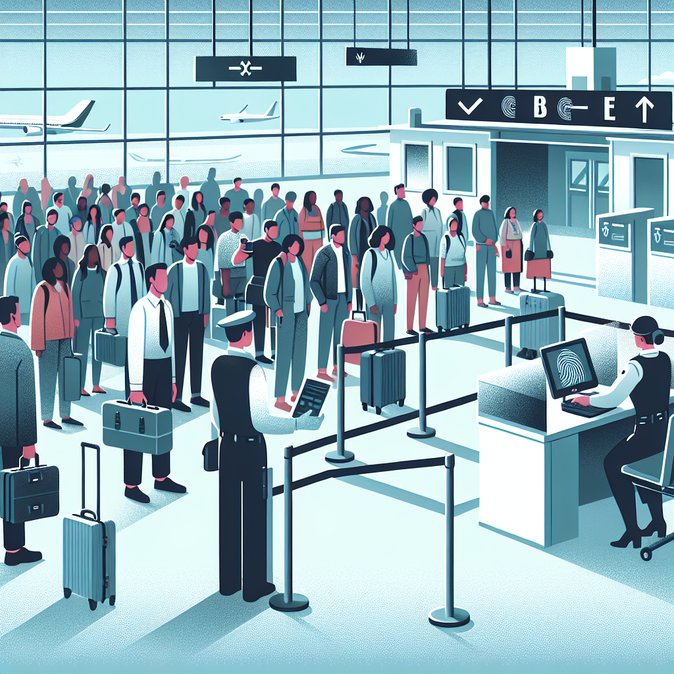
Italy’s two busiest gateways—Rome Fiumicino and Milan Malpensa—are bracing for an unprecedented stress-test this summer as the European Union’s new Entry/Exit System (EES) moves from partial to full operation on 10 April 2026. Since October the scheme has required border officers to register the fingerprints and facial image of non-EU travellers on their first entry into the Schengen Area, replacing the old passport-stamp routine. During the winter trial period only 35 per cent of passengers had to complete the process; over Easter the share rises to 100 per cent.
Trade bodies ACI Europe, Airlines for Europe and Britain’s ABTA told the Guardian that queues at Italian, French and Spanish airports have already stretched to three hours when just one in three passengers were enrolled. With throughput about to triple they fear “five-hour bottlenecks” unless the Commission allows member states to stagger implementation or temporarily switch the system off at peak times. Fiumicino’s border police say they would need at least 90 additional officers and 60 extra kiosks to keep wait times under one hour—resources that are not in the current budget.
Travellers anxious about getting their paperwork right before facing the tougher EES checks can simplify preparations by using VisaHQ’s online platform. The service lets non-EU visitors review Italy’s visa rules, complete applications and arrange secure passport deliveries in one place, cutting the risk of surprises at Fiumicino or Malpensa. See https://www.visahq.com/italy/ for details.
![Airports warn EU biometric border checks could choke Italy’s summer traffic]()
Italian tour operators worry that images of chaotic passport halls could deter long-haul visitors at the very moment the country hopes to capture pent-up demand linked to the Milano-Cortina 2026 Olympics. Alitalia’s successor ITA Airways has asked ENAC, the civil-aviation regulator, to coordinate slot-spacing over the May–September period so that wide-body arrivals are spread more evenly across the day.
The Interior Ministry confirmed it has the legal right to invoke a 90-day suspension of EES under a new "safety-valve" clause, but said any decision would be taken only "in extremis" and in concert with other Schengen states. A working group with airport operators and the police is due to present contingency plans to the cabinet by 1 March.
For corporate mobility managers the message is clear: build in longer connection times, pre-warn assignees about fingerprinting, and consider rerouting via Zurich or Vienna—two hubs that have opted for aggressive staffing and have, so far, kept queues below 30 minutes.
Trade bodies ACI Europe, Airlines for Europe and Britain’s ABTA told the Guardian that queues at Italian, French and Spanish airports have already stretched to three hours when just one in three passengers were enrolled. With throughput about to triple they fear “five-hour bottlenecks” unless the Commission allows member states to stagger implementation or temporarily switch the system off at peak times. Fiumicino’s border police say they would need at least 90 additional officers and 60 extra kiosks to keep wait times under one hour—resources that are not in the current budget.
Travellers anxious about getting their paperwork right before facing the tougher EES checks can simplify preparations by using VisaHQ’s online platform. The service lets non-EU visitors review Italy’s visa rules, complete applications and arrange secure passport deliveries in one place, cutting the risk of surprises at Fiumicino or Malpensa. See https://www.visahq.com/italy/ for details.
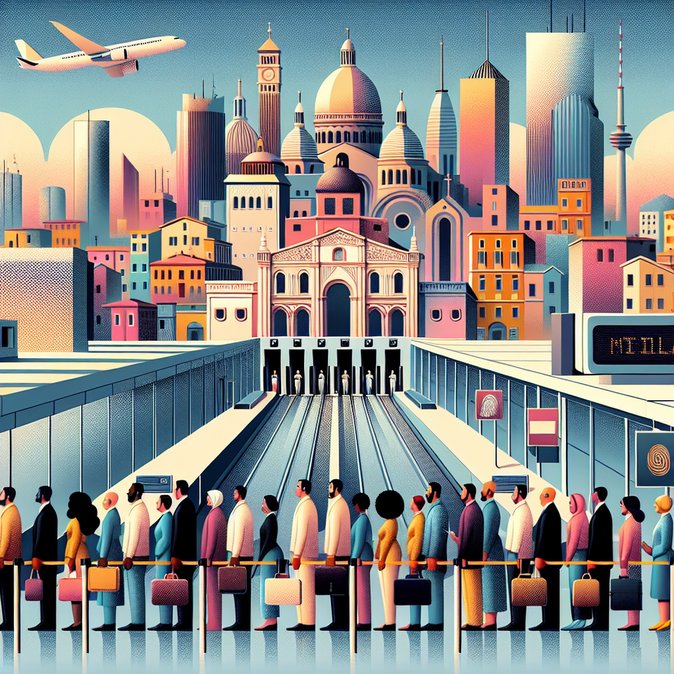
Italian tour operators worry that images of chaotic passport halls could deter long-haul visitors at the very moment the country hopes to capture pent-up demand linked to the Milano-Cortina 2026 Olympics. Alitalia’s successor ITA Airways has asked ENAC, the civil-aviation regulator, to coordinate slot-spacing over the May–September period so that wide-body arrivals are spread more evenly across the day.
The Interior Ministry confirmed it has the legal right to invoke a 90-day suspension of EES under a new "safety-valve" clause, but said any decision would be taken only "in extremis" and in concert with other Schengen states. A working group with airport operators and the police is due to present contingency plans to the cabinet by 1 March.
For corporate mobility managers the message is clear: build in longer connection times, pre-warn assignees about fingerprinting, and consider rerouting via Zurich or Vienna—two hubs that have opted for aggressive staffing and have, so far, kept queues below 30 minutes.