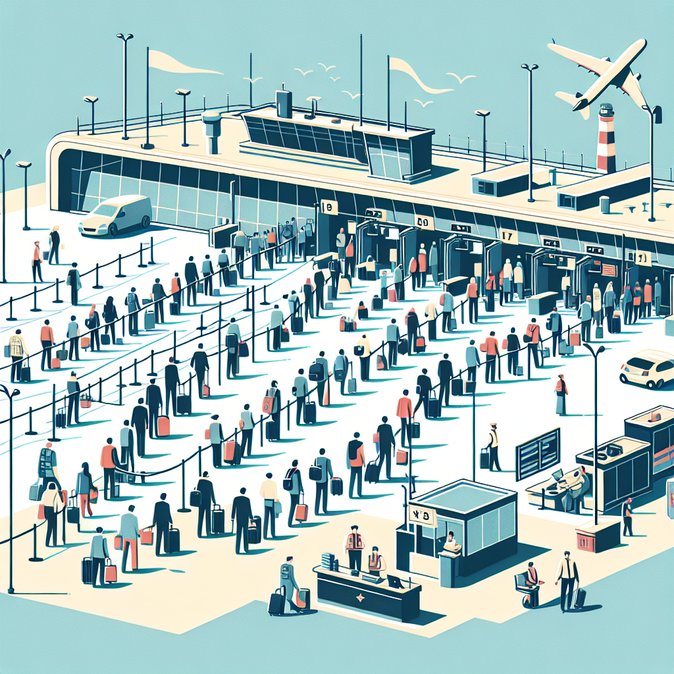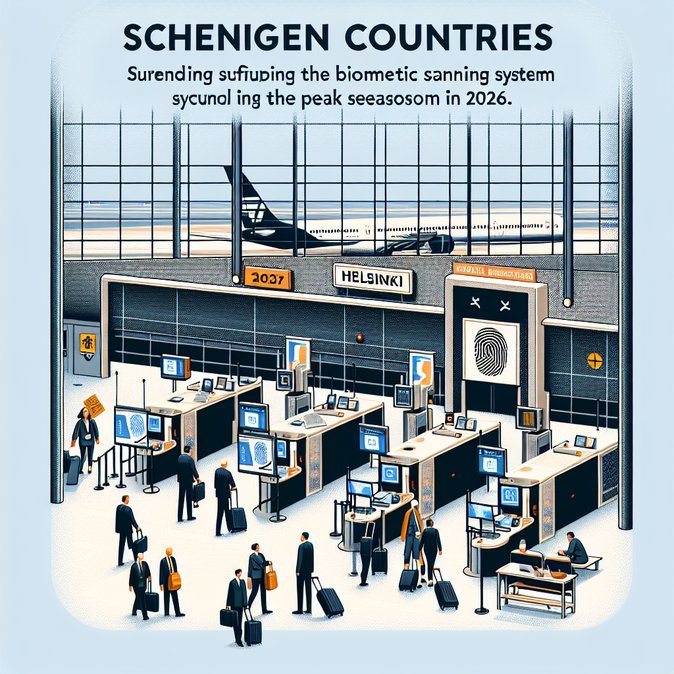
The Times reported on 4 February that the European Commission has **officially set the fee for the European Travel Information and Authorisation System (ETIAS) at €20**, nearly triple the €7 amount originally agreed in 2018. ETIAS will apply to visa-exempt visitors—including Finns travelling to non-Schengen Cyprus and to Ireland—as well as to third-country nationals heading to Finland, when the scheme goes live in the last quarter of 2026. (thetimes.com)
Under the final rules, travellers aged 18-70 will pay the fee; minors and seniors are exempt but must still obtain authorisation. The electronic permit will be valid for three years (or until passport expiry) and, once active, will be a pre-requisite for boarding an aircraft, ferry or coach bound for the Schengen Area. Most applications should be approved within minutes, but security “hits” could trigger manual reviews of up to 30 days.
For Finnish multinationals, the impact will be two-fold. First, staff based in Finland who travel frequently to meetings in Dublin or to company sites in non-EU Western Balkans states will need to budget for new costs and processing times. Second, HR teams must track ETIAS status for inbound business visitors and rotational assignees from visa-waiver countries such as the United States, Japan and the United Kingdom.
![€20 ETIAS fee confirmed ahead of 2026 launch—Finnish travellers and employers urged to plan budgets now]()
For organisations and leisure travellers seeking practical assistance, VisaHQ’s Finland portal (https://www.visahq.com/finland/) provides an end-to-end ETIAS preparation and submission service. Users benefit from clear checklists, automated reminders and real-time status tracking, helping both HR departments and individual flyers stay compliant without added hassle.
Although ETIAS is **not a visa**, it sits alongside the EES and will feed travellers’ data into EU security databases. Firms that rely on just-in-time deployment of specialist technicians should therefore incorporate ETIAS lead times into project plans and ensure that third-party travel-booking tools capture ETIAS numbers once issued.
The Commission says it will run a six-month transition period followed by a six-month grace period before airlines face fines for carrying passengers without an ETIAS. Mobility managers are advised to update travel-policy handbooks, earmark budget for the new fee, and communicate early with frequent flyers to avoid last-minute surprises in 2027.
Under the final rules, travellers aged 18-70 will pay the fee; minors and seniors are exempt but must still obtain authorisation. The electronic permit will be valid for three years (or until passport expiry) and, once active, will be a pre-requisite for boarding an aircraft, ferry or coach bound for the Schengen Area. Most applications should be approved within minutes, but security “hits” could trigger manual reviews of up to 30 days.
For Finnish multinationals, the impact will be two-fold. First, staff based in Finland who travel frequently to meetings in Dublin or to company sites in non-EU Western Balkans states will need to budget for new costs and processing times. Second, HR teams must track ETIAS status for inbound business visitors and rotational assignees from visa-waiver countries such as the United States, Japan and the United Kingdom.

For organisations and leisure travellers seeking practical assistance, VisaHQ’s Finland portal (https://www.visahq.com/finland/) provides an end-to-end ETIAS preparation and submission service. Users benefit from clear checklists, automated reminders and real-time status tracking, helping both HR departments and individual flyers stay compliant without added hassle.
Although ETIAS is **not a visa**, it sits alongside the EES and will feed travellers’ data into EU security databases. Firms that rely on just-in-time deployment of specialist technicians should therefore incorporate ETIAS lead times into project plans and ensure that third-party travel-booking tools capture ETIAS numbers once issued.
The Commission says it will run a six-month transition period followed by a six-month grace period before airlines face fines for carrying passengers without an ETIAS. Mobility managers are advised to update travel-policy handbooks, earmark budget for the new fee, and communicate early with frequent flyers to avoid last-minute surprises in 2027.