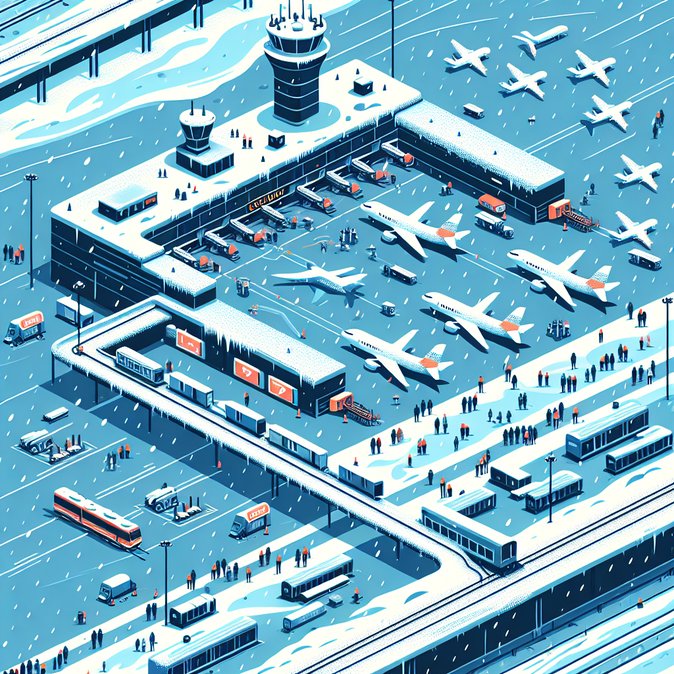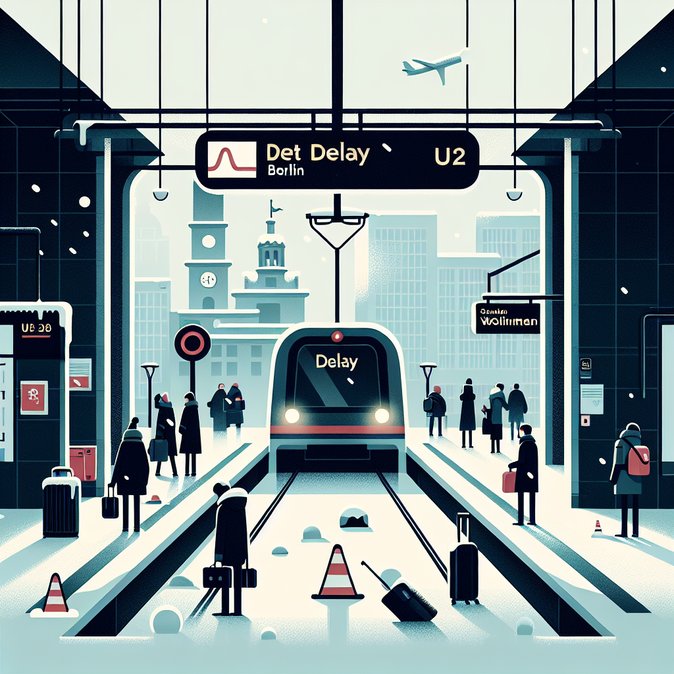
As Berliners struggled with grounded flights at BER, commuters inside the capital faced their own mobility headache when the U-Bahn operator BVG suspended service on key sections of the U2 line on the morning of 5 February. Above-ground track segments between Wittenbergplatz and Potsdamer Platz as well as between Rosa-Luxemburg-Platz and Pankow were closed after overnight ice storms froze moving track components and platform edges. (welt.de)
The shutdown hit one of the city’s most heavily travelled corridors, linking government ministries, media headquarters and tourist sites. BVG deployed replacement buses but warned that Berlin’s surface streets were themselves slick with black ice, leading to delays of up to 40 minutes. The disruptions followed a week-long series of weather-related outages that have already forced companies to expand remote-work allowances and reschedule client meetings.
In that context, VisaHQ can provide a useful safety net: its Berlin-focused portal (https://www.visahq.com/germany/) lets travellers, expatriates and HR managers arrange German visas, residence-permit extensions and Schengen renewals at short notice, cushioning the impact of sudden schedule changes brought on by weather or transport disruptions.
![Icy conditions cut U2 subway line in Berlin, compounding commuter woes after airport closure]()
From a global-mobility perspective the incident underscores how domestic transport reliability can cascade into international travel risks. Several travellers who had re-booked from cancelled flights at BER to trains departing Hauptbahnhof missed their connections because the U2 stoppage extended transfer times across the city centre. Relocation advisers recommend building generous buffers between intra-German rail and international flights during the current cold snap.
BVG said a return to normal service is contingent on temperatures rising above freezing and on-site engineers verifying that thawing water will not refreeze in tunnel entrance ramps. The operator added that it would run empty "de-icing trams" on certain tram lines overnight to prevent a repeat of last week’s wire-icing incidents.
Employers with Posted Worker compliance obligations should note that unexpected travel delays might extend employee presence in Germany beyond planned thresholds; tracking systems should capture actual days spent in-country to avoid accidental social-security triggers.
The shutdown hit one of the city’s most heavily travelled corridors, linking government ministries, media headquarters and tourist sites. BVG deployed replacement buses but warned that Berlin’s surface streets were themselves slick with black ice, leading to delays of up to 40 minutes. The disruptions followed a week-long series of weather-related outages that have already forced companies to expand remote-work allowances and reschedule client meetings.
In that context, VisaHQ can provide a useful safety net: its Berlin-focused portal (https://www.visahq.com/germany/) lets travellers, expatriates and HR managers arrange German visas, residence-permit extensions and Schengen renewals at short notice, cushioning the impact of sudden schedule changes brought on by weather or transport disruptions.

From a global-mobility perspective the incident underscores how domestic transport reliability can cascade into international travel risks. Several travellers who had re-booked from cancelled flights at BER to trains departing Hauptbahnhof missed their connections because the U2 stoppage extended transfer times across the city centre. Relocation advisers recommend building generous buffers between intra-German rail and international flights during the current cold snap.
BVG said a return to normal service is contingent on temperatures rising above freezing and on-site engineers verifying that thawing water will not refreeze in tunnel entrance ramps. The operator added that it would run empty "de-icing trams" on certain tram lines overnight to prevent a repeat of last week’s wire-icing incidents.
Employers with Posted Worker compliance obligations should note that unexpected travel delays might extend employee presence in Germany beyond planned thresholds; tracking systems should capture actual days spent in-country to avoid accidental social-security triggers.