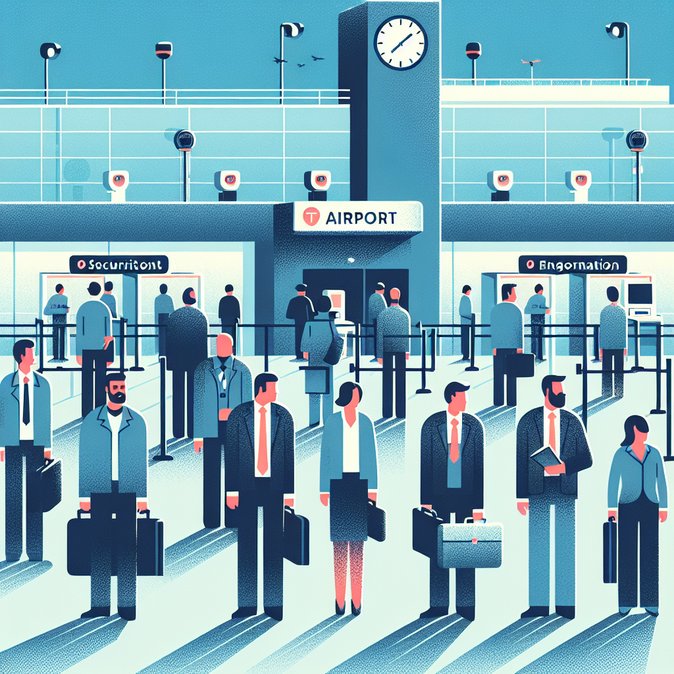
Airports, airlines and travel associations sounded a fresh alarm on 5 February after another morning of three-hour queues at several Schengen airports prompted renewed calls to slow the roll-out of the EU’s new biometric Entry-Exit System (EES).
EES, which has been in a "technical soft-launch" phase since October 2025, will become mandatory for all third-country nationals – including Britons, Americans and most business travellers bound for Germany – from 10 April 2026. Travellers must have their fingerprints and a facial photo captured the first time they cross the external Schengen border. While Germany’s largest hubs, Frankfurt-Main and Munich, have installed more than 100 automated kiosks, border-police staffing levels and training remain a bottleneck, and provincial airports such as Hamburg and Stuttgart are still integrating the software. (theguardian.com)
Travellers and corporate mobility teams looking for practical help in navigating these shifting border controls can turn to VisaHQ’s Germany portal (https://www.visahq.com/germany/). The service consolidates the latest EES updates, visa requirements and real-time advisory notices, and offers document pre-screening and appointment scheduling—streamlining the administrative steps long before a traveller reaches passport control.
![EU Entry-Exit System faces calls for leniency as Germany braces for Easter start-up]()
Trade bodies ACI Europe and the German Business Travel Association (VDR) warned that if the European Commission does not issue "blanket flexibility"—allowing officers to suspend or scale back enrolment during peak surges—Germany could see five-hour queues over the Whit-Monday and summer peaks. Carriers fear knock-on effects on flight connectivity and crew duty-time limits; Lufthansa told the Guardian that missed connections during October’s pilot phase cost the airline "a mid-seven-figure sum." (theguardian.com)
The Interior Ministry has so far authorised officers to register only 35 percent of travellers during the soft-launch, but border staff say that threshold will disappear in April unless Brussels acts. Industry groups want a phased ramp-up tied to concrete service-level agreements, extra funding for temporary staff, and a mobile pre-enrolment app that Germany’s Federal Police says will not be ready before late summer.
Practical implications for corporate mobility teams are immediate. Assignees arriving after 10 April should expect their first entry to take 10-20 minutes longer and should avoid tight Schengen-to-non-Schengen connections at German hubs. HR managers are advising mobile employees to carry evidence of onward accommodation and to build 45-minute buffers into itineraries until enrolment stabilises. Longer term, once travellers are registered, exit/entry stamping disappears and Schengen overstays will be calculated to the day, increasing compliance exposure for frequent business visitors.
EES, which has been in a "technical soft-launch" phase since October 2025, will become mandatory for all third-country nationals – including Britons, Americans and most business travellers bound for Germany – from 10 April 2026. Travellers must have their fingerprints and a facial photo captured the first time they cross the external Schengen border. While Germany’s largest hubs, Frankfurt-Main and Munich, have installed more than 100 automated kiosks, border-police staffing levels and training remain a bottleneck, and provincial airports such as Hamburg and Stuttgart are still integrating the software. (theguardian.com)
Travellers and corporate mobility teams looking for practical help in navigating these shifting border controls can turn to VisaHQ’s Germany portal (https://www.visahq.com/germany/). The service consolidates the latest EES updates, visa requirements and real-time advisory notices, and offers document pre-screening and appointment scheduling—streamlining the administrative steps long before a traveller reaches passport control.

Trade bodies ACI Europe and the German Business Travel Association (VDR) warned that if the European Commission does not issue "blanket flexibility"—allowing officers to suspend or scale back enrolment during peak surges—Germany could see five-hour queues over the Whit-Monday and summer peaks. Carriers fear knock-on effects on flight connectivity and crew duty-time limits; Lufthansa told the Guardian that missed connections during October’s pilot phase cost the airline "a mid-seven-figure sum." (theguardian.com)
The Interior Ministry has so far authorised officers to register only 35 percent of travellers during the soft-launch, but border staff say that threshold will disappear in April unless Brussels acts. Industry groups want a phased ramp-up tied to concrete service-level agreements, extra funding for temporary staff, and a mobile pre-enrolment app that Germany’s Federal Police says will not be ready before late summer.
Practical implications for corporate mobility teams are immediate. Assignees arriving after 10 April should expect their first entry to take 10-20 minutes longer and should avoid tight Schengen-to-non-Schengen connections at German hubs. HR managers are advising mobile employees to carry evidence of onward accommodation and to build 45-minute buffers into itineraries until enrolment stabilises. Longer term, once travellers are registered, exit/entry stamping disappears and Schengen overstays will be calculated to the day, increasing compliance exposure for frequent business visitors.