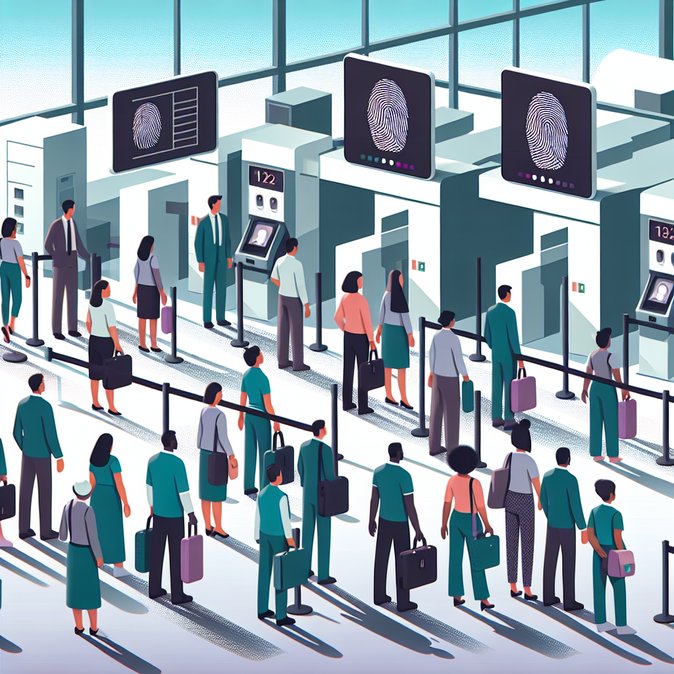
Travel industry associations sounded the alarm on 5 February over the European Union’s Entry-Exit System (EES), warning that full enforcement from 10 April could lengthen passport-control times at Prague Airport and the busiest Czech land crossings with Germany and Poland during the summer peak.
EES requires every non-EU national—including Britons, Americans and other visa-exempt travellers—to be fingerprinted, photographed and registered the first time they cross an external Schengen border after the switchover. Since a limited rollout began last October, some Mediterranean airports have reported queues of up to three hours when only 35 % of passengers were being enrolled. From April, the quota rises to 100 %.
To navigate these evolving requirements, travellers and mobility managers can leverage VisaHQ, which aggregates the latest EES guidance and supplies personalised checklists for trips to the Czech Republic and the wider Schengen area. Its portal—https://www.visahq.com/czech-republic/—offers real-time alerts, document-processing assistance and forthcoming ETIAS updates, helping visitors avoid last-minute surprises at the border.
![Summer queues warning: new EU biometric checks could snarl arrivals at Czech airports and land borders]()
Czech border police told the daily Hospodářské noviny that they have installed 46 self-service biometric kiosks at Václav Havel Airport and will add 20 more by June, but they concede that staffing remains “tight”. Airport operator Letiště Praha estimates that without additional personnel, average processing times for wide-body arrivals could triple to 45 minutes. Coach companies serving the Václavské náměstí–Heathrow overnight route fear knock-on delays at the Channel Tunnel French control zone, potentially missing ferry slots.
Industry body ACI Europe urged Brussels to allow member states temporary flexibility—such as partial suspensions on the busiest days—until more hardware and staff are in place. Czech travel agencies echo the call, noting that prolonged queues would undermine the country’s post-pandemic inbound recovery: foreign arrivals only returned to 92 % of 2019 levels in 2025. Corporate travel managers are advising colleagues from the UK and USA to build at least an extra hour into itineraries for meetings in Prague from mid-April.
For now, Czech residents and other EU citizens remain outside the scope of EES, but they will face a separate registration requirement—ETIAS—expected late next year. Airlines operating to Prague are updating check-in systems to verify whether a non-EU passenger already has an EES record; if not, carriers may need to allocate more ground time or risk fines for delivering un-registered travellers.
Practical tips for mobility managers include scheduling early-morning long-haul arrivals, when queues are typically shorter, and ensuring that staff on frequent trips renew passports well before expiry, as a new passport triggers fresh biometric enrolment. The interior ministry has also confirmed that diplomatic and service passport-holders are exempt from fingerprinting, but not from facial recognition.
EES requires every non-EU national—including Britons, Americans and other visa-exempt travellers—to be fingerprinted, photographed and registered the first time they cross an external Schengen border after the switchover. Since a limited rollout began last October, some Mediterranean airports have reported queues of up to three hours when only 35 % of passengers were being enrolled. From April, the quota rises to 100 %.
To navigate these evolving requirements, travellers and mobility managers can leverage VisaHQ, which aggregates the latest EES guidance and supplies personalised checklists for trips to the Czech Republic and the wider Schengen area. Its portal—https://www.visahq.com/czech-republic/—offers real-time alerts, document-processing assistance and forthcoming ETIAS updates, helping visitors avoid last-minute surprises at the border.

Czech border police told the daily Hospodářské noviny that they have installed 46 self-service biometric kiosks at Václav Havel Airport and will add 20 more by June, but they concede that staffing remains “tight”. Airport operator Letiště Praha estimates that without additional personnel, average processing times for wide-body arrivals could triple to 45 minutes. Coach companies serving the Václavské náměstí–Heathrow overnight route fear knock-on delays at the Channel Tunnel French control zone, potentially missing ferry slots.
Industry body ACI Europe urged Brussels to allow member states temporary flexibility—such as partial suspensions on the busiest days—until more hardware and staff are in place. Czech travel agencies echo the call, noting that prolonged queues would undermine the country’s post-pandemic inbound recovery: foreign arrivals only returned to 92 % of 2019 levels in 2025. Corporate travel managers are advising colleagues from the UK and USA to build at least an extra hour into itineraries for meetings in Prague from mid-April.
For now, Czech residents and other EU citizens remain outside the scope of EES, but they will face a separate registration requirement—ETIAS—expected late next year. Airlines operating to Prague are updating check-in systems to verify whether a non-EU passenger already has an EES record; if not, carriers may need to allocate more ground time or risk fines for delivering un-registered travellers.
Practical tips for mobility managers include scheduling early-morning long-haul arrivals, when queues are typically shorter, and ensuring that staff on frequent trips renew passports well before expiry, as a new passport triggers fresh biometric enrolment. The interior ministry has also confirmed that diplomatic and service passport-holders are exempt from fingerprinting, but not from facial recognition.