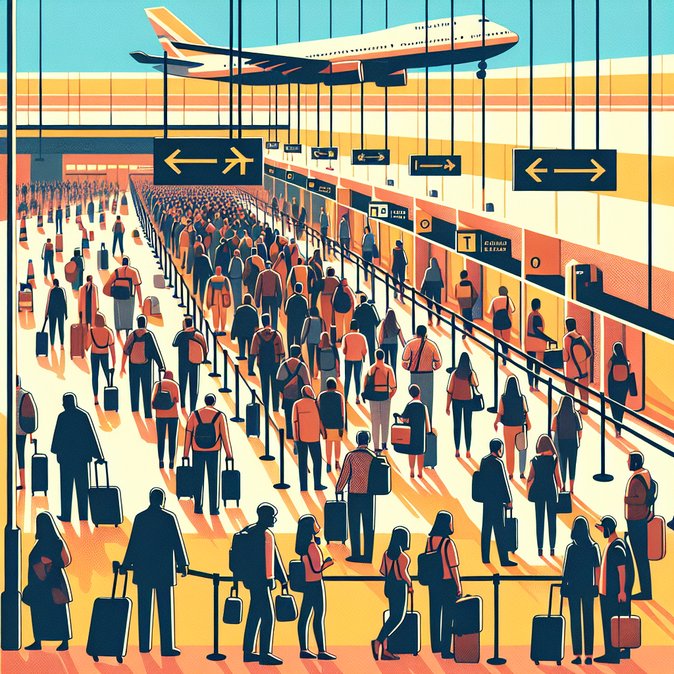
Austria’s airports are bracing for the second—and most disruptive—phase of Europe’s new Entry-Exit System (EES), the biometric border database that replaces manual passport stamping for non-EU visitors. In a letter dated 5 February 2026, Airports Council International (ACI Europe) and the UK travel association ABTA urged the European Commission to let border guards “stand down” EES requirements during peak holiday periods if queues become unmanageable. The plea follows reports of two- to three-hour waits at Madrid-Barajas and Rome-Fiumicino even though only 35 % of passengers are currently being registered. From 10 April, every third-country national entering or leaving the Schengen Area—including Austria—must provide fingerprints and a facial image on first entry.
Vienna International Airport (VIE) completed installation of 55 biometric kiosks last autumn, but insiders admit that throughput remains well below the 25 passengers per minute promised by suppliers. Unlike border-force counterparts in Spain and Portugal, Austrian police have so far resisted using the emergency “switch-off” provision written into the EES regulation, arguing that early discipline will spare travellers harsher pain later. Ground-handler Celebi, however, fears missed connections for passengers transferring to Eastern-European regional flights where minimum legal connection times are already tight.
In that context, travellers who want to minimise friction at these new checks can at least ensure every other document is in perfect order before departure. VisaHQ’s dedicated Austria portal (https://www.visahq.com/austria/) provides step-by-step visa guidance, deadline reminders and live updates on biometric registration policies, giving both leisure visitors and corporate mobility teams a simple way to cut surprises at the border.
![Travel Industry Warns of Summer Chaos as EU Biometric Entry-Exit System Nears Full Roll-Out]()
For businesses, the operational headache is obvious: road-warriors from the US and UK, who routinely squeeze client meetings in Salzburg or Linz between flights, now have to budget extra buffer time. Mobility managers at semiconductor giant Infineon told the WirtschaftsWoche conference this week that they will introduce a company rule of a minimum three-hour layover at all Schengen gateways until the end of August.
Labour-law specialists point to a secondary risk: under EU Working Time rules, hours spent queuing at immigration may count as working time for mobile employees, inflating overtime costs. Some firms are therefore considering shifting short European hops onto virtual platforms until the post-launch turbulence subsides.
Looking ahead, Austria’s Interior Ministry says it will deploy an additional 120 contract staff at Vienna, Salzburg and Innsbruck airports between April and October to guide travellers through the kiosks and prevent bottlenecks that could spill back into Schengen-EU arrival channels. The ministry also hinted it could join Sweden in piloting a smartphone pre-registration app if EU-level legal obstacles are removed. Until then, companies should alert assignees and visiting executives: the Alpine punctuality stereotype may take a temporary hit this summer.
Vienna International Airport (VIE) completed installation of 55 biometric kiosks last autumn, but insiders admit that throughput remains well below the 25 passengers per minute promised by suppliers. Unlike border-force counterparts in Spain and Portugal, Austrian police have so far resisted using the emergency “switch-off” provision written into the EES regulation, arguing that early discipline will spare travellers harsher pain later. Ground-handler Celebi, however, fears missed connections for passengers transferring to Eastern-European regional flights where minimum legal connection times are already tight.
In that context, travellers who want to minimise friction at these new checks can at least ensure every other document is in perfect order before departure. VisaHQ’s dedicated Austria portal (https://www.visahq.com/austria/) provides step-by-step visa guidance, deadline reminders and live updates on biometric registration policies, giving both leisure visitors and corporate mobility teams a simple way to cut surprises at the border.
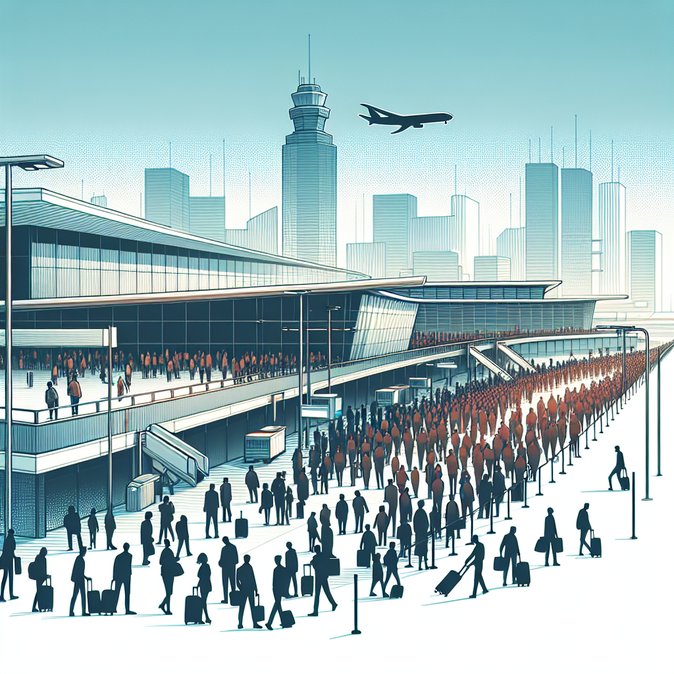
For businesses, the operational headache is obvious: road-warriors from the US and UK, who routinely squeeze client meetings in Salzburg or Linz between flights, now have to budget extra buffer time. Mobility managers at semiconductor giant Infineon told the WirtschaftsWoche conference this week that they will introduce a company rule of a minimum three-hour layover at all Schengen gateways until the end of August.
Labour-law specialists point to a secondary risk: under EU Working Time rules, hours spent queuing at immigration may count as working time for mobile employees, inflating overtime costs. Some firms are therefore considering shifting short European hops onto virtual platforms until the post-launch turbulence subsides.
Looking ahead, Austria’s Interior Ministry says it will deploy an additional 120 contract staff at Vienna, Salzburg and Innsbruck airports between April and October to guide travellers through the kiosks and prevent bottlenecks that could spill back into Schengen-EU arrival channels. The ministry also hinted it could join Sweden in piloting a smartphone pre-registration app if EU-level legal obstacles are removed. Until then, companies should alert assignees and visiting executives: the Alpine punctuality stereotype may take a temporary hit this summer.