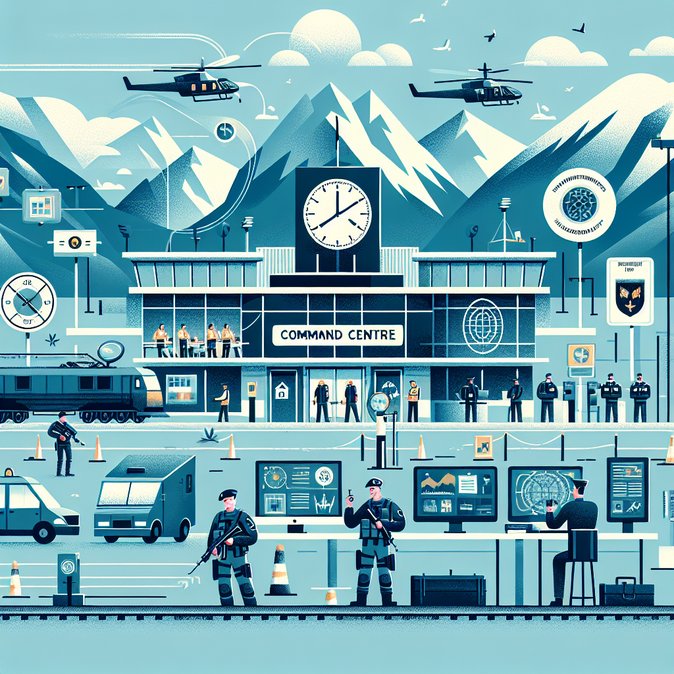
With the Milano-Cortina Winter Olympics opening on 6 February, Italy’s Interior Ministry unveiled a sweeping security architecture centred on the new International Olympic Operations Room (SOIO) in Rome. The SOIO will coordinate police headquarters across six northern provinces and host liaison officers from foreign forces, Interpol and Europol.
Authorities will deploy snipers, bomb-disposal units and dog teams at venues, but the plan’s mobility relevance lies in stepped-up controls at rail hubs and land borders with Switzerland, Austria, France and Slovenia. Spot passport checks may apply even to Schengen passengers whenever intelligence warrants, echoing France’s 2024 Olympic derogations. Commercial vehicle inspections will also increase on the A4 and Brenner corridors, potentially slowing just-in-time deliveries.
For travellers still uncertain about documentation—particularly those arriving from outside the EU—specialist agencies like VisaHQ can streamline the visa or passport-renewal process well ahead of the Opening Ceremony. Their Italy portal (https://www.visahq.com/italy/) provides up-to-date guidance, digital application tools and expedited courier options, a useful safety net if heightened security derogations demand full passports or extra paperwork at Alpine crossings.
![Milan-Cortina Olympics security plan adds 24/7 command centre and tighter border checks]()
Roughly two million visitors, including 60,000 at the opening ceremony, are expected. Business-travel advisers recommend carrying physical passports rather than relying solely on national ID cards and allowing extra time for cross-border road or rail journeys. Logistics firms are warning clients to anticipate delays of one to three hours at key Alpine crossings during peak event days.
Cyber-security is another strand: a 24-hour digital-threat cell will monitor airport, ticketing and accommodation systems, and companies providing Wi-Fi or payment services at Olympic venues must share real-time logs with the National Cybersecurity Agency. Firms that handle traveller data should review contractual obligations and incident-response SLAs before the Games commence.
The SOIO model may become a template for future high-density events in Italy, signalling that extraordinary border measures—even within Schengen—are the "new normal" whenever security risk is elevated.
Authorities will deploy snipers, bomb-disposal units and dog teams at venues, but the plan’s mobility relevance lies in stepped-up controls at rail hubs and land borders with Switzerland, Austria, France and Slovenia. Spot passport checks may apply even to Schengen passengers whenever intelligence warrants, echoing France’s 2024 Olympic derogations. Commercial vehicle inspections will also increase on the A4 and Brenner corridors, potentially slowing just-in-time deliveries.
For travellers still uncertain about documentation—particularly those arriving from outside the EU—specialist agencies like VisaHQ can streamline the visa or passport-renewal process well ahead of the Opening Ceremony. Their Italy portal (https://www.visahq.com/italy/) provides up-to-date guidance, digital application tools and expedited courier options, a useful safety net if heightened security derogations demand full passports or extra paperwork at Alpine crossings.
Roughly two million visitors, including 60,000 at the opening ceremony, are expected. Business-travel advisers recommend carrying physical passports rather than relying solely on national ID cards and allowing extra time for cross-border road or rail journeys. Logistics firms are warning clients to anticipate delays of one to three hours at key Alpine crossings during peak event days.
Cyber-security is another strand: a 24-hour digital-threat cell will monitor airport, ticketing and accommodation systems, and companies providing Wi-Fi or payment services at Olympic venues must share real-time logs with the National Cybersecurity Agency. Firms that handle traveller data should review contractual obligations and incident-response SLAs before the Games commence.
The SOIO model may become a template for future high-density events in Italy, signalling that extraordinary border measures—even within Schengen—are the "new normal" whenever security risk is elevated.