In a major policy move on 2 February 2026, the European Commission adopted its first EU-wide Visa Strategy, a new European Asylum and Migration Management Strategy, and a Recommendation on Attracting Talent for Innovation. Although the documents are addressed to all 27 member states, they will have an outsized impact on Germany, which issued almost 2 million Schengen visas and some 370 000 national visas in 2025 alone.
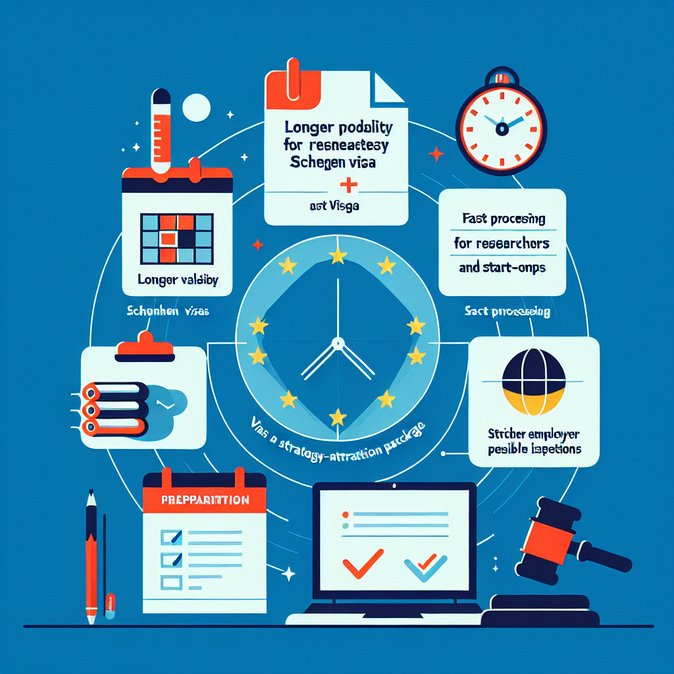
The Visa Strategy calls for longer-validity multiple-entry visas for ‘trusted business travellers’, the creation of European Legal Gateway Offices to guide employers and foreign talent, and a review of the 90/180-day rule for categories such as touring artists, athletes and cross-border project experts. A pilot Legal Gateway office will open in India later this year, with information-technology engineers and consultants as the first target group. German companies—particularly Mittelstand manufacturers that rely on short-term specialists—stand to gain from the proposed relaxation; the German Chambers of Commerce and Industry (DIHK) have already urged Berlin to volunteer as one of the test locations for a second Gateway office.
For corporate mobility managers, the most immediate change lies in the recommended 30-day processing target for researcher, STEM, start-up-founder and innovative-entrepreneur residence permits. The recommendation is not yet legally binding, but the Federal Foreign Office confirmed to industry associations that it will adjust internal key-performance indicators for its 200-plus visa sections worldwide in anticipation of an eventual legislative mandate. The Ministry of the Interior is likewise mapping the EU proposals against Germany’s new Skilled-Worker Immigration Act, which came into force last November and already allows accelerated (‘Express-verfahren’) appointments for recognised sponsors.
![EU adopts first-ever Visa Strategy and talent-attraction roadmap—Germany prepares to overhaul procedures]()
Against this backdrop, VisaHQ can serve as an invaluable partner for companies and individuals needing real-time guidance on both Schengen and national-visa procedures. By visiting the dedicated Germany page (https://www.visahq.com/germany/), users gain access to step-by-step application wizards, document checklists and status-tracking tools, and VisaHQ’s team stands ready to integrate upcoming EU reforms—such as longer-validity visas and Express-verfahren options—into its platform so that HR departments and travellers stay compliant and ahead of deadlines.
Compliance pressures will tighten in parallel. Brussels intends to strengthen the Employers Sanctions Directive, increasing workplace inspections and penalties for illegal employment. German employers with recognised-sponsor status could enjoy reduced paperwork yet face random audits to confirm that salary, job-title and work-location data match the approved terms. Immigration advisers therefore recommend that companies build audit-ready digital files and rehearse inspection scenarios with local works councils.
Implementation is staggered. Some measures—such as the talent-attraction Recommendation—can take effect as soon as member states update administrative guidelines. Others, including new restrictions on visas in response to hostile third-country acts, require amendments to the EU Visa Code and could take several years. Still, the direction of travel is clear: more digitalisation, faster processing for bona-fide travellers, and tougher enforcement where abuses occur. For Germany’s globally mobile workforce and the HR teams that support them, 2026 is shaping up to be a watershed year.
The Visa Strategy calls for longer-validity multiple-entry visas for ‘trusted business travellers’, the creation of European Legal Gateway Offices to guide employers and foreign talent, and a review of the 90/180-day rule for categories such as touring artists, athletes and cross-border project experts. A pilot Legal Gateway office will open in India later this year, with information-technology engineers and consultants as the first target group. German companies—particularly Mittelstand manufacturers that rely on short-term specialists—stand to gain from the proposed relaxation; the German Chambers of Commerce and Industry (DIHK) have already urged Berlin to volunteer as one of the test locations for a second Gateway office.
For corporate mobility managers, the most immediate change lies in the recommended 30-day processing target for researcher, STEM, start-up-founder and innovative-entrepreneur residence permits. The recommendation is not yet legally binding, but the Federal Foreign Office confirmed to industry associations that it will adjust internal key-performance indicators for its 200-plus visa sections worldwide in anticipation of an eventual legislative mandate. The Ministry of the Interior is likewise mapping the EU proposals against Germany’s new Skilled-Worker Immigration Act, which came into force last November and already allows accelerated (‘Express-verfahren’) appointments for recognised sponsors.

Against this backdrop, VisaHQ can serve as an invaluable partner for companies and individuals needing real-time guidance on both Schengen and national-visa procedures. By visiting the dedicated Germany page (https://www.visahq.com/germany/), users gain access to step-by-step application wizards, document checklists and status-tracking tools, and VisaHQ’s team stands ready to integrate upcoming EU reforms—such as longer-validity visas and Express-verfahren options—into its platform so that HR departments and travellers stay compliant and ahead of deadlines.
Compliance pressures will tighten in parallel. Brussels intends to strengthen the Employers Sanctions Directive, increasing workplace inspections and penalties for illegal employment. German employers with recognised-sponsor status could enjoy reduced paperwork yet face random audits to confirm that salary, job-title and work-location data match the approved terms. Immigration advisers therefore recommend that companies build audit-ready digital files and rehearse inspection scenarios with local works councils.
Implementation is staggered. Some measures—such as the talent-attraction Recommendation—can take effect as soon as member states update administrative guidelines. Others, including new restrictions on visas in response to hostile third-country acts, require amendments to the EU Visa Code and could take several years. Still, the direction of travel is clear: more digitalisation, faster processing for bona-fide travellers, and tougher enforcement where abuses occur. For Germany’s globally mobile workforce and the HR teams that support them, 2026 is shaping up to be a watershed year.