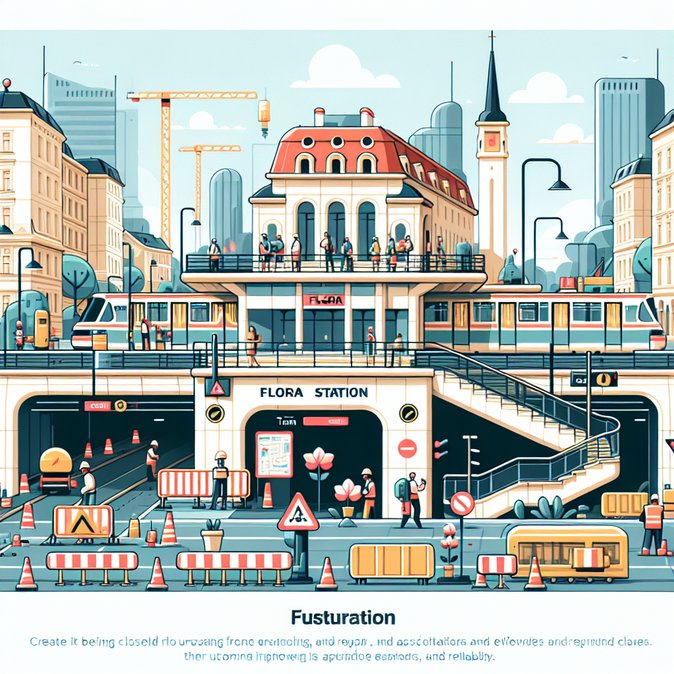
Prague Transport Company (DPP) closed Flora station on Metro Line A at 05:00 on Monday, 2 February 2026, kicking off a CZK 1.29 billion renovation that will last until late November. The closure forces trains to pass through the hub without stopping and reroutes roughly 55 000 daily passengers, including thousands of foreign assignees and business travellers who use the corridor between the city centre and the Želivského hotel-and-office district.
The upgrade—Flora’s first full reconstruction since it opened in 1980—will replace all three escalators, install modern fire-suppression systems and repair long-standing ceiling leaks that have periodically closed concourses in heavy rain. Future phases will add elevators to make the deep-level station barrier-free by early 2028, aligning the network with EU accessibility targets that multinationals increasingly reference in corporate-social-responsibility reporting.
During the works, DPP has redirected passengers to nearby metro stops Jiřího z Poděbrad and Želivského and laid on additional tram capacity along Vinohradská Avenue. However, peak-hour crowding is expected to ripple across the system for several weeks. Travel-management companies are advising clients to budget an extra 10–15 minutes for cross-town journeys and to brief international visitors unfamiliar with Prague’s surface-tram network.
![Prague’s Flora Metro Station shuts for ten-month overhaul, reshaping commuter routes]()
Amid these logistical adjustments, companies should also double-check that incoming staff and guests have the proper entry paperwork. VisaHQ’s self-service platform (https://www.visahq.com/czech-republic/) streamlines Czech visa applications, offers real-time status tracking and can courier approved passports directly to a corporate address, freeing mobility managers to focus on rerouting travellers rather than chasing consulate appointments.
The shutdown has knock-on implications for business travel. Several hotels around Flora—popular with conference organisers for their mid-range rates and direct metro link to the historical centre—have begun emailing guests with route maps and QR codes for live tram schedules. Employers running shuttle buses to the growing biotech cluster in Strašnice will need to adjust pick-up points and departure times.
City officials argue that the short-term pain is outweighed by long-term gains. Modern escalators will cut maintenance downtime by 40 percent, while new waterproofing should eliminate recurring closures that have frustrated commuters and tourists alike. For corporate mobility teams, the lesson is clear: update internal travel guides, monitor DPP service alerts and remind staff—especially those on tight airport connections—that alternative routes may be faster until Flora re-opens ahead of the 2026 Christmas market rush.
The upgrade—Flora’s first full reconstruction since it opened in 1980—will replace all three escalators, install modern fire-suppression systems and repair long-standing ceiling leaks that have periodically closed concourses in heavy rain. Future phases will add elevators to make the deep-level station barrier-free by early 2028, aligning the network with EU accessibility targets that multinationals increasingly reference in corporate-social-responsibility reporting.
During the works, DPP has redirected passengers to nearby metro stops Jiřího z Poděbrad and Želivského and laid on additional tram capacity along Vinohradská Avenue. However, peak-hour crowding is expected to ripple across the system for several weeks. Travel-management companies are advising clients to budget an extra 10–15 minutes for cross-town journeys and to brief international visitors unfamiliar with Prague’s surface-tram network.
Amid these logistical adjustments, companies should also double-check that incoming staff and guests have the proper entry paperwork. VisaHQ’s self-service platform (https://www.visahq.com/czech-republic/) streamlines Czech visa applications, offers real-time status tracking and can courier approved passports directly to a corporate address, freeing mobility managers to focus on rerouting travellers rather than chasing consulate appointments.
The shutdown has knock-on implications for business travel. Several hotels around Flora—popular with conference organisers for their mid-range rates and direct metro link to the historical centre—have begun emailing guests with route maps and QR codes for live tram schedules. Employers running shuttle buses to the growing biotech cluster in Strašnice will need to adjust pick-up points and departure times.
City officials argue that the short-term pain is outweighed by long-term gains. Modern escalators will cut maintenance downtime by 40 percent, while new waterproofing should eliminate recurring closures that have frustrated commuters and tourists alike. For corporate mobility teams, the lesson is clear: update internal travel guides, monitor DPP service alerts and remind staff—especially those on tight airport connections—that alternative routes may be faster until Flora re-opens ahead of the 2026 Christmas market rush.