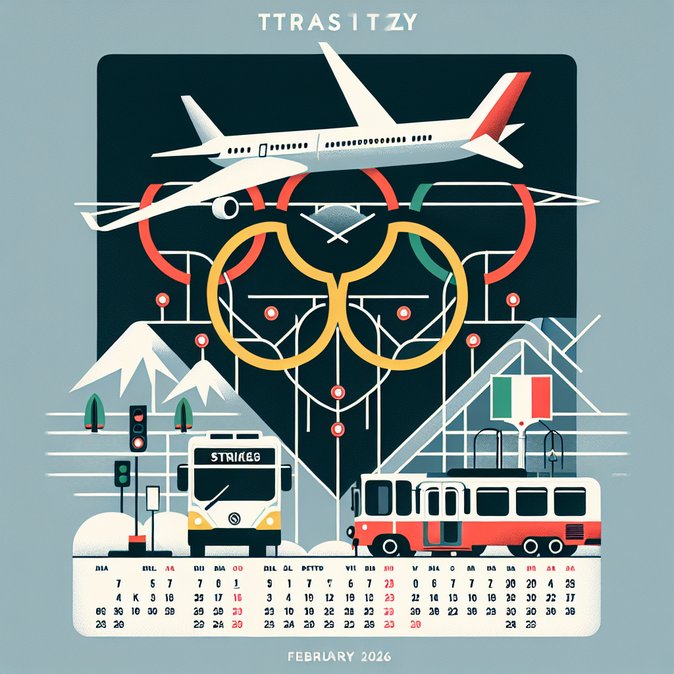
Italy is bracing for a month of transport unrest that will test the resilience of business travellers, commuters and Olympic-bound visitors alike. A calendar published on 2 February confirms 26 separate strikes—six of them nationwide—spanning aviation, long-distance and regional rail, metros and even motorway operators.
The first major test comes immediately: the ORSA union’s 23-hour walk-out at Trenord began at 03:00 on 2 February and is expected to create a patchwork of cancellations on Lombardy’s suburban and Malpensa Express services despite the legally-mandated ‘fasce di garanzia’ during the peaks. Trenord has lined up non-stop buses for stranded airport passengers, but experience from previous actions suggests longer door-to-door times and heavier congestion at the A8 and A4 motorway exits for Malpensa.
For international visitors who still need to arrange or update travel documents before braving February’s industrial turbulence, VisaHQ can take one major variable off the table. Through its Italy-specific portal (https://www.visahq.com/italy/), the service expedites ETIAS pre-registrations, work permits and other visa categories while providing live status tracking—freeing both leisure and corporate travellers to concentrate on contingency plans rather than paperwork.
![February Strike Wave to Disrupt Air, Rail and Metro Services Across Italy]()
Mid-month, attention shifts to the skies. On 16 February Vueling cabin crew will stage a 24-hour strike, while ITA Airways staff have announced both a four-hour stoppage (13:00-17:00) and a separate 24-hour protest with partial guarantee windows. Ground-handling employees affiliated to Assohandler and ALHA cargo will join the action, raising the spectre of widespread delays in baggage delivery and freight processing at Rome-Fiumicino and Milan-Malpensa.
The end of the month threatens the rail backbone. From 21:00 on 27 February to 20:59 on 28 February, the FS Group—covering Trenitalia long-haul, Mercitalia Rail freight and Trenitalia TPER regional services—will halt operations. Business travellers heading to quarter-end meetings should consider rerouting via coach or air or booking hotel nights near meeting venues.
Why it matters: February is already under pressure because Milan-Cortina 2026 opens on 6 February. Corporates with mobility programmes should refresh traveller alerts, pre-authorise taxi alternatives where rail links are critical, and remind employees of EU Regulation 261/2004 compensation thresholds in the event of flight cancellations. (ansa.it)
The first major test comes immediately: the ORSA union’s 23-hour walk-out at Trenord began at 03:00 on 2 February and is expected to create a patchwork of cancellations on Lombardy’s suburban and Malpensa Express services despite the legally-mandated ‘fasce di garanzia’ during the peaks. Trenord has lined up non-stop buses for stranded airport passengers, but experience from previous actions suggests longer door-to-door times and heavier congestion at the A8 and A4 motorway exits for Malpensa.
For international visitors who still need to arrange or update travel documents before braving February’s industrial turbulence, VisaHQ can take one major variable off the table. Through its Italy-specific portal (https://www.visahq.com/italy/), the service expedites ETIAS pre-registrations, work permits and other visa categories while providing live status tracking—freeing both leisure and corporate travellers to concentrate on contingency plans rather than paperwork.

Mid-month, attention shifts to the skies. On 16 February Vueling cabin crew will stage a 24-hour strike, while ITA Airways staff have announced both a four-hour stoppage (13:00-17:00) and a separate 24-hour protest with partial guarantee windows. Ground-handling employees affiliated to Assohandler and ALHA cargo will join the action, raising the spectre of widespread delays in baggage delivery and freight processing at Rome-Fiumicino and Milan-Malpensa.
The end of the month threatens the rail backbone. From 21:00 on 27 February to 20:59 on 28 February, the FS Group—covering Trenitalia long-haul, Mercitalia Rail freight and Trenitalia TPER regional services—will halt operations. Business travellers heading to quarter-end meetings should consider rerouting via coach or air or booking hotel nights near meeting venues.
Why it matters: February is already under pressure because Milan-Cortina 2026 opens on 6 February. Corporates with mobility programmes should refresh traveller alerts, pre-authorise taxi alternatives where rail links are critical, and remind employees of EU Regulation 261/2004 compensation thresholds in the event of flight cancellations. (ansa.it)