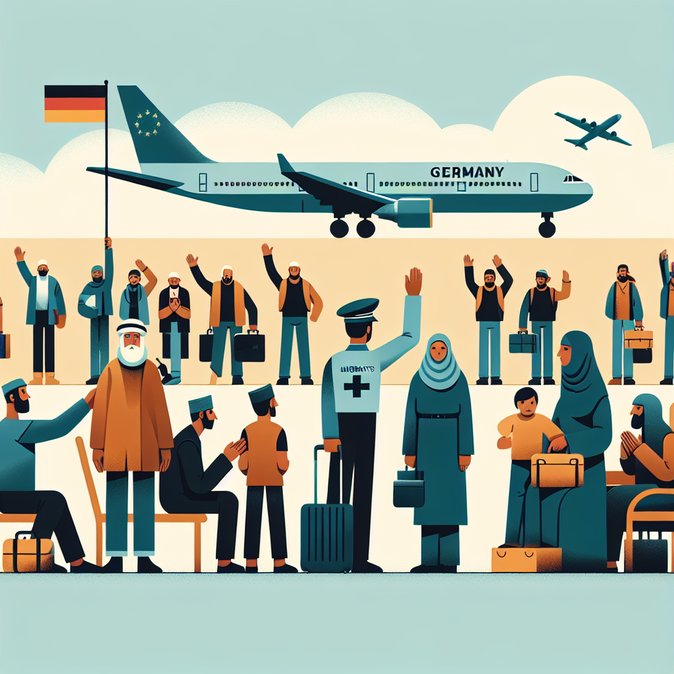
Berlin’s lower house of parliament confirmed on 2 February that Germany has entered the intensive implementation phase of the reform of the Common European Asylum System (GEAS). In a written reply (Bundestagsdrucksache 21/3818) to a parliamentary query, the Federal Government says it is working "with highest priority" to transpose the package and have all procedures, databases and reception standards ready before the June 2026 EU deadline.
The Interior Ministry, the Federal Office for Migration and Refugees (BAMF) and the Federal Police have established a joint programme office and are running weekly coordination calls with the Länder. Key IT tasks include connecting BAMF’s MARiS case-management system to Eurodac 2.0 for faster fingerprint checks and adapting border-control software so that officers can run the new pre-entry screening in real time. The Länder, which run first-reception centres, must meanwhile convert accommodation blocks so that people whose claims will be processed at the border can be held separately for up to 12 weeks, as the pact requires.
![Bundestag reports “high-priority” work underway to implement EU’s new asylum pact]()
Amid these technical and procedural overhauls, companies and private travelers can simplify their preparations by using VisaHQ’s Germany portal (https://www.visahq.com/germany/), which provides up-to-date visa guidance, document checklists and a streamlined application interface—valuable tools for keeping pace with evolving EU and national rules.
Officials admit that the timetable is “a considerable challenge” because Germany’s federal structure requires 16 state parliaments to amend their asylum-reception acts. Pilot projects in Saxony and Bavaria start in March to test how identification, security and vulnerability assessments can be completed within the 7-day limit set by Brussels. An Interior Ministry steering committee will evaluate the pilots every fortnight and publish a dashboard of key indicators, including processing times, appeal rates and transfers to other member states.
For corporate mobility managers the update is a reminder that the legal framework around cross-border postings will evolve rapidly in 2026. Once the screening regulation becomes operational, non-EU business travellers arriving overland may face additional checks at Germany’s external Schengen borders (airports will phase the system in later). Companies should review their document bundles—especially proof of purpose of stay and assignment letters—to avoid delays at the border. Immigrants already in Germany on Blue Cards or skilled-worker permits are not directly affected, but compliance teams should monitor state legislation for any knock-on effects on residence procedures.
The Interior Ministry, the Federal Office for Migration and Refugees (BAMF) and the Federal Police have established a joint programme office and are running weekly coordination calls with the Länder. Key IT tasks include connecting BAMF’s MARiS case-management system to Eurodac 2.0 for faster fingerprint checks and adapting border-control software so that officers can run the new pre-entry screening in real time. The Länder, which run first-reception centres, must meanwhile convert accommodation blocks so that people whose claims will be processed at the border can be held separately for up to 12 weeks, as the pact requires.

Amid these technical and procedural overhauls, companies and private travelers can simplify their preparations by using VisaHQ’s Germany portal (https://www.visahq.com/germany/), which provides up-to-date visa guidance, document checklists and a streamlined application interface—valuable tools for keeping pace with evolving EU and national rules.
Officials admit that the timetable is “a considerable challenge” because Germany’s federal structure requires 16 state parliaments to amend their asylum-reception acts. Pilot projects in Saxony and Bavaria start in March to test how identification, security and vulnerability assessments can be completed within the 7-day limit set by Brussels. An Interior Ministry steering committee will evaluate the pilots every fortnight and publish a dashboard of key indicators, including processing times, appeal rates and transfers to other member states.
For corporate mobility managers the update is a reminder that the legal framework around cross-border postings will evolve rapidly in 2026. Once the screening regulation becomes operational, non-EU business travellers arriving overland may face additional checks at Germany’s external Schengen borders (airports will phase the system in later). Companies should review their document bundles—especially proof of purpose of stay and assignment letters—to avoid delays at the border. Immigrants already in Germany on Blue Cards or skilled-worker permits are not directly affected, but compliance teams should monitor state legislation for any knock-on effects on residence procedures.