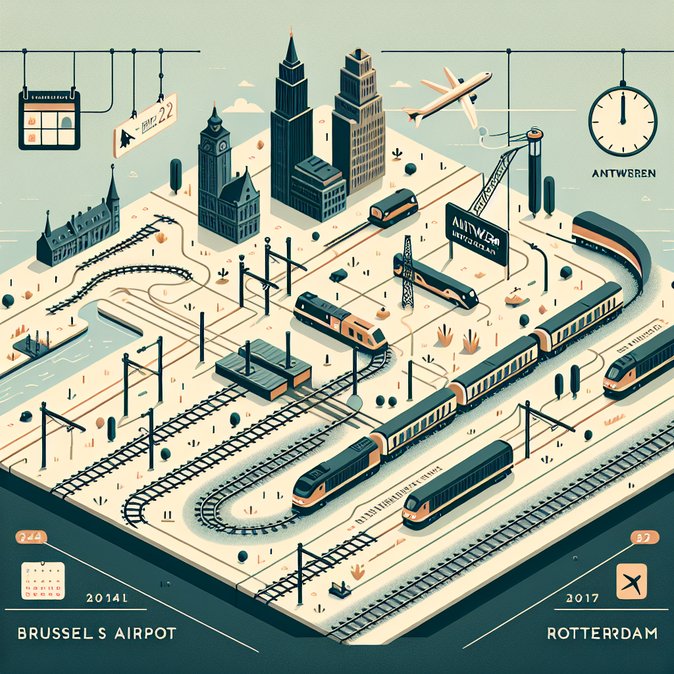
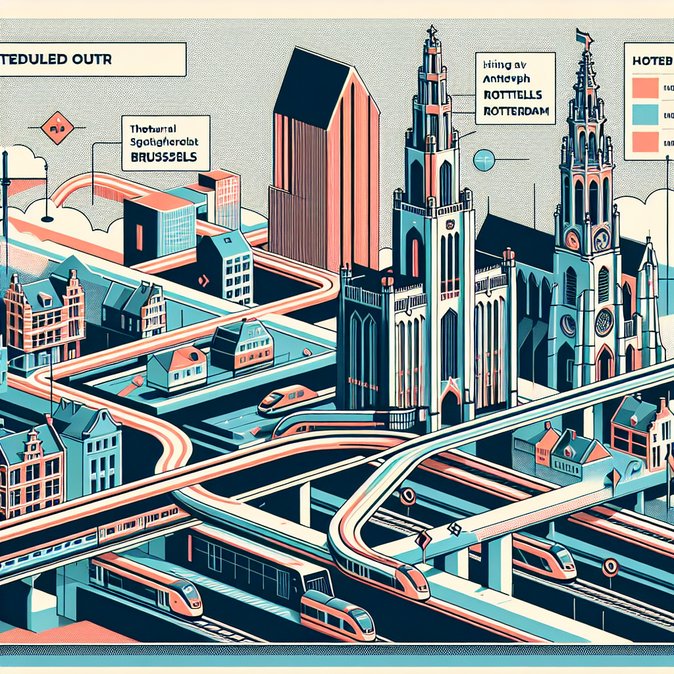
International rail passengers faced disruption over the weekend as scheduled engineering works north-east of Brussels forced EuroCity trains on the Brussels–Rotterdam line to skip Brussels Airport-Zaventem on 31 January and 1 February 2026. The operator, SNCB International, confirmed that services ran non-stop between Brussels-Midi and Antwerp, with onward connections available for air travellers via Mechelen or local trains.
The two-day closure of the airport stop forms part of a broader track-renewal programme that will also shut Brussels-Central and Brussels-North to EuroCity trains from 7–13 February. Maintenance teams are replacing points and upgrading signalling on one of Belgium’s busiest mixed-traffic corridors, which handles up to 200 passenger and freight movements a day.
If last-minute diversions leave you wondering whether an unexpected border crossing will require additional paperwork, VisaHQ can sort it out in minutes: their Belgium portal (https://www.visahq.com/belgium/) lets travellers check Schengen visa rules, submit applications online, and receive real-time status updates—handy when rail disruptions force itinerary changes.
![Engineering works cut EuroCity link to Brussels Airport, affecting weekend travellers]()
Business travellers were advised to add at least 30 minutes to journey times. Airlines including Brussels Airlines and KLM issued travel waivers allowing free rebooking for passengers connecting via rail. Airport authority BAC said terminal operations were unaffected but reminded passengers that check-in desks open two hours before European departures and three hours before long-haul flights.
For corporate mobility programmes that rely on rail-air through-tickets—popular with Dutch-based staff flying long-haul from Brussels—the disruption highlights the need to monitor Belgian infrastructure works that are often scheduled at short notice. SNCB has already published further weekend blockades in late February affecting Lille-bound InterCity trains, and mobility managers are urged to circulate alternative routing guides.
On a positive note, the works pave the way for the introduction of ETCS Level 2 signalling on the line in 2027, which should eventually cut Brussels–Amsterdam runtimes to under 1 hour 50 minutes.
The two-day closure of the airport stop forms part of a broader track-renewal programme that will also shut Brussels-Central and Brussels-North to EuroCity trains from 7–13 February. Maintenance teams are replacing points and upgrading signalling on one of Belgium’s busiest mixed-traffic corridors, which handles up to 200 passenger and freight movements a day.
If last-minute diversions leave you wondering whether an unexpected border crossing will require additional paperwork, VisaHQ can sort it out in minutes: their Belgium portal (https://www.visahq.com/belgium/) lets travellers check Schengen visa rules, submit applications online, and receive real-time status updates—handy when rail disruptions force itinerary changes.
Business travellers were advised to add at least 30 minutes to journey times. Airlines including Brussels Airlines and KLM issued travel waivers allowing free rebooking for passengers connecting via rail. Airport authority BAC said terminal operations were unaffected but reminded passengers that check-in desks open two hours before European departures and three hours before long-haul flights.
For corporate mobility programmes that rely on rail-air through-tickets—popular with Dutch-based staff flying long-haul from Brussels—the disruption highlights the need to monitor Belgian infrastructure works that are often scheduled at short notice. SNCB has already published further weekend blockades in late February affecting Lille-bound InterCity trains, and mobility managers are urged to circulate alternative routing guides.
On a positive note, the works pave the way for the introduction of ETCS Level 2 signalling on the line in 2027, which should eventually cut Brussels–Amsterdam runtimes to under 1 hour 50 minutes.