Belgium’s federal government has decided to prolong the so-called ‘internal entry checks’ that police have been carrying out on major roads, buses, selected train services and intra-Schengen flights since July 2025. The move, confirmed on 1 February 2026 by the Cabinet of Migration Minister Anneleen Van Bossuyt, extends the operation until at least 31 July 2026.
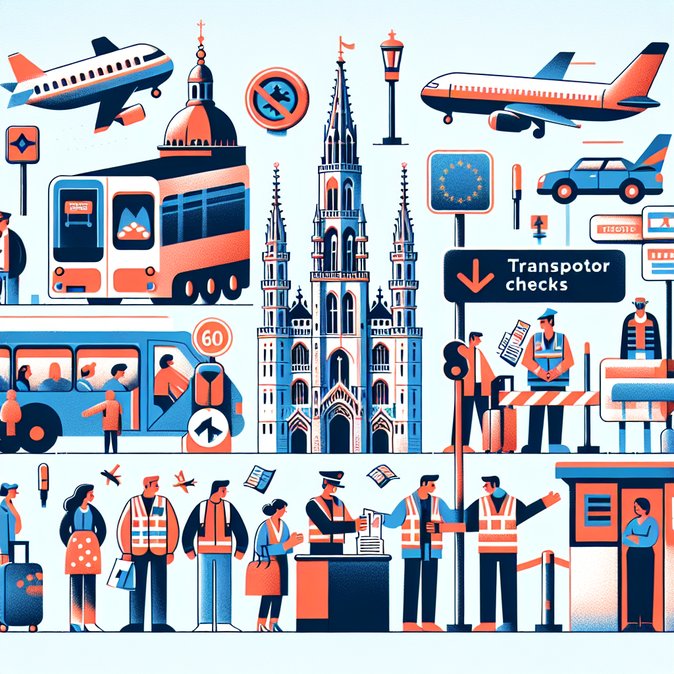
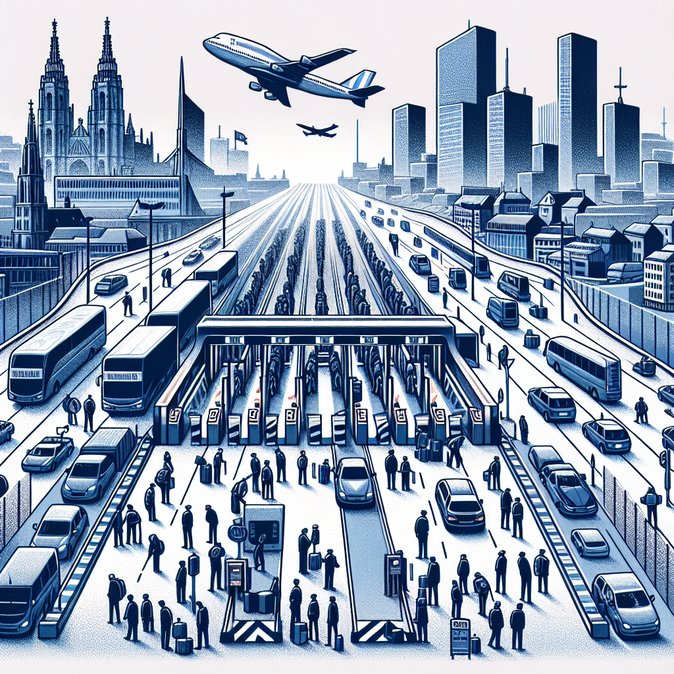
Although the checks stop short of re-introducing full border controls, they allow federal and local police to board long-distance coaches, stop motorists at motorway service areas and question passengers arriving on flights from what officials describe as “high-pressure” migration routes such as Italy and Greece. According to figures released by the Interior Ministry, officers inspected 25,500 people during the first six-month phase. Roughly 170 travellers lacked valid residence documents; 108 were transferred to the Immigration Office for further processing, 23 were placed in closed return centres and 12 were removed to their countries of origin.
Van Bossuyt argues the measures are a “necessary signal” that Belgium is no longer a soft option for irregular onward movement within the Schengen Area. Interior Minister Bernard Quintin told reporters that police will increasingly target smuggling networks and drug-related trafficking uncovered by the roadside controls. He added that Belgium’s interception rate is “significantly higher than the Netherlands’, proving the operation’s deterrent effect.”
![Belgium prolongs internal Schengen entry checks for six more months]()
In this evolving compliance environment, VisaHQ’s online platform (https://www.visahq.com/belgium/) can help travellers and corporate mobility teams stay ahead of shifting documentation rules by offering real-time guidance, expedited passport renewals and convenient Schengen or Belgian visa processing, thereby minimising the risk of delays during these intensified checks.
For multinational employers, the extension means that assignees and frequent business travellers transiting Belgium from other EU states should continue to carry passports or ID cards, proof of legal residence and, where applicable, copies of work permits. Coach operators serving Brussels, Antwerp and Liège have already adjusted timetables to allow for spot checks that can last up to 30 minutes. Companies running cross-border commuter shuttles between the Netherlands and Belgium are also advising staff to build in extra journey time.
Legal observers note that the announcement comes as EU institutions debate a broader revision of the Schengen Borders Code that could give member states more leeway to police internal movements. While the Belgian checks have so far avoided a formal notification to Brussels, civil-rights groups warn the line between targeted policing and de-facto border controls is becoming blurred.
Although the checks stop short of re-introducing full border controls, they allow federal and local police to board long-distance coaches, stop motorists at motorway service areas and question passengers arriving on flights from what officials describe as “high-pressure” migration routes such as Italy and Greece. According to figures released by the Interior Ministry, officers inspected 25,500 people during the first six-month phase. Roughly 170 travellers lacked valid residence documents; 108 were transferred to the Immigration Office for further processing, 23 were placed in closed return centres and 12 were removed to their countries of origin.
Van Bossuyt argues the measures are a “necessary signal” that Belgium is no longer a soft option for irregular onward movement within the Schengen Area. Interior Minister Bernard Quintin told reporters that police will increasingly target smuggling networks and drug-related trafficking uncovered by the roadside controls. He added that Belgium’s interception rate is “significantly higher than the Netherlands’, proving the operation’s deterrent effect.”
In this evolving compliance environment, VisaHQ’s online platform (https://www.visahq.com/belgium/) can help travellers and corporate mobility teams stay ahead of shifting documentation rules by offering real-time guidance, expedited passport renewals and convenient Schengen or Belgian visa processing, thereby minimising the risk of delays during these intensified checks.
For multinational employers, the extension means that assignees and frequent business travellers transiting Belgium from other EU states should continue to carry passports or ID cards, proof of legal residence and, where applicable, copies of work permits. Coach operators serving Brussels, Antwerp and Liège have already adjusted timetables to allow for spot checks that can last up to 30 minutes. Companies running cross-border commuter shuttles between the Netherlands and Belgium are also advising staff to build in extra journey time.
Legal observers note that the announcement comes as EU institutions debate a broader revision of the Schengen Borders Code that could give member states more leeway to police internal movements. While the Belgian checks have so far avoided a formal notification to Brussels, civil-rights groups warn the line between targeted policing and de-facto border controls is becoming blurred.