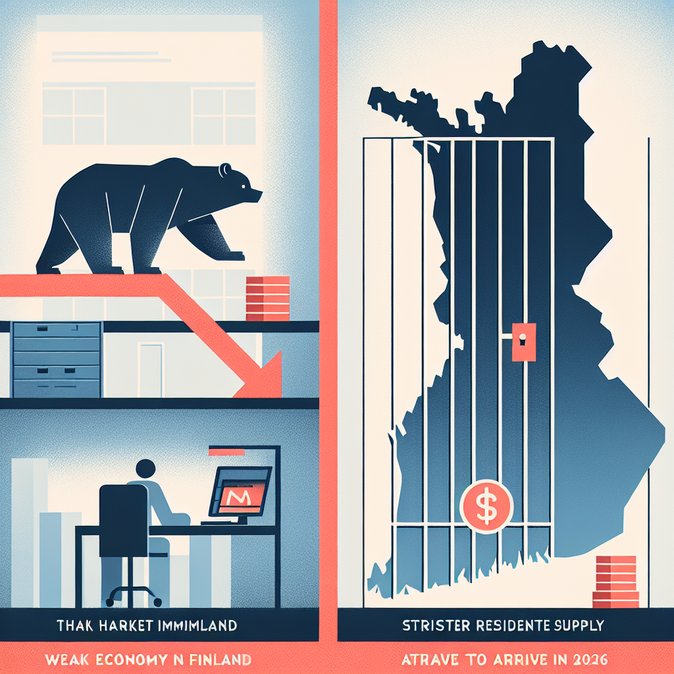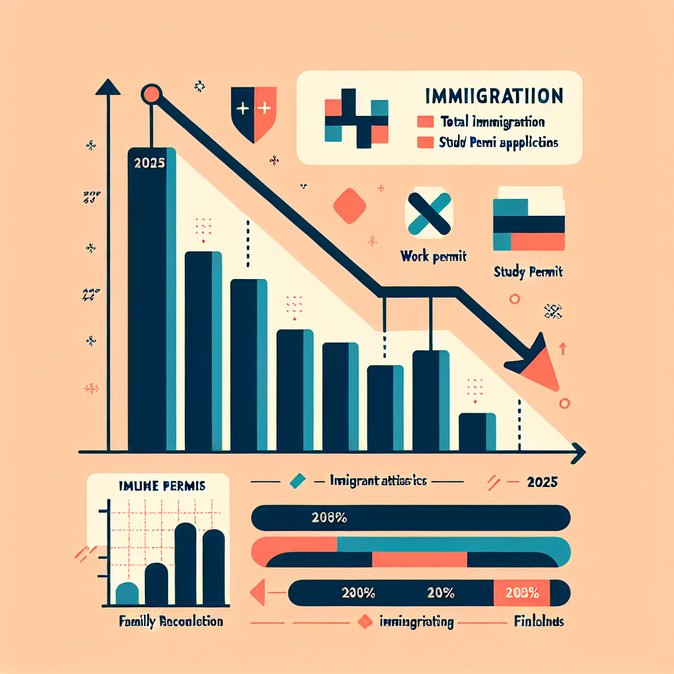
Finland’s Immigration Service (Migri) has released its annual statistics, confirming that overall immigration demand cooled markedly in 2025. According to the authority, it received 180,000-plus applications of all types last year—down from more than 196,000 in 2024. The steepest fall came in the country’s headline growth engine: work-based migration, where first-time residence-permit applications plunged by 25 percent to 11,324. Migri officials link the trend to Finland’s listless economy, corporate hiring freezes and elevated unemployment, all of which have curbed demand for foreign talent. (suomenmaa.fi)
Student mobility softened, too. First-time study-permit requests slipped four percent to just over 13,500, with the largest applicant pools still originating in South Asia. While international graduates increasingly remain in Finland—post-graduation residence-permit approvals jumped 33 percent—the pipeline feeding that pool is narrowing.
Whether you are a student weighing Finnish universities, a professional eyeing Nordic career opportunities, or a company moving staff to Helsinki, VisaHQ’s online platform (https://www.visahq.com/finland/) can guide you through every visa and residence-permit step—from personalized document checklists to live application tracking—helping you meet Migri’s evolving requirements with confidence.
![Finnish Immigration Service reports sharp drop in permit applications during 2025]()
Family-reunification flows bucked the trend. Nearly 24,000 first-time applications were filed, a marginal rise on 2024. Migri notes that the surge is driven partly by foreign students who now routinely bring partners and children once they have settled. At the same time, the proportion of positive decisions across all categories slipped to 80 percent (down from 84 percent a year earlier) as stricter income- and integration-related rules introduced by the centre-right coalition government begin to bite.
Asylum numbers also tapered: first-time claims fell 15 percent to a little over 2,000, despite continuing conflicts in key source countries such as Afghanistan, Iraq and Somalia. Authorities warn, however, that protection volumes are “highly sensitive to sudden geopolitical shocks” and could rebound quickly. Temporary-protection requests by Ukrainians remained high at about 12,000, reflecting the protracted war across Finland’s eastern border.
For multinationals running Finnish operations, the data underscore two realities. First, Finland’s talent-short industries—from ICT to health care—may find it harder to replace skills locally in 2026 unless the macro-economy picks up. Second, processing times could lengthen as Migri grapples with cost-recovery measures and higher fees coming into force this year. Companies are advised to start permit filings early, verify that salary thresholds (now €1,600 for regular workers) are met, and prepare to evidence integration and language-study plans where applicable.
Student mobility softened, too. First-time study-permit requests slipped four percent to just over 13,500, with the largest applicant pools still originating in South Asia. While international graduates increasingly remain in Finland—post-graduation residence-permit approvals jumped 33 percent—the pipeline feeding that pool is narrowing.
Whether you are a student weighing Finnish universities, a professional eyeing Nordic career opportunities, or a company moving staff to Helsinki, VisaHQ’s online platform (https://www.visahq.com/finland/) can guide you through every visa and residence-permit step—from personalized document checklists to live application tracking—helping you meet Migri’s evolving requirements with confidence.

Family-reunification flows bucked the trend. Nearly 24,000 first-time applications were filed, a marginal rise on 2024. Migri notes that the surge is driven partly by foreign students who now routinely bring partners and children once they have settled. At the same time, the proportion of positive decisions across all categories slipped to 80 percent (down from 84 percent a year earlier) as stricter income- and integration-related rules introduced by the centre-right coalition government begin to bite.
Asylum numbers also tapered: first-time claims fell 15 percent to a little over 2,000, despite continuing conflicts in key source countries such as Afghanistan, Iraq and Somalia. Authorities warn, however, that protection volumes are “highly sensitive to sudden geopolitical shocks” and could rebound quickly. Temporary-protection requests by Ukrainians remained high at about 12,000, reflecting the protracted war across Finland’s eastern border.
For multinationals running Finnish operations, the data underscore two realities. First, Finland’s talent-short industries—from ICT to health care—may find it harder to replace skills locally in 2026 unless the macro-economy picks up. Second, processing times could lengthen as Migri grapples with cost-recovery measures and higher fees coming into force this year. Companies are advised to start permit filings early, verify that salary thresholds (now €1,600 for regular workers) are met, and prepare to evidence integration and language-study plans where applicable.