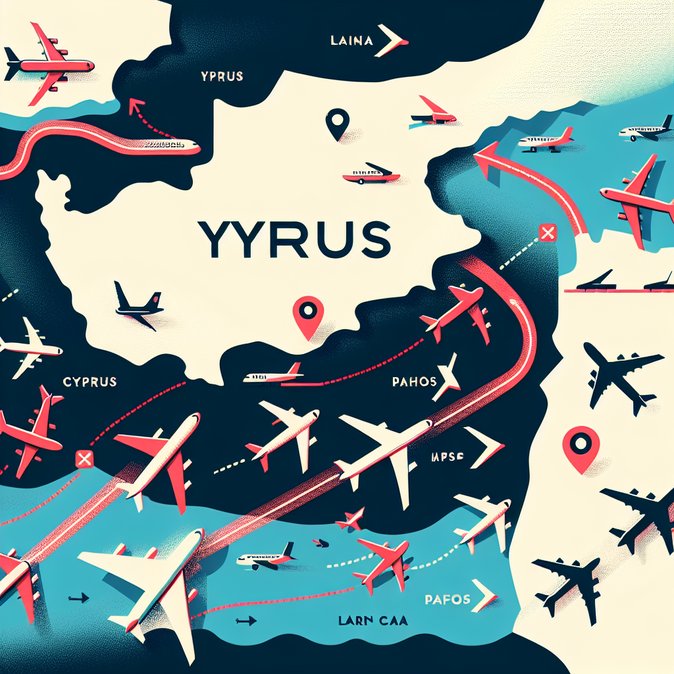
A Travel & Tour World analysis warns that potential US airstrikes on Iran could trigger widespread airspace closures across the Middle East, forcing carriers to cancel or reroute flights connecting Europe, Asia and North America. Airlines have already begun avoiding Iranian and Iraqi skies, and contingency plans name Larnaca and Pafos among the safest diversion airports for fuel and crew changes due to their location outside likely conflict zones. (travelandtourworld.com)
Cyprus Civil Aviation officials told TTW’s reporters that the island’s flight-information region remains fully operational and that Hermes Airports can accept up to 25 unscheduled wide-body diversions per day if Gulf hubs are disrupted. Ground-handling firms have been instructed to keep extra staff on standby through mid-February.
For global-mobility managers, the key takeaway is itinerary flexibility. Corporate travellers should build longer connection buffers, favour point-to-point services over tight inter-Gulf transfers and monitor NOTAMs for last-minute routing changes. Companies with critical staff transiting the region may wish to preload e-visas or fast-track entry permits so diverted flights can disembark in Cyprus without bureaucratic delays.
![Rising US–Iran tensions prompt airlines to reroute; Cyprus positioned as contingency hub]()
At this stage, VisaHQ can assist corporate travel managers by streamlining the Cyprus e-visa or entry-permit process. Through its user-friendly platform (https://www.visahq.com/cyprus/), travellers can complete applications online, track real-time status updates and receive expert guidance on required documentation, ensuring that any last-minute diversions to Larnaca or Pafos are not held up by paperwork.
A sudden influx of technical stops could, however, strain island infrastructure. Taxi unions are threatening renewed strike action over kerb-side congestion, and hotel capacity around Larnaca Airport is already at 78 % for the first week of February. Mobility stakeholders should therefore secure room blocks and ground transport in advance.
While the situation is fluid, Cyprus’ strategic geography could translate into short-term revenue for airport service providers and hoteliers, but it also underscores the island’s vulnerability to broader regional instability—an important factor for relocation risk assessments.
Cyprus Civil Aviation officials told TTW’s reporters that the island’s flight-information region remains fully operational and that Hermes Airports can accept up to 25 unscheduled wide-body diversions per day if Gulf hubs are disrupted. Ground-handling firms have been instructed to keep extra staff on standby through mid-February.
For global-mobility managers, the key takeaway is itinerary flexibility. Corporate travellers should build longer connection buffers, favour point-to-point services over tight inter-Gulf transfers and monitor NOTAMs for last-minute routing changes. Companies with critical staff transiting the region may wish to preload e-visas or fast-track entry permits so diverted flights can disembark in Cyprus without bureaucratic delays.

At this stage, VisaHQ can assist corporate travel managers by streamlining the Cyprus e-visa or entry-permit process. Through its user-friendly platform (https://www.visahq.com/cyprus/), travellers can complete applications online, track real-time status updates and receive expert guidance on required documentation, ensuring that any last-minute diversions to Larnaca or Pafos are not held up by paperwork.
A sudden influx of technical stops could, however, strain island infrastructure. Taxi unions are threatening renewed strike action over kerb-side congestion, and hotel capacity around Larnaca Airport is already at 78 % for the first week of February. Mobility stakeholders should therefore secure room blocks and ground transport in advance.
While the situation is fluid, Cyprus’ strategic geography could translate into short-term revenue for airport service providers and hoteliers, but it also underscores the island’s vulnerability to broader regional instability—an important factor for relocation risk assessments.