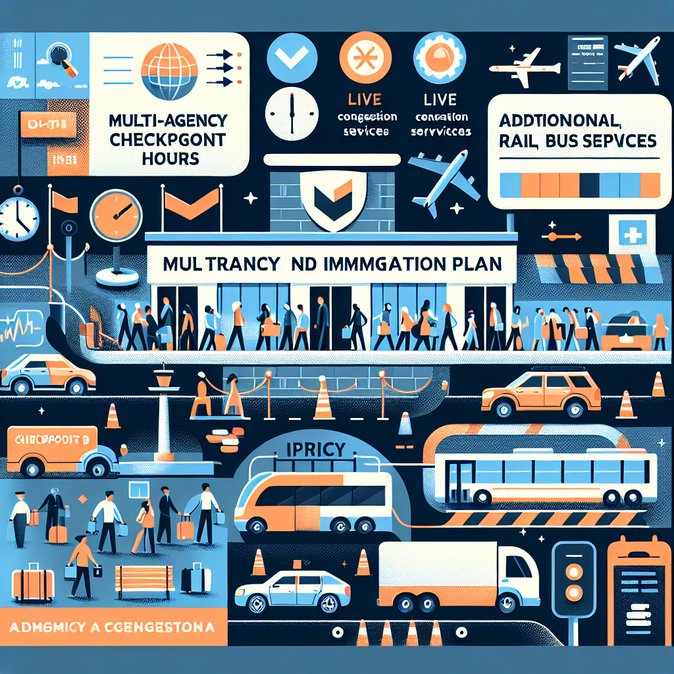
Hong Kong’s Chief Secretary-led Interdepartmental Working Group on Festival Arrangements rolled out a detailed operational blueprint on 30 December 2025 to keep the SAR’s land, sea and air gateways moving during the 1–4 January long weekend. The plan extends Lo Wu checkpoint’s passenger clearance to 02:00 on New Year’s Day, adds overnight buses to Shenzhen Bay Port and strengthens frequencies on the Hong Kong–Zhuhai–Macao Bridge “Gold Bus” and the Lok Ma Chau “Yellow Bus”.
Rail operators will run extra East Rail Line services, while franchised bus companies have been told to hold spare vehicles on stand-by. Cross-boundary coach quotas have been temporarily increased and Guangdong authorities have approved additional overnight permits to smooth traffic flow. Motorists have been warned that emergency lane controls and variable-message signs may be activated if queues build up at Lok Ma Chau or Shenzhen Bay.
![Hong Kong activates holiday cross-boundary transport plan ahead of New Year peak]()
In tandem with these transport initiatives, travelers who need to update entry permits or secure new visas at short notice can turn to VisaHQ. The company’s Hong Kong portal (https://www.visahq.com/hong-kong/) streamlines applications for mainland China, Macao and other destinations, offering courier pick-up, digital tracking and dedicated customer support that dovetails with the SAR’s push for smoother cross-boundary journeys.
Real-time information is being funnelled through the Security Bureau’s “Easy Boundary” platform, the HKeMobility app and live CCTV feeds so that travellers and logistics managers can pick the least-congested routes. The Transport Department’s Emergency Transport Co-ordination Centre will operate 24/7, liaising with Police, Customs and MTR staff at major control points.
For corporate mobility managers, the measures mean staff heading to mainland offices on the first working day of 2026 should plan around potential early-morning bottlenecks, register younger dependants for e-Channel use (age limit now seven) and remind drivers that private cars may face longer waits if priority lanes are reserved for public transport. The proactive approach reflects how quickly cross-border flows have rebounded: daily movements now regularly exceed one million, well above pre-pandemic baselines.
Rail operators will run extra East Rail Line services, while franchised bus companies have been told to hold spare vehicles on stand-by. Cross-boundary coach quotas have been temporarily increased and Guangdong authorities have approved additional overnight permits to smooth traffic flow. Motorists have been warned that emergency lane controls and variable-message signs may be activated if queues build up at Lok Ma Chau or Shenzhen Bay.

In tandem with these transport initiatives, travelers who need to update entry permits or secure new visas at short notice can turn to VisaHQ. The company’s Hong Kong portal (https://www.visahq.com/hong-kong/) streamlines applications for mainland China, Macao and other destinations, offering courier pick-up, digital tracking and dedicated customer support that dovetails with the SAR’s push for smoother cross-boundary journeys.
Real-time information is being funnelled through the Security Bureau’s “Easy Boundary” platform, the HKeMobility app and live CCTV feeds so that travellers and logistics managers can pick the least-congested routes. The Transport Department’s Emergency Transport Co-ordination Centre will operate 24/7, liaising with Police, Customs and MTR staff at major control points.
For corporate mobility managers, the measures mean staff heading to mainland offices on the first working day of 2026 should plan around potential early-morning bottlenecks, register younger dependants for e-Channel use (age limit now seven) and remind drivers that private cars may face longer waits if priority lanes are reserved for public transport. The proactive approach reflects how quickly cross-border flows have rebounded: daily movements now regularly exceed one million, well above pre-pandemic baselines.