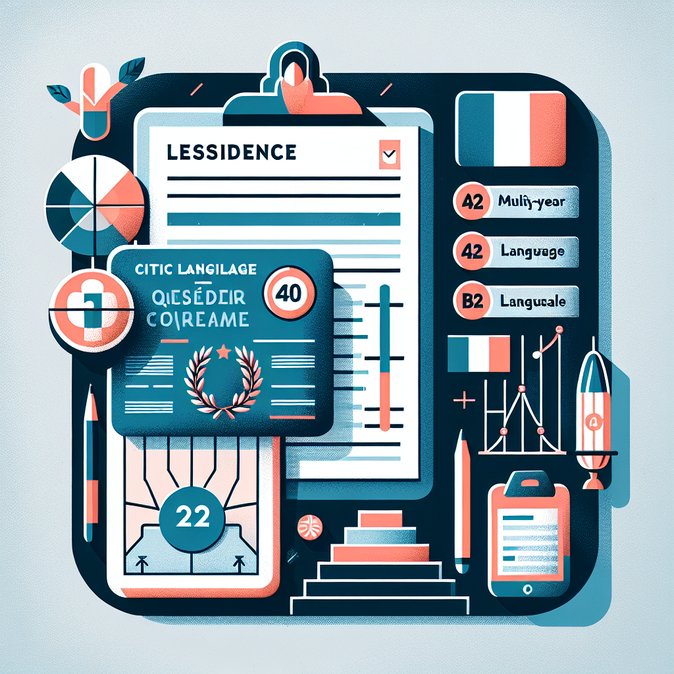
Starting next week, most non-EU nationals applying for a first multi-year carte de séjour, a 10-year resident card or French citizenship will have to pass a new 40-question multiple-choice “examen civique” in addition to the existing French-language requirement. The change, confirmed on 29 December and published in France’s Official Journal, affects Tunisians, Algerians, Moroccans and all other third-country nationals seeking long-term status.
Candidates will have 45 minutes to score at least 80 %, answering questions on republican values, institutions, history and daily civic life. Language thresholds are also reaffirmed: A2 for four-year residence cards, B1 for 10-year cards and B2 for naturalisation. Authorities say the dual test will ensure newcomers integrate “in substance, not just in form.”
Navigating the administrative maze that surrounds French residence permits and naturalisation can be daunting. VisaHQ’s dedicated France portal (https://www.visahq.com/france/) streamlines the process with tailored checklists, document pre-screening and real-time status tracking, freeing applicants to focus on acing the new civic and language exams rather than wrestling with paperwork.
![Mandatory civic-knowledge exam to join French language test for residence cards and naturalisation from 1 January 2026]()
Migrant-rights groups fear the bar is set too high. Sample questions leaked online ask about obscure constitutional articles and nineteenth-century events, which even native-born citizens struggle to answer. Lawyers warn that failed applicants risk losing legal status altogether, because under a January 2024 law every rejection must be paired with a removal order.
For employers, the stakes are practical. Talent Passports and ICT permits are exempt for renewals, but staff switching from student status or visitor visas will face the new exam. HR teams should build in at least three extra months and budget for preparatory courses (≈ €450) and certified test fees (≈ €150) when forecasting mobility costs.
Officials argue that better-qualified migrants will benefit in the long run: those who pass once will not repeat the civic exam when renewing, and successful naturalisation will unlock EU-wide mobility without work-permit formalities.
Candidates will have 45 minutes to score at least 80 %, answering questions on republican values, institutions, history and daily civic life. Language thresholds are also reaffirmed: A2 for four-year residence cards, B1 for 10-year cards and B2 for naturalisation. Authorities say the dual test will ensure newcomers integrate “in substance, not just in form.”
Navigating the administrative maze that surrounds French residence permits and naturalisation can be daunting. VisaHQ’s dedicated France portal (https://www.visahq.com/france/) streamlines the process with tailored checklists, document pre-screening and real-time status tracking, freeing applicants to focus on acing the new civic and language exams rather than wrestling with paperwork.

Migrant-rights groups fear the bar is set too high. Sample questions leaked online ask about obscure constitutional articles and nineteenth-century events, which even native-born citizens struggle to answer. Lawyers warn that failed applicants risk losing legal status altogether, because under a January 2024 law every rejection must be paired with a removal order.
For employers, the stakes are practical. Talent Passports and ICT permits are exempt for renewals, but staff switching from student status or visitor visas will face the new exam. HR teams should build in at least three extra months and budget for preparatory courses (≈ €450) and certified test fees (≈ €150) when forecasting mobility costs.
Officials argue that better-qualified migrants will benefit in the long run: those who pass once will not repeat the civic exam when renewing, and successful naturalisation will unlock EU-wide mobility without work-permit formalities.