Berlin has quietly prolonged the “temporary” controls it re-introduced in September on all nine land borders, publishing the extension notice in the Bundesanzeiger on 26 December. The measure means Bundespolizei officers will continue spot identity checks on cars, coaches and trains entering from neighbouring countries—including Czechia—until at least 15 March 2026.
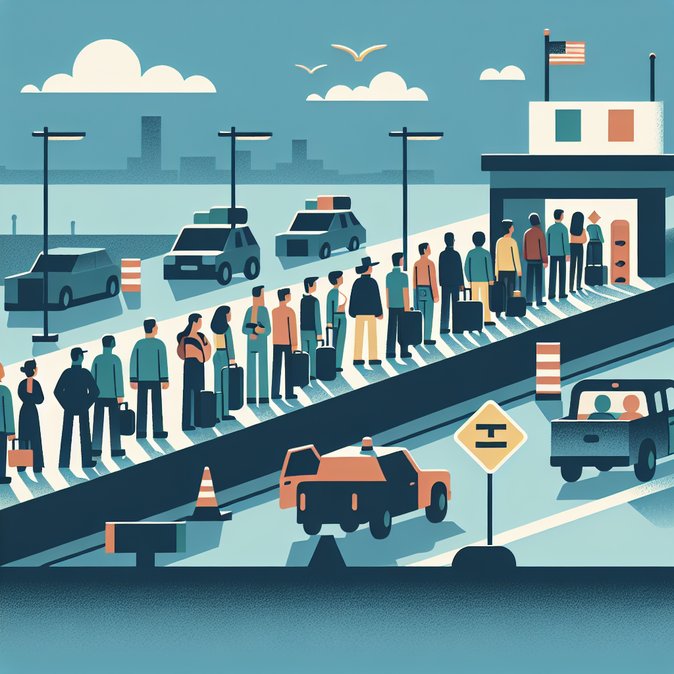
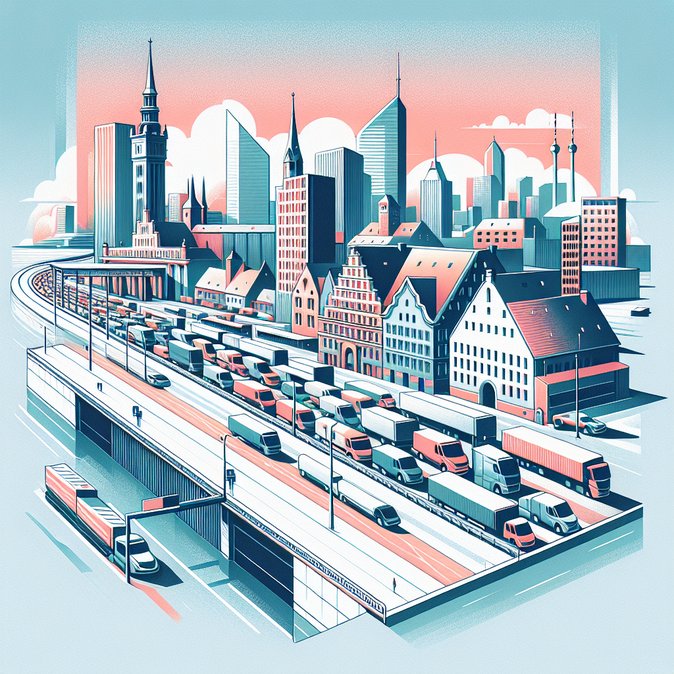
For the estimated 40 000 Czech nationals who commute daily to factories and offices in Bavaria and Saxony, the decision spells longer and less predictable journey times. Queues of 30–45 minutes have already been reported on the D5 motorway (Rozvadov–Waidhaus) and on the Dresden–Prague rail line. Logistics firms complain that just-in-time deliveries now require larger buffers, raising costs for automotive and electronics supply chains.
From a compliance standpoint, travellers must carry passports or national ID cards plus documentation proving the purpose of travel—work contracts, A1 social-security forms or invitation letters. Employers are reminding posted workers that overstaying Schengen limits between identity checkpoints could attract fines.
![Germany Extends Internal Schengen Border Checks to 15 March 2026, Impacting Czech Cross-Border Commuters]()
In light of these tighter requirements, VisaHQ’s online portal—featuring a Czech Republic section at https://www.visahq.com/czech-republic/—can help commuters, posted workers and corporate mobility teams verify document lists, download A1 forms and stay updated on Schengen rules, reducing the risk of holdups during German spot checks.
Border checks also complicate corporate travel planning. Mobility managers are advising staff to build at least an extra hour into journeys and to retain digital copies of key documents on their phones. Companies with high-frequency cross-border traffic are exploring shuttle buses with pre-cleared passenger manifests to streamline inspections.
Berlin insists the controls are a response to irregular migration along the Balkan route and recent people-smuggling cases. However, politicians in Prague warn that prolonged checks threaten the economic integration of the border regions and have called on the European Commission to scrutinise the extension.
For the estimated 40 000 Czech nationals who commute daily to factories and offices in Bavaria and Saxony, the decision spells longer and less predictable journey times. Queues of 30–45 minutes have already been reported on the D5 motorway (Rozvadov–Waidhaus) and on the Dresden–Prague rail line. Logistics firms complain that just-in-time deliveries now require larger buffers, raising costs for automotive and electronics supply chains.
From a compliance standpoint, travellers must carry passports or national ID cards plus documentation proving the purpose of travel—work contracts, A1 social-security forms or invitation letters. Employers are reminding posted workers that overstaying Schengen limits between identity checkpoints could attract fines.
In light of these tighter requirements, VisaHQ’s online portal—featuring a Czech Republic section at https://www.visahq.com/czech-republic/—can help commuters, posted workers and corporate mobility teams verify document lists, download A1 forms and stay updated on Schengen rules, reducing the risk of holdups during German spot checks.
Border checks also complicate corporate travel planning. Mobility managers are advising staff to build at least an extra hour into journeys and to retain digital copies of key documents on their phones. Companies with high-frequency cross-border traffic are exploring shuttle buses with pre-cleared passenger manifests to streamline inspections.
Berlin insists the controls are a response to irregular migration along the Balkan route and recent people-smuggling cases. However, politicians in Prague warn that prolonged checks threaten the economic integration of the border regions and have called on the European Commission to scrutinise the extension.