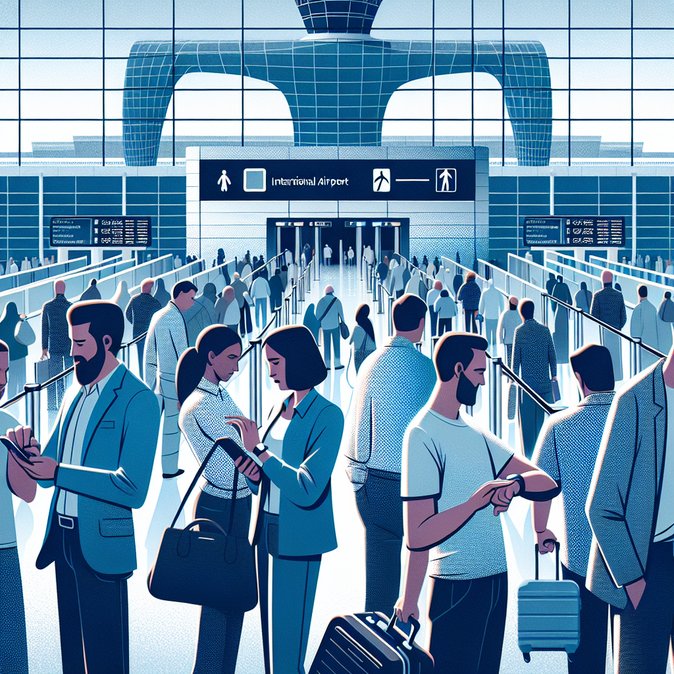
Holiday departures from Václav Havel Airport Prague descended into chaos on the morning of 28 December when the European Union’s brand-new Entry/Exit System (EES) suffered its first major crash. A routine overnight software patch failed to load, freezing all 36 biometric kiosks that process third-country nationals. With no certified backup e-gates, Czech Foreign Police reverted to manual passport stamping, instantly quadrupling processing times.
Long-haul flights bore the brunt: Etihad’s EY-62 to Abu Dhabi and Korean Air’s KE-936 to Seoul both missed their departure slots, triggering a domino wave of missed connections across the Schengen network. Airports Council International estimates carriers lost more than €180 000 in re-routing and accommodation costs during the three-hour bottleneck. Business travellers reported spending up to four hours in queues, jeopardising high-value meetings scheduled after arrival.
Although residents holding Czech long-stay visas are exempt from EES registration, visiting executives and posted workers must enrol biometrics on both entry and exit. Travel-risk consultants are therefore advising corporates to add at least one extra hour to all outbound itineraries from Prague until the system stabilises. Airport management has ordered an immediate forensic review by EU agency eu-LISA and will hire 60 temporary “border assistants” plus install 20 additional kiosks ahead of the late-January business-travel surge.
![EES Outage Forces Manual Passport Stamping and Three-Hour Queues at Prague Airport]()
Travellers looking for a single point of truth on Czech entry rules can tap VisaHQ’s online portal, which consolidates the latest EES alerts and visa requirements in one dashboard. The service (https://www.visahq.com/czech-republic/) lets users check eligibility, upload documents and secure the correct Czech visa well ahead of departure, reducing the risk of being caught in last-minute border disruptions.
For now, mobility managers should brief travellers to double-check visa validity, carry printed proof of onward tickets and hotel bookings, and arrive at the airport at least three hours before departure. Digital visa platforms that monitor real-time border status can help flag evolving requirements and avert last-minute surprises.
The incident underscores growing pains as Europe transitions to biometric border management. Until reliability improves, companies with tight travel schedules may consider routing staff through neighbouring hubs such as Munich or Vienna, where contingency capacity is higher.
Long-haul flights bore the brunt: Etihad’s EY-62 to Abu Dhabi and Korean Air’s KE-936 to Seoul both missed their departure slots, triggering a domino wave of missed connections across the Schengen network. Airports Council International estimates carriers lost more than €180 000 in re-routing and accommodation costs during the three-hour bottleneck. Business travellers reported spending up to four hours in queues, jeopardising high-value meetings scheduled after arrival.
Although residents holding Czech long-stay visas are exempt from EES registration, visiting executives and posted workers must enrol biometrics on both entry and exit. Travel-risk consultants are therefore advising corporates to add at least one extra hour to all outbound itineraries from Prague until the system stabilises. Airport management has ordered an immediate forensic review by EU agency eu-LISA and will hire 60 temporary “border assistants” plus install 20 additional kiosks ahead of the late-January business-travel surge.
Travellers looking for a single point of truth on Czech entry rules can tap VisaHQ’s online portal, which consolidates the latest EES alerts and visa requirements in one dashboard. The service (https://www.visahq.com/czech-republic/) lets users check eligibility, upload documents and secure the correct Czech visa well ahead of departure, reducing the risk of being caught in last-minute border disruptions.
For now, mobility managers should brief travellers to double-check visa validity, carry printed proof of onward tickets and hotel bookings, and arrive at the airport at least three hours before departure. Digital visa platforms that monitor real-time border status can help flag evolving requirements and avert last-minute surprises.
The incident underscores growing pains as Europe transitions to biometric border management. Until reliability improves, companies with tight travel schedules may consider routing staff through neighbouring hubs such as Munich or Vienna, where contingency capacity is higher.
More From Czech Republic
View all
Czech Interior Ministry Takes Immigration Helplines Offline over Holidays, Putting January Permit Deadlines at Risk
Germany Extends Internal Schengen Border Checks to 15 March 2026, Impacting Czech Cross-Border Commuters