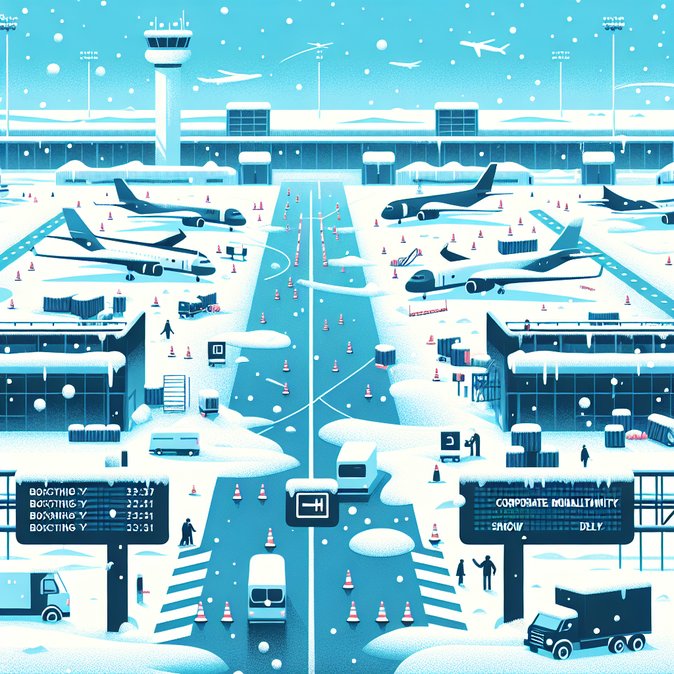
A powerful winter storm that swept across southern Ontario, Québec, Alberta and B.C. over the weekend paralysed Canada’s air-transport network just as holiday travellers and relocating assignees were heading home. Transport Canada’s Air-Travel Disruption Report logged more than 1,200 cancellations and 2,300 delays of 30 minutes or longer between 27-28 December, with Toronto Pearson alone cancelling 320 departures and arrivals .
Airport authorities activated “winter-hold” protocols: arriving aircraft were diverted into extended holding patterns while convoys of snow-ploughs cleared runways and de-icing crews worked round-the-clock. One Air Canada wide-body spent six hours on the tarmac before crew-duty limits forced a diversion to Ottawa. Gate congestion forced several international flights to refuel in Winnipeg before continuing to final destinations .
For mobility managers the timing could not be worse. Boxing-Week is traditionally when many leisure travellers return and January assignments begin. Companies scrambled to reroute assignees or delay start dates. Under Canada’s Air Passenger Protection Regulations, weather events exempt airlines from mandatory hotel or meal vouchers, although unused tickets remain eligible for refunds or free rebooking—a nuance HR teams should flag to staff .
![Blizzard Grounds 1,200+ Flights at Canada’s Four Busiest Airports]()
For globally mobile employees, visa validity can become an unexpected headache when itineraries change at the last minute. VisaHQ’s Canadian portal (https://www.visahq.com/canada/) offers a rapid, online way to renew passports, secure transit visas or apply for eTAs, giving mobility teams real-time tracking and reducing administrative stress when storms upend travel plans.
The storm has reignited debate over the resilience of Canada’s hub-and-spoke model. Pearson’s ground-handling union warned that chronic understaffing leaves little slack during extreme weather. Transport Canada is studying whether to mandate minimum winter-operations staffing ratios, with recommendations expected in early 2026. In the meantime, employers may wish to route travellers through secondary hubs such as Ottawa or Halifax during peak winter months.
Cargo backlogs could ripple into supply-chain timelines. Several manufacturers told Global Mobility Daily they are diverting time-critical components to cross-border trucking to meet production deadlines. The lesson: build extra buffer into January transition plans—and keep an eye on Environment Canada’s long-range forecasts.
Airport authorities activated “winter-hold” protocols: arriving aircraft were diverted into extended holding patterns while convoys of snow-ploughs cleared runways and de-icing crews worked round-the-clock. One Air Canada wide-body spent six hours on the tarmac before crew-duty limits forced a diversion to Ottawa. Gate congestion forced several international flights to refuel in Winnipeg before continuing to final destinations .
For mobility managers the timing could not be worse. Boxing-Week is traditionally when many leisure travellers return and January assignments begin. Companies scrambled to reroute assignees or delay start dates. Under Canada’s Air Passenger Protection Regulations, weather events exempt airlines from mandatory hotel or meal vouchers, although unused tickets remain eligible for refunds or free rebooking—a nuance HR teams should flag to staff .

For globally mobile employees, visa validity can become an unexpected headache when itineraries change at the last minute. VisaHQ’s Canadian portal (https://www.visahq.com/canada/) offers a rapid, online way to renew passports, secure transit visas or apply for eTAs, giving mobility teams real-time tracking and reducing administrative stress when storms upend travel plans.
The storm has reignited debate over the resilience of Canada’s hub-and-spoke model. Pearson’s ground-handling union warned that chronic understaffing leaves little slack during extreme weather. Transport Canada is studying whether to mandate minimum winter-operations staffing ratios, with recommendations expected in early 2026. In the meantime, employers may wish to route travellers through secondary hubs such as Ottawa or Halifax during peak winter months.
Cargo backlogs could ripple into supply-chain timelines. Several manufacturers told Global Mobility Daily they are diverting time-critical components to cross-border trucking to meet production deadlines. The lesson: build extra buffer into January transition plans—and keep an eye on Environment Canada’s long-range forecasts.