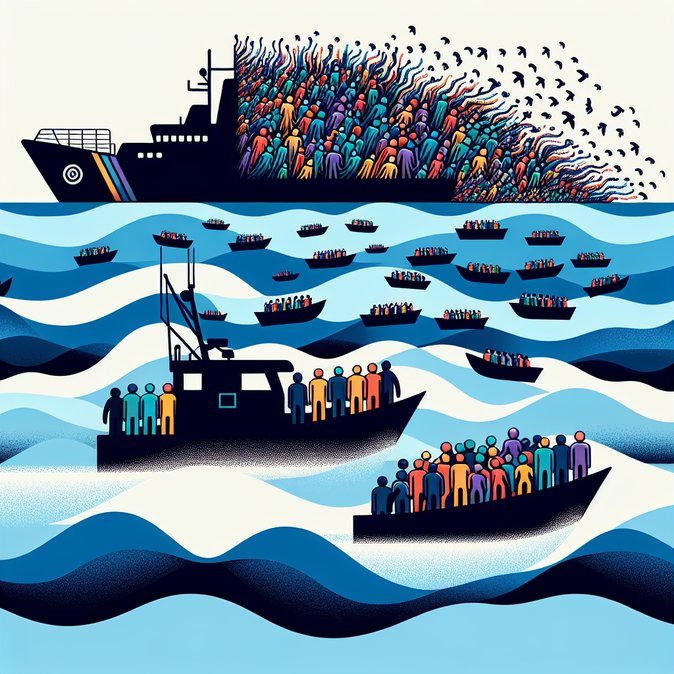
French and British ministers had expected the new at-sea interception mandate agreed in July to be operational by January, enabling French officers to disable motorised dinghies up to 300 m from the beaches of Pas-de-Calais before migrants boarded. But on Saturday, December 28 the Alliance and UNSA-Police unions publicly instructed members not to act, warning that any manoeuvre that caused a capsize could expose officers to manslaughter charges. The Interior Ministry confirmed that French prosecutors will not grant blanket immunity, effectively freezing the programme.
The stand-off leaves a £800 million Franco-British cooperation package without its flagship deterrent. The UK had bank-rolled drones, coastal fencing and 700 extra gendarmes on condition that France move “further out to sea”. More than 37,000 people have already crossed the Channel in 2025, and last Saturday set a December record with 803 arrivals. British Prime Minister Sir Keir Starmer faces domestic pressure to show quick results after branding small-boat crossings his government’s “number-one priority”.
![French Police Unions Stall At-Sea Interceptions Plan for Channel Migrant Boats]()
Against this uncertain backdrop, mobility departments can streamline individual travel clearances by turning to VisaHQ. Through its France portal (https://www.visahq.com/france/), the service provides up-to-date visa information and application support for both Schengen and UK entries, helping employers keep relocations and business trips on schedule even as border policies remain in flux.
Legally, France is torn between the duty to save life at sea and a 2012 Conseil d’État ruling that bars the use of force against craft carrying passengers except in extreme circumstances. Maritime lawyers note that once migrants are on board, the boats qualify as “distressed vessels”, obliging both French and British navies to prioritise rescue over enforcement. The unions argue that disabling propellers or deploying floating barriers in shallow surf creates an unacceptable risk of drowning.
For mobility managers, the impasse means the operational status quo will continue into 2026: Britain will keep funding French beach patrols, and asylum applicants who reach UK waters will still be processed in the UK. Corporations moving talent between the two countries must therefore plan for ongoing delays at Dover, Folkestone and Eurotunnel terminals whenever weather windows favour crossings. Compliance teams should also monitor potential policy pivots if London looks to third-country processing or tighter visa rules in response to rising arrivals.
The stand-off leaves a £800 million Franco-British cooperation package without its flagship deterrent. The UK had bank-rolled drones, coastal fencing and 700 extra gendarmes on condition that France move “further out to sea”. More than 37,000 people have already crossed the Channel in 2025, and last Saturday set a December record with 803 arrivals. British Prime Minister Sir Keir Starmer faces domestic pressure to show quick results after branding small-boat crossings his government’s “number-one priority”.

Against this uncertain backdrop, mobility departments can streamline individual travel clearances by turning to VisaHQ. Through its France portal (https://www.visahq.com/france/), the service provides up-to-date visa information and application support for both Schengen and UK entries, helping employers keep relocations and business trips on schedule even as border policies remain in flux.
Legally, France is torn between the duty to save life at sea and a 2012 Conseil d’État ruling that bars the use of force against craft carrying passengers except in extreme circumstances. Maritime lawyers note that once migrants are on board, the boats qualify as “distressed vessels”, obliging both French and British navies to prioritise rescue over enforcement. The unions argue that disabling propellers or deploying floating barriers in shallow surf creates an unacceptable risk of drowning.
For mobility managers, the impasse means the operational status quo will continue into 2026: Britain will keep funding French beach patrols, and asylum applicants who reach UK waters will still be processed in the UK. Corporations moving talent between the two countries must therefore plan for ongoing delays at Dover, Folkestone and Eurotunnel terminals whenever weather windows favour crossings. Compliance teams should also monitor potential policy pivots if London looks to third-country processing or tighter visa rules in response to rising arrivals.