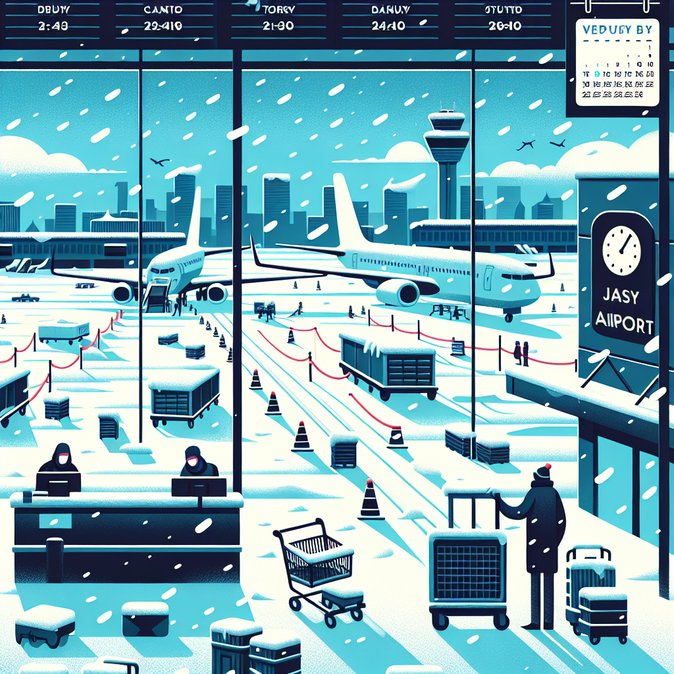
An intense late-December snow-and-ice system crippled Canada’s aviation network on 27–28 December, forcing carriers to cancel more than 1,200 flights and delay a further 2,300 by at least 30 minutes. Toronto Pearson, Montréal-Trudeau, Calgary and Vancouver bore the brunt, with Pearson alone accounting for 320 cancellations, according to Transport Canada’s Air-Travel Disruption Report issued at 08:45 EST on Saturday.
Airport operators activated so-called “winter-hold” protocols: inbound aircraft were diverted into extended holding patterns while convoys of snowploughs cleared runways and de-icing crews worked round-the-clock. The longest single delay—six hours for Air Canada flight AC 876—illustrates how crew-duty limits quickly cascade into network-wide schedule chaos. Gate congestion forced several wide-body aircraft to divert to Ottawa and Winnipeg for refuelling before continuing to their final destinations.
For business travellers, the timing could hardly be worse. The post-Christmas “Boxing-Week” period is traditionally one of the busiest for leisure return trips and the start of January relocation assignments. Companies with assignees due to report in early January are scrambling to arrange alternative routings or push back start dates. Mobility managers should remind travellers that, under Canada’s Air Passenger Protection Regulations, weather events exempt airlines from mandatory hotel or meal vouchers, although unused tickets are eligible for refunds or rebooking at no extra charge.
![Historic Winter Storm Grounds Over 1,200 Flights at Canada’s Four Busiest Airports]()
To help cut through at least one layer of complexity, mobility teams can streamline visa, eTA and passport services through VisaHQ. The platform’s Canada page (https://www.visahq.com/canada/) lets travellers confirm entry requirements and submit secure online applications, making it easier to pivot itineraries or rebook flights when winter storms disrupt airport operations.
Longer-term, the disruption is rekindling debate over the resiliency of Canada’s hub-and-spoke model. Pearson’s unionised ground-handling workforce has warned that chronic understaffing leaves little slack when major storms hit. Transport Canada is expected to release recommendations early in 2026 on whether to mandate minimum winter-operations staffing ratios at designated airports. Until then, employers may wish to diversify routings through secondary hubs such as Ottawa or Halifax during peak winter months.
Finally, cargo backlogs could ripple into supply-chain timelines. Several multinational firms told Global Mobility Daily that they are diverting time-critical components to cross-border trucking to meet production deadlines. The lesson for HR and logistics alike: build extra buffer into January transition plans—and keep an eye on Environment Canada’s long-range forecasts.
Airport operators activated so-called “winter-hold” protocols: inbound aircraft were diverted into extended holding patterns while convoys of snowploughs cleared runways and de-icing crews worked round-the-clock. The longest single delay—six hours for Air Canada flight AC 876—illustrates how crew-duty limits quickly cascade into network-wide schedule chaos. Gate congestion forced several wide-body aircraft to divert to Ottawa and Winnipeg for refuelling before continuing to their final destinations.
For business travellers, the timing could hardly be worse. The post-Christmas “Boxing-Week” period is traditionally one of the busiest for leisure return trips and the start of January relocation assignments. Companies with assignees due to report in early January are scrambling to arrange alternative routings or push back start dates. Mobility managers should remind travellers that, under Canada’s Air Passenger Protection Regulations, weather events exempt airlines from mandatory hotel or meal vouchers, although unused tickets are eligible for refunds or rebooking at no extra charge.

To help cut through at least one layer of complexity, mobility teams can streamline visa, eTA and passport services through VisaHQ. The platform’s Canada page (https://www.visahq.com/canada/) lets travellers confirm entry requirements and submit secure online applications, making it easier to pivot itineraries or rebook flights when winter storms disrupt airport operations.
Longer-term, the disruption is rekindling debate over the resiliency of Canada’s hub-and-spoke model. Pearson’s unionised ground-handling workforce has warned that chronic understaffing leaves little slack when major storms hit. Transport Canada is expected to release recommendations early in 2026 on whether to mandate minimum winter-operations staffing ratios at designated airports. Until then, employers may wish to diversify routings through secondary hubs such as Ottawa or Halifax during peak winter months.
Finally, cargo backlogs could ripple into supply-chain timelines. Several multinational firms told Global Mobility Daily that they are diverting time-critical components to cross-border trucking to meet production deadlines. The lesson for HR and logistics alike: build extra buffer into January transition plans—and keep an eye on Environment Canada’s long-range forecasts.