With less than 100 days to go before the EU’s Entry/Exit System (EES) must be operational at 50 % of French border points, the Interior Ministry has published an updated implementation calendar that affects every non-EU business traveller. The Connexion reports that, from mid-January, airports, seaports and land crossings will run EES for at least two hours per day, ramping up to full use by 10 April 2026.
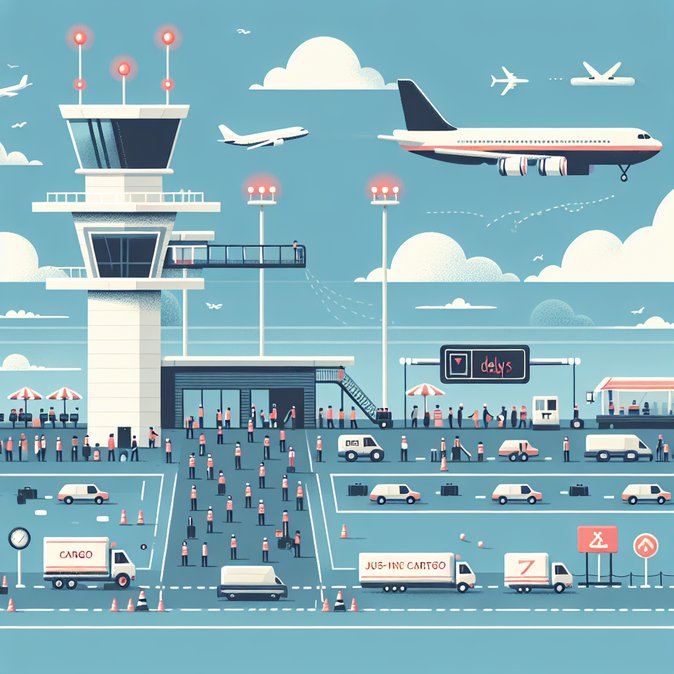
EES replaces the Schengen passport stamp with a biometric register capturing facial images and fingerprints on first entry, dramatically reducing opportunities to ‘over-stay and over-stay unnoticed’. While the Ministry claims initial trials generated ‘minimal’ queues at small regional airports, operators at Paris-CDG and Nice caution that enrolment can take up to 90 seconds per passenger – triple the old manual scan – and that capacity margins are thin during the 07:00-11:00 arrival peak.
Closely linked is ETIAS, the electronic travel authorisation that will become mandatory for visa-waiver nationals by November 2026. The system will draw on EES data to score security and migration risk in real time. Airlines therefore face a double compliance burden: verifying ETIAS approval before boarding, and ensuring first-time EES enrolment on arrival. Failure to do so could trigger fines of up to €5,000 per passenger.
![What Changes at the French Border in 2026: EES Roll-Out and ETIAS Countdown]()
For companies and travellers needing practical support with the fast-approaching EES and ETIAS requirements, VisaHQ offers streamlined online services—including document checks, timeline alerts and application handling—through its dedicated France page (https://www.visahq.com/france/). Leveraging a global network, the platform can coordinate corporate travel compliance across multiple jurisdictions while keeping individual executives informed of every rule change.
For corporate-mobility teams, the 2026 horizon means acting now: audit traveller profiles to flag ‘third-country nationals’, budget for potential airport delays, and communicate clearly that holding a valid Schengen visa (or visa waiver) will soon no longer be enough. Seasoned executives with frequent Schengen stamps will have their day-counts calculated automatically; inadvertent over-stay will generate an alert at exit.
The upside is long-term automation. Once registered, travellers will be able to use self-service e-gates, and France expects average throughput times to fall below pre-COVID levels by late 2026. The Ministry is recruiting 700 additional border guards and installing 150 new biometric kiosks at CDG alone to meet the deadline.
EES replaces the Schengen passport stamp with a biometric register capturing facial images and fingerprints on first entry, dramatically reducing opportunities to ‘over-stay and over-stay unnoticed’. While the Ministry claims initial trials generated ‘minimal’ queues at small regional airports, operators at Paris-CDG and Nice caution that enrolment can take up to 90 seconds per passenger – triple the old manual scan – and that capacity margins are thin during the 07:00-11:00 arrival peak.
Closely linked is ETIAS, the electronic travel authorisation that will become mandatory for visa-waiver nationals by November 2026. The system will draw on EES data to score security and migration risk in real time. Airlines therefore face a double compliance burden: verifying ETIAS approval before boarding, and ensuring first-time EES enrolment on arrival. Failure to do so could trigger fines of up to €5,000 per passenger.

For companies and travellers needing practical support with the fast-approaching EES and ETIAS requirements, VisaHQ offers streamlined online services—including document checks, timeline alerts and application handling—through its dedicated France page (https://www.visahq.com/france/). Leveraging a global network, the platform can coordinate corporate travel compliance across multiple jurisdictions while keeping individual executives informed of every rule change.
For corporate-mobility teams, the 2026 horizon means acting now: audit traveller profiles to flag ‘third-country nationals’, budget for potential airport delays, and communicate clearly that holding a valid Schengen visa (or visa waiver) will soon no longer be enough. Seasoned executives with frequent Schengen stamps will have their day-counts calculated automatically; inadvertent over-stay will generate an alert at exit.
The upside is long-term automation. Once registered, travellers will be able to use self-service e-gates, and France expects average throughput times to fall below pre-COVID levels by late 2026. The Ministry is recruiting 700 additional border guards and installing 150 new biometric kiosks at CDG alone to meet the deadline.