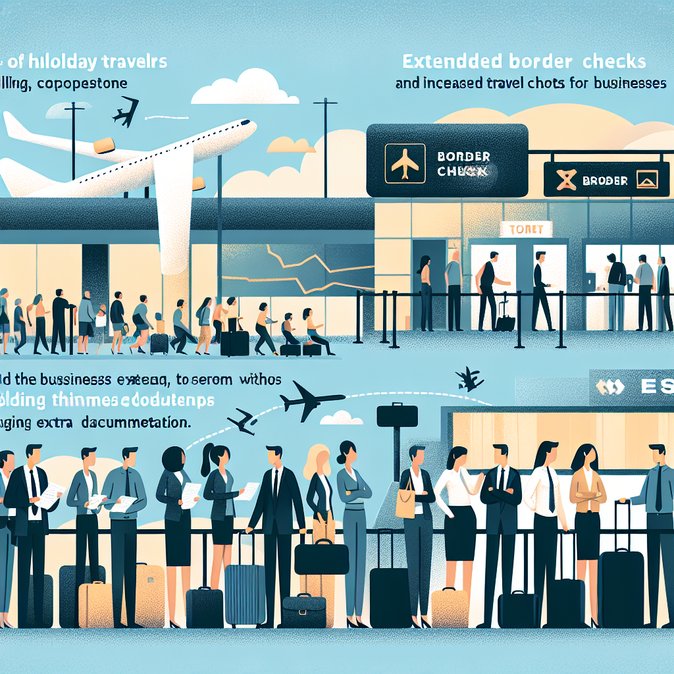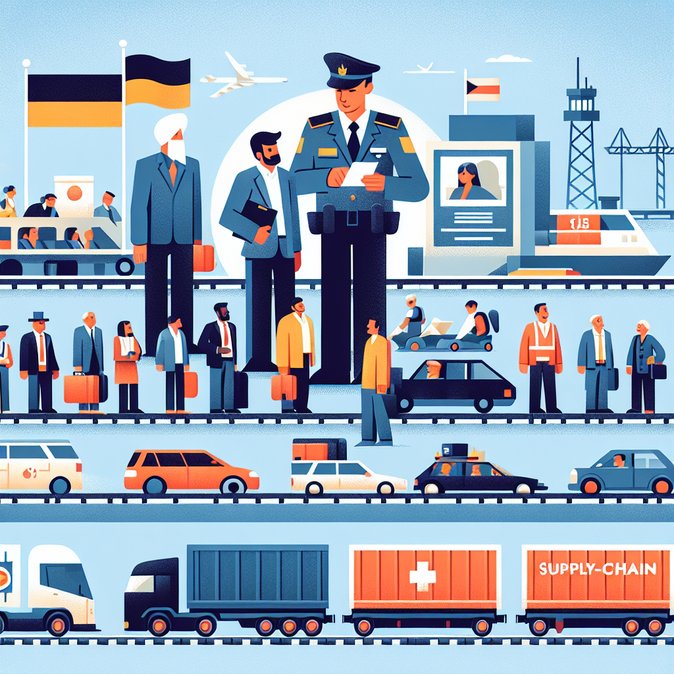
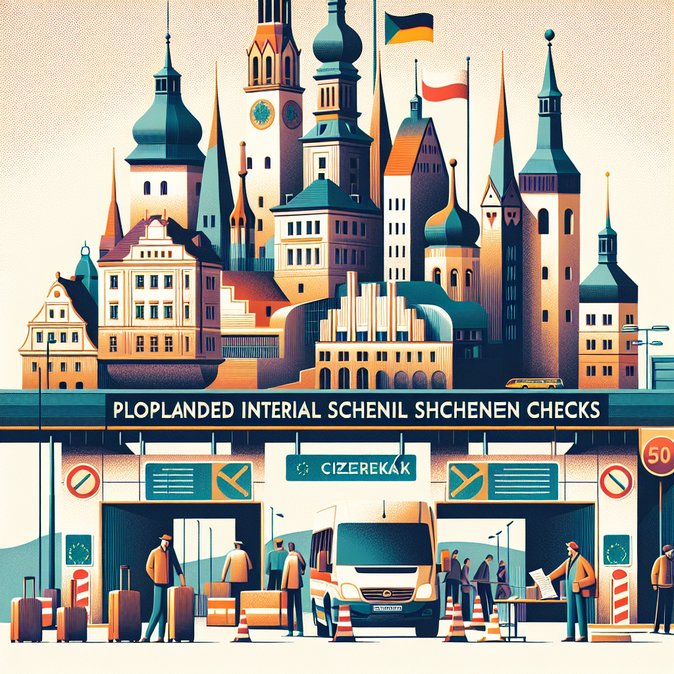
Berlin has quietly prolonged the ‘temporary’ controls it re-introduced in September on all land borders—including crossings from Czechia—until the legal ceiling of 15 March 2026. The notice, published in the Federal Gazette on 22 December, empowers Bundespolizei officers to stop motorists, rail passengers and coach travellers at random to verify ID, travel purpose and proof of funds.
For the 40,000 Czech commuters who enter Bavaria and Saxony daily, the move spells longer and less predictable journey times. Queues of 30–45 minutes have already been reported on the D5 (Rozvadov–Waidhaus) motorway and on the Dresden–Prague rail line. Logistics firms complain that just-in-time deliveries now require larger buffers, raising costs.
![Germany Extends Border Checks with Czechia to 15 March 2026]()
In this tightening border environment, VisaHQ can help travellers assemble the correct documentation before they set off. The company’s online portal for Czech citizens (https://www.visahq.com/czech-republic/) provides step-by-step guidance on visas, residence confirmations and supporting papers such as proof of funds or employment letters—resources that can shorten inspections and reduce the risk of being turned back.
Travel-management companies are advising cross-border workers to carry work contracts or invitation letters to speed on-the-spot inspections. Multinationals with operations on both sides of the frontier are revisiting remote-work policies and, in some cases, booking hotel blocks near plants to avoid daily crossings.
German authorities justify the extension as necessary to curb irregular migration, but Brussels is signalling impatience with repeated renewals. If the checks continue beyond March, the European Commission could launch infringement proceedings—an outcome that would put further diplomatic strain on Prague-Berlin relations.
For the 40,000 Czech commuters who enter Bavaria and Saxony daily, the move spells longer and less predictable journey times. Queues of 30–45 minutes have already been reported on the D5 (Rozvadov–Waidhaus) motorway and on the Dresden–Prague rail line. Logistics firms complain that just-in-time deliveries now require larger buffers, raising costs.
In this tightening border environment, VisaHQ can help travellers assemble the correct documentation before they set off. The company’s online portal for Czech citizens (https://www.visahq.com/czech-republic/) provides step-by-step guidance on visas, residence confirmations and supporting papers such as proof of funds or employment letters—resources that can shorten inspections and reduce the risk of being turned back.
Travel-management companies are advising cross-border workers to carry work contracts or invitation letters to speed on-the-spot inspections. Multinationals with operations on both sides of the frontier are revisiting remote-work policies and, in some cases, booking hotel blocks near plants to avoid daily crossings.
German authorities justify the extension as necessary to curb irregular migration, but Brussels is signalling impatience with repeated renewals. If the checks continue beyond March, the European Commission could launch infringement proceedings—an outcome that would put further diplomatic strain on Prague-Berlin relations.