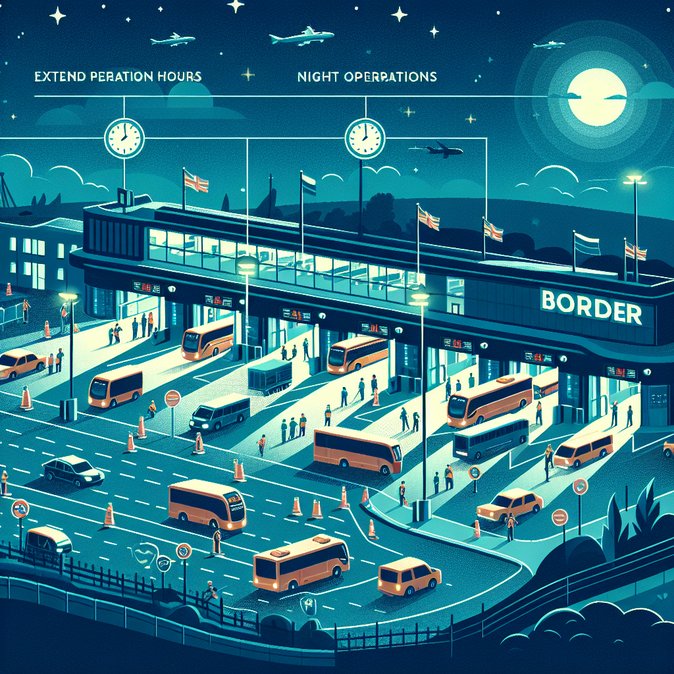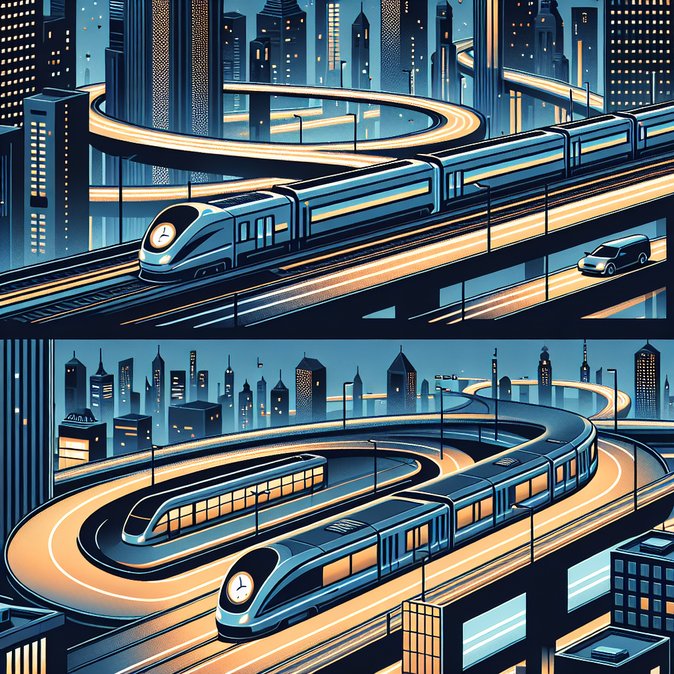
To prevent a repeat of last year’s crowding, Hong Kong’s transport operators implemented an overnight service plan from the afternoon of 24 December through the early hours of Christmas Day. The MTR Corporation ran trains through the night on every line except the Airport Express, Disneyland Resort Line and East Rail north of Sheung Shui, with headways on key urban lines cut to three minutes. Franchised bus companies added 24-hour departures on 20 routes and launched five special night-bus services linking New Territories districts to Kowloon interchange hubs. Green-minibus operators extended hours on five routes.
The enhanced timetable was coordinated with the Immigration Department’s crowd forecasts, which predicted surges at Lo Wu between 22:00 and 01:00. By synchronising rail and road capacity, authorities hoped to spread passenger flow and reduce the risk of platform congestion—crucial for employers running late shifts.
Early data suggest the strategy worked: MTR reported only two platform-hold events longer than five minutes, compared with 14 the previous Christmas Eve, while bus load factors averaged 63 per cent. Retailers in Central and Tsim Sha Tsui said foot traffic held steady past midnight, boosting sales of F&B outlets by 12 per cent versus 2024.
![MTR and bus operators roll out all-night services for Christmas Eve revellers and cross-border travellers]()
Shift-based businesses with staff shuttling between Hong Kong and the mainland should also remember that any cross-border travel hinges on up-to-date documents. VisaHQ’s one-stop visa service (https://www.visahq.com/hong-kong/) can secure work, transit and multiple-entry permits quickly, ensuring employees can take full advantage of the new overnight transport timetable without unexpected immigration delays.
For HR and mobility managers, the main takeaway is that overnight public transport can now be treated as a reliable option when drafting duty-of-care plans. However, companies should note that medical insurance providers often exclude incidents occurring after the last scheduled public-transport departure; policies may need updating to reflect the new all-night baseline.
Transport analysts argue that the MTR’s performance strengthens the case for permanent overnight services on Fridays and Saturdays, a move that could support Hong Kong’s 24-hour economy ambitions and improve connectivity for cross-border shift workers living in Shenzhen.
The enhanced timetable was coordinated with the Immigration Department’s crowd forecasts, which predicted surges at Lo Wu between 22:00 and 01:00. By synchronising rail and road capacity, authorities hoped to spread passenger flow and reduce the risk of platform congestion—crucial for employers running late shifts.
Early data suggest the strategy worked: MTR reported only two platform-hold events longer than five minutes, compared with 14 the previous Christmas Eve, while bus load factors averaged 63 per cent. Retailers in Central and Tsim Sha Tsui said foot traffic held steady past midnight, boosting sales of F&B outlets by 12 per cent versus 2024.

Shift-based businesses with staff shuttling between Hong Kong and the mainland should also remember that any cross-border travel hinges on up-to-date documents. VisaHQ’s one-stop visa service (https://www.visahq.com/hong-kong/) can secure work, transit and multiple-entry permits quickly, ensuring employees can take full advantage of the new overnight transport timetable without unexpected immigration delays.
For HR and mobility managers, the main takeaway is that overnight public transport can now be treated as a reliable option when drafting duty-of-care plans. However, companies should note that medical insurance providers often exclude incidents occurring after the last scheduled public-transport departure; policies may need updating to reflect the new all-night baseline.
Transport analysts argue that the MTR’s performance strengthens the case for permanent overnight services on Fridays and Saturdays, a move that could support Hong Kong’s 24-hour economy ambitions and improve connectivity for cross-border shift workers living in Shenzhen.
More From Hong Kong
View all
Hong Kong registers 1.25 million cross-border trips on Christmas Day, busiest day since full border reopening

Immigration Department braces for 11.5 million holiday border crossings and activates joint command centre