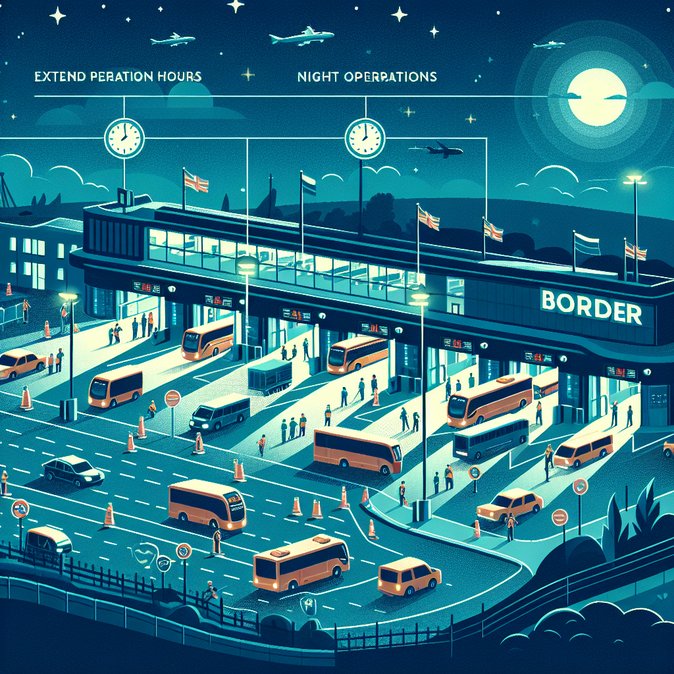
Hong Kong’s government will keep the Lo Wu pedestrian checkpoint open until 02:00 on 1 January and run Shenzhen Bay’s passenger and vehicle halls overnight to accommodate post-countdown crowds. Extra overnight bus routes NB2 and NB3 will link the Shenzhen Bay crossing with Yuen Long, Tin Shui Wai and Tuen Mun, while MTR services on the East Rail Line will run until 02:30 to match checkpoint hours.
The decision follows last year’s scenes of three-hour queues after the midnight fireworks. Although this year’s harbour fireworks have been cancelled following the Wang Fuk Court fire tragedy, authorities anticipate heavy outbound flows as residents head north for late-night entertainment unrestricted by Hong Kong’s public-order curbs.
For travellers needing to verify entry formalities at short notice, VisaHQ offers a quick solution. Its Hong Kong portal (https://www.visahq.com/hong-kong/) provides real-time visa requirement checks for mainland China and dozens of other destinations, digital application tools, and corporate dashboards that help mobility managers pre-clear documents before staff reach the border—turning the extended checkpoint hours into actual time saved.
![Lo Wu and Shenzhen Bay checkpoints to operate past midnight on New Year’s Eve to ease crowding]()
For businesses the change matters: factory supervisors returning to Guangdong after New Year dinners, pilots shuttling to Shenzhen Bao’an Airport for early-morning departures, and logistics staff moving urgent parts now have more scheduling flexibility. The Immigration Department will deploy 350 additional officers and open all automated lanes; Customs will run dual-channel "Green-to-Red" luggage screening to speed clearance.
Travel managers should update employee apps with the special transport timetables and remind staff that Shenzhen Metro Line 4 (Futian) will operate 24 hours that night, but the final Hong Kong MTR train northbound departs Lo Wu at 02:15. Those crossing later must use taxis or ride-hailing services from Lok Ma Chau.
Looking ahead, transport consultants say the trial may become permanent on other major holidays if crowd-control technology proves effective. The Transport and Logistics Bureau will assess data in January before deciding whether to budget for round-the-clock checkpoint operations during Lunar New Year.
The decision follows last year’s scenes of three-hour queues after the midnight fireworks. Although this year’s harbour fireworks have been cancelled following the Wang Fuk Court fire tragedy, authorities anticipate heavy outbound flows as residents head north for late-night entertainment unrestricted by Hong Kong’s public-order curbs.
For travellers needing to verify entry formalities at short notice, VisaHQ offers a quick solution. Its Hong Kong portal (https://www.visahq.com/hong-kong/) provides real-time visa requirement checks for mainland China and dozens of other destinations, digital application tools, and corporate dashboards that help mobility managers pre-clear documents before staff reach the border—turning the extended checkpoint hours into actual time saved.

For businesses the change matters: factory supervisors returning to Guangdong after New Year dinners, pilots shuttling to Shenzhen Bao’an Airport for early-morning departures, and logistics staff moving urgent parts now have more scheduling flexibility. The Immigration Department will deploy 350 additional officers and open all automated lanes; Customs will run dual-channel "Green-to-Red" luggage screening to speed clearance.
Travel managers should update employee apps with the special transport timetables and remind staff that Shenzhen Metro Line 4 (Futian) will operate 24 hours that night, but the final Hong Kong MTR train northbound departs Lo Wu at 02:15. Those crossing later must use taxis or ride-hailing services from Lok Ma Chau.
Looking ahead, transport consultants say the trial may become permanent on other major holidays if crowd-control technology proves effective. The Transport and Logistics Bureau will assess data in January before deciding whether to budget for round-the-clock checkpoint operations during Lunar New Year.
More From Hong Kong
View all
Hong Kong registers 1.25 million cross-border trips on Christmas Day, busiest day since full border reopening
MTR and bus operators roll out all-night services for Christmas Eve revellers and cross-border travellers